iPhone 5c Front-Facing Camera and Sensor Cable Replacement
This guide details the procedure for substituting the upper display assembly cable, a component that integrates the front-facing camera, microphone, and various sensors.
Step 1 | Taping the display glass
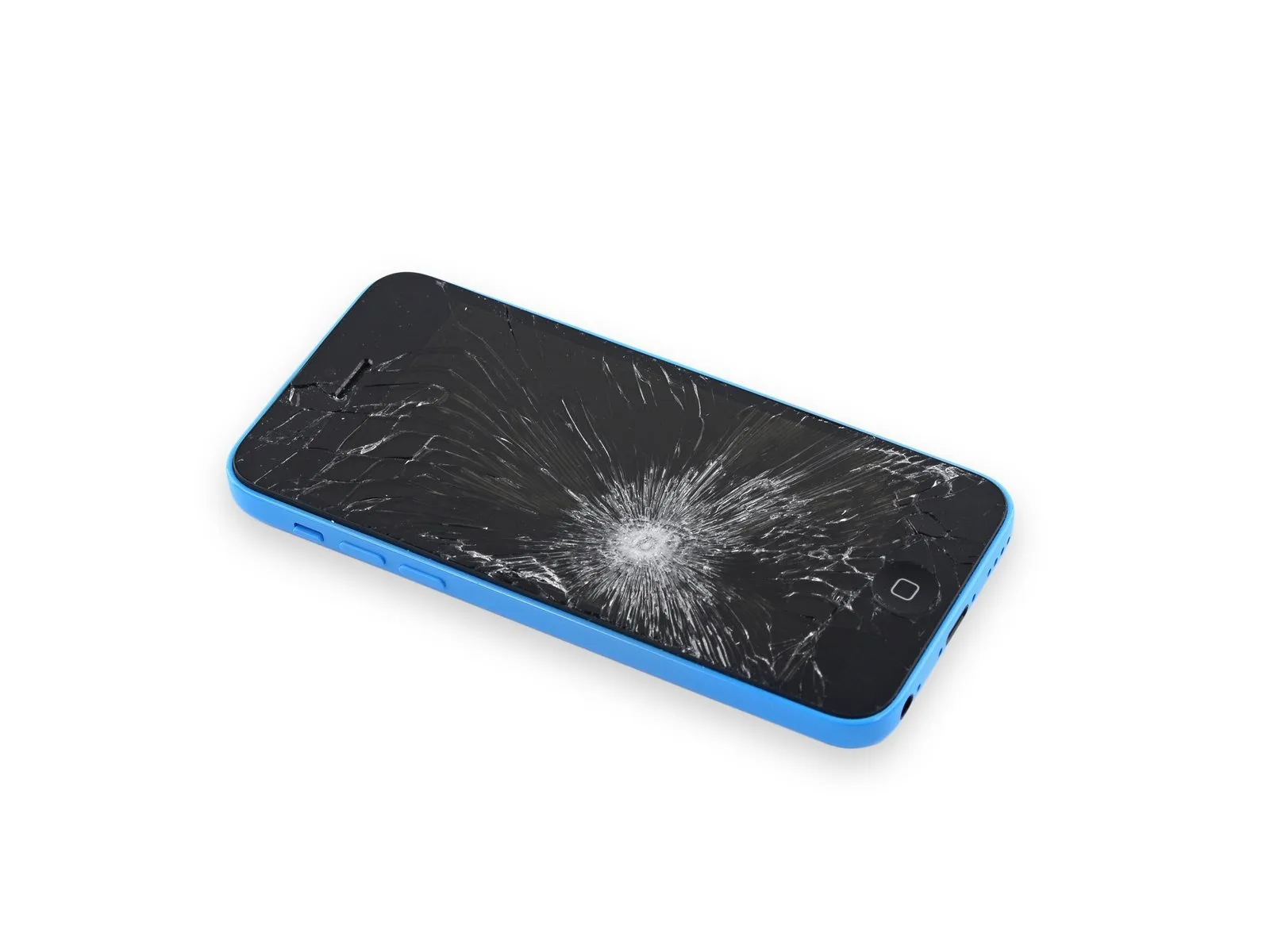
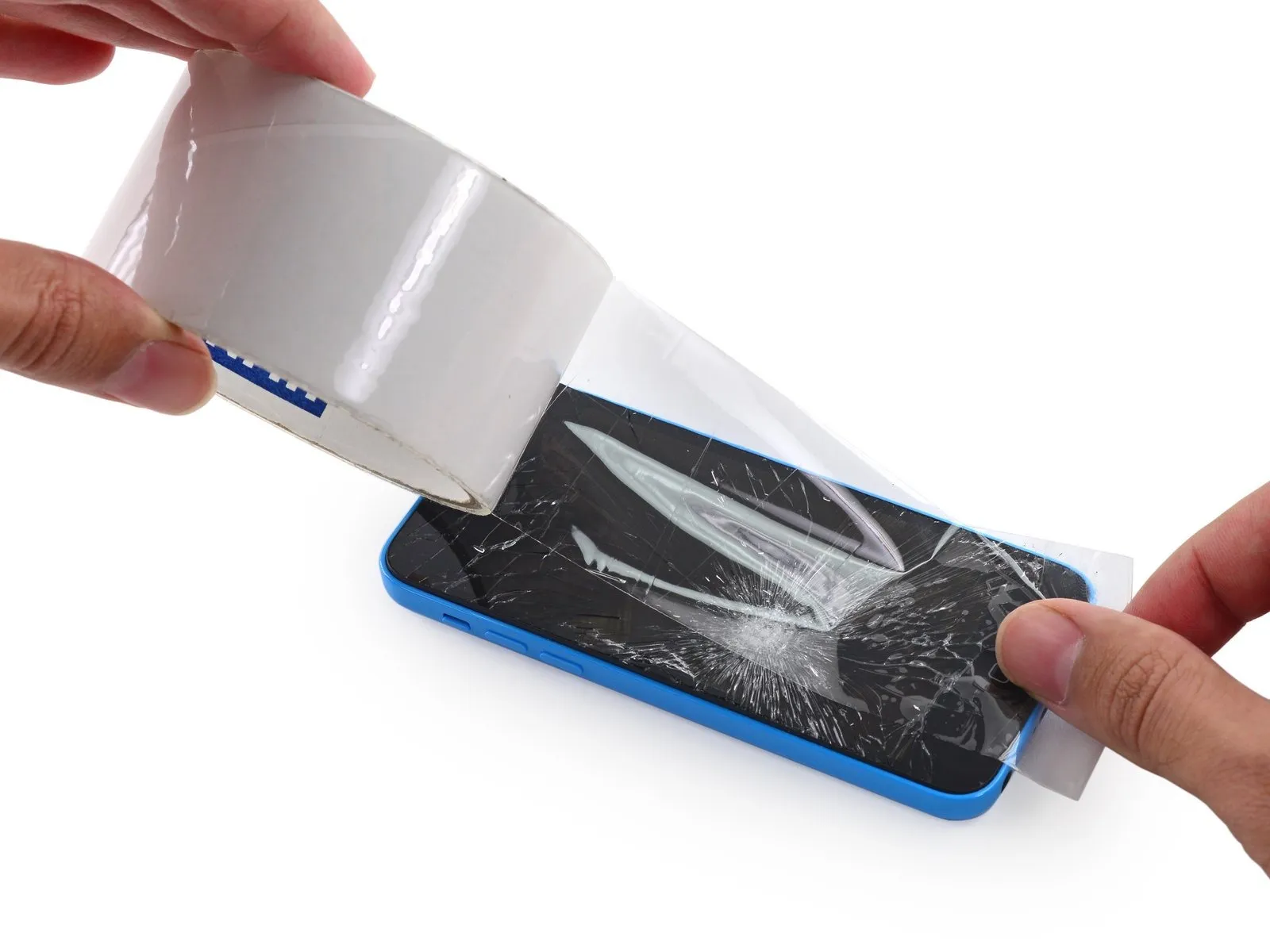
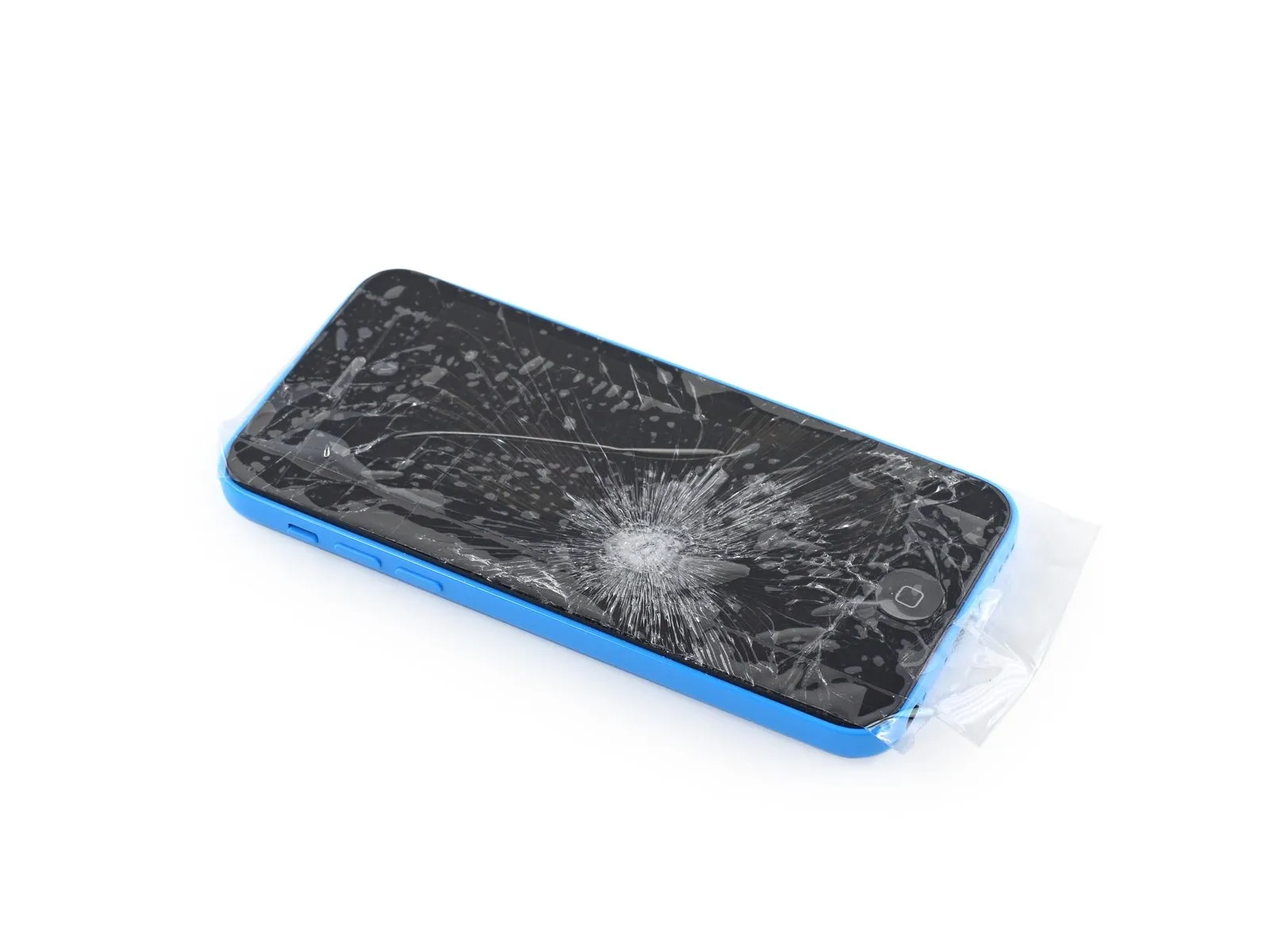
To mitigate the risk of additional shattering and potential injury while repairing a cracked display glass, secure it with tape.
Apply strips of transparent packing tape across the iPhone screen, ensuring complete coverage by slightly overlapping each strip.
To prevent glass fragments from scattering and maintain stability during the display separation process, this technique is essential.
To safeguard your eyes from potential glass fragments released during the repair process, always use safety glasses.
Apply strips of transparent packing tape across the iPhone screen, ensuring complete coverage by slightly overlapping each strip.
To prevent glass fragments from scattering and maintain stability during the display separation process, this technique is essential.
To safeguard your eyes from potential glass fragments released during the repair process, always use safety glasses.
Step 2 | Removing the Pentalobe screws
To prevent a fire hazard or explosion resulting from accidental puncture, ensure the iPhone's lithium-ion battery is depleted to less than 25% charge prior to continuing.
To prevent electrical shock or damage, ensure the iPhone is completely de-energized prior to starting the repair process.
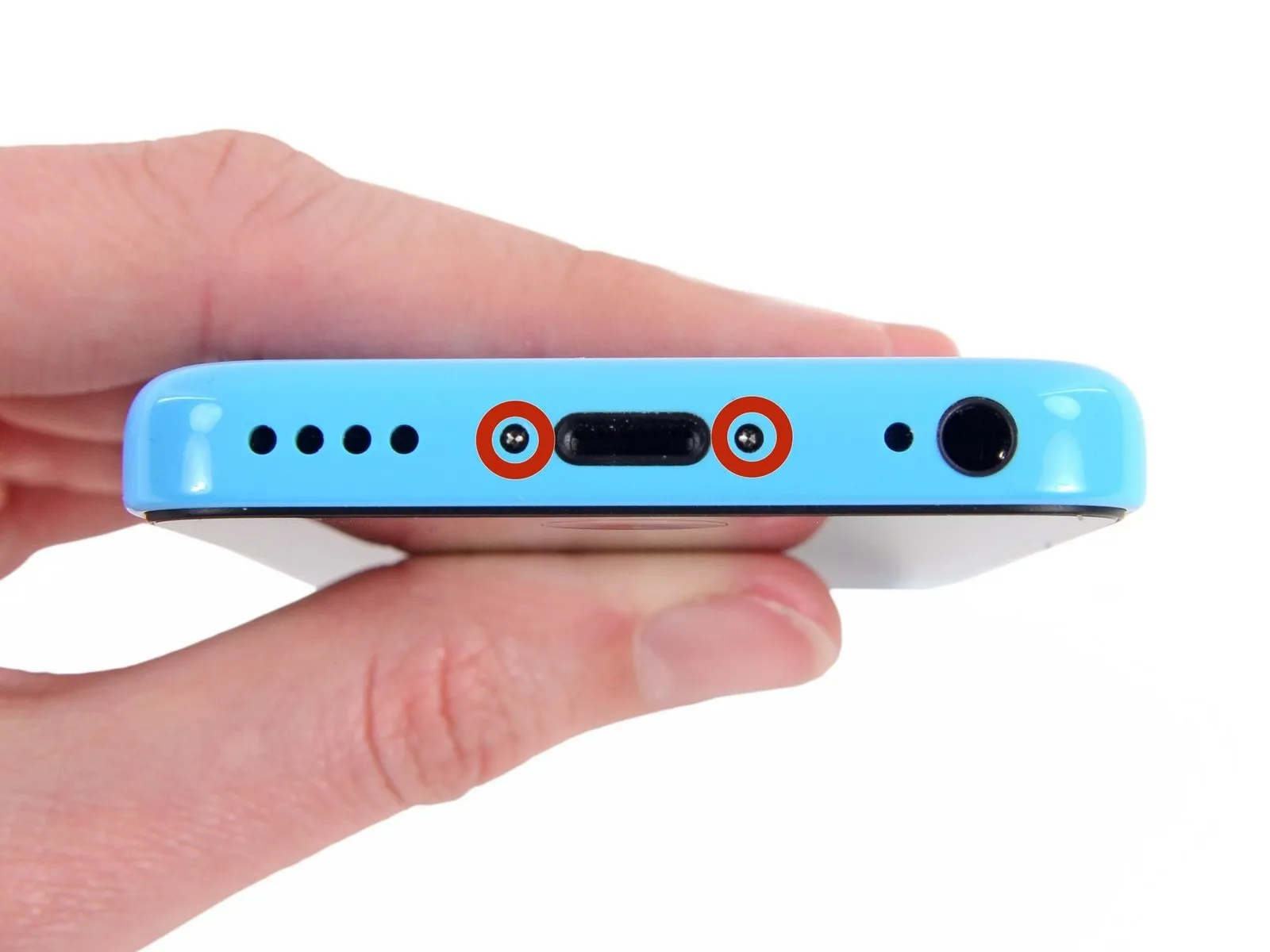
Using appropriate tools, detach the two Lightning connector retaining screws; these are 3.8 mm P2 Pentalobe fasteners, one located on each side.
To prevent electrical shock or damage, ensure the iPhone is completely de-energized prior to starting the repair process.
Using appropriate tools, detach the two Lightning connector retaining screws; these are 3.8 mm P2 Pentalobe fasteners, one located on each side.
Step 3 | Starting the iSclack Opening Procedure
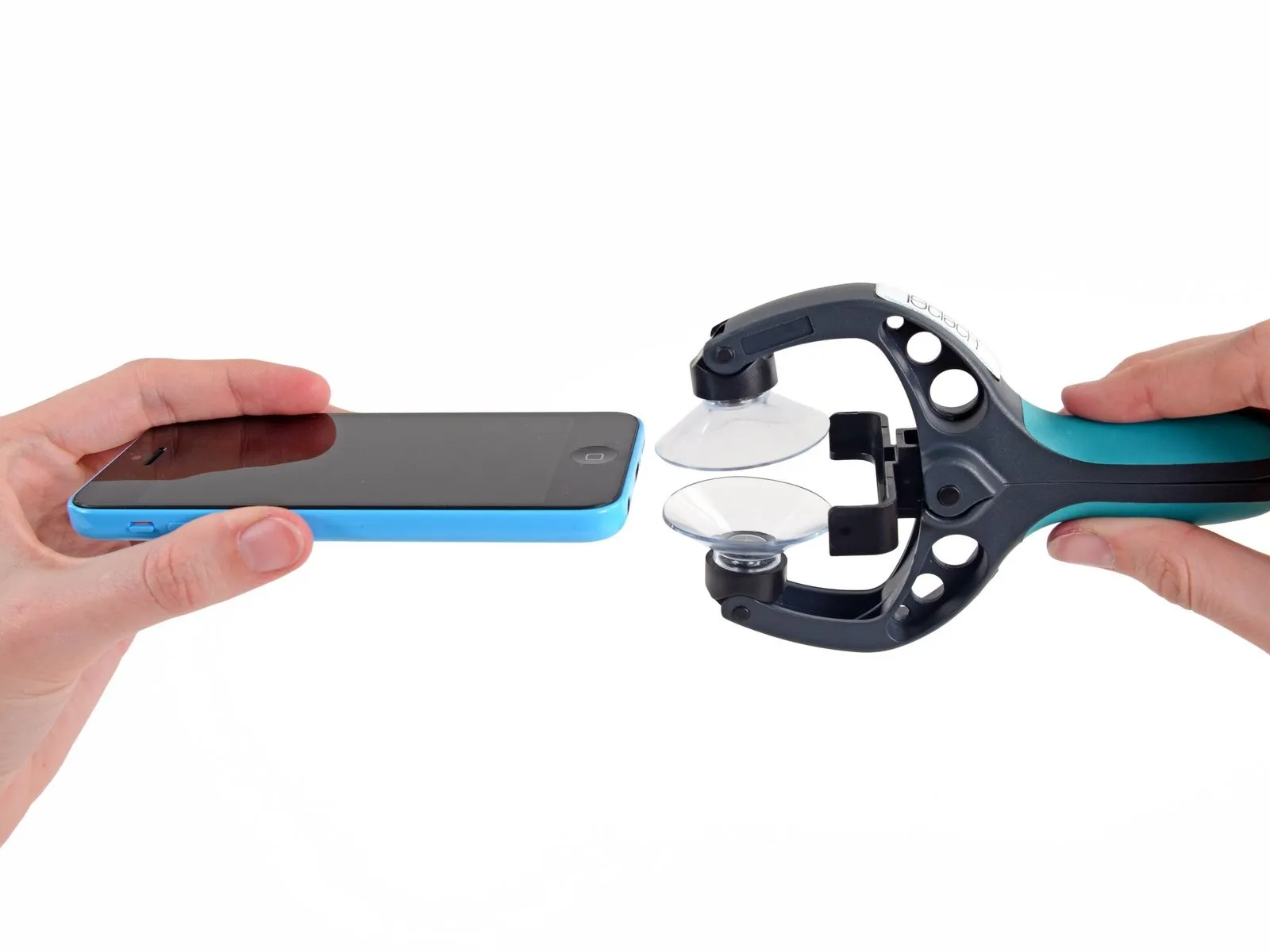
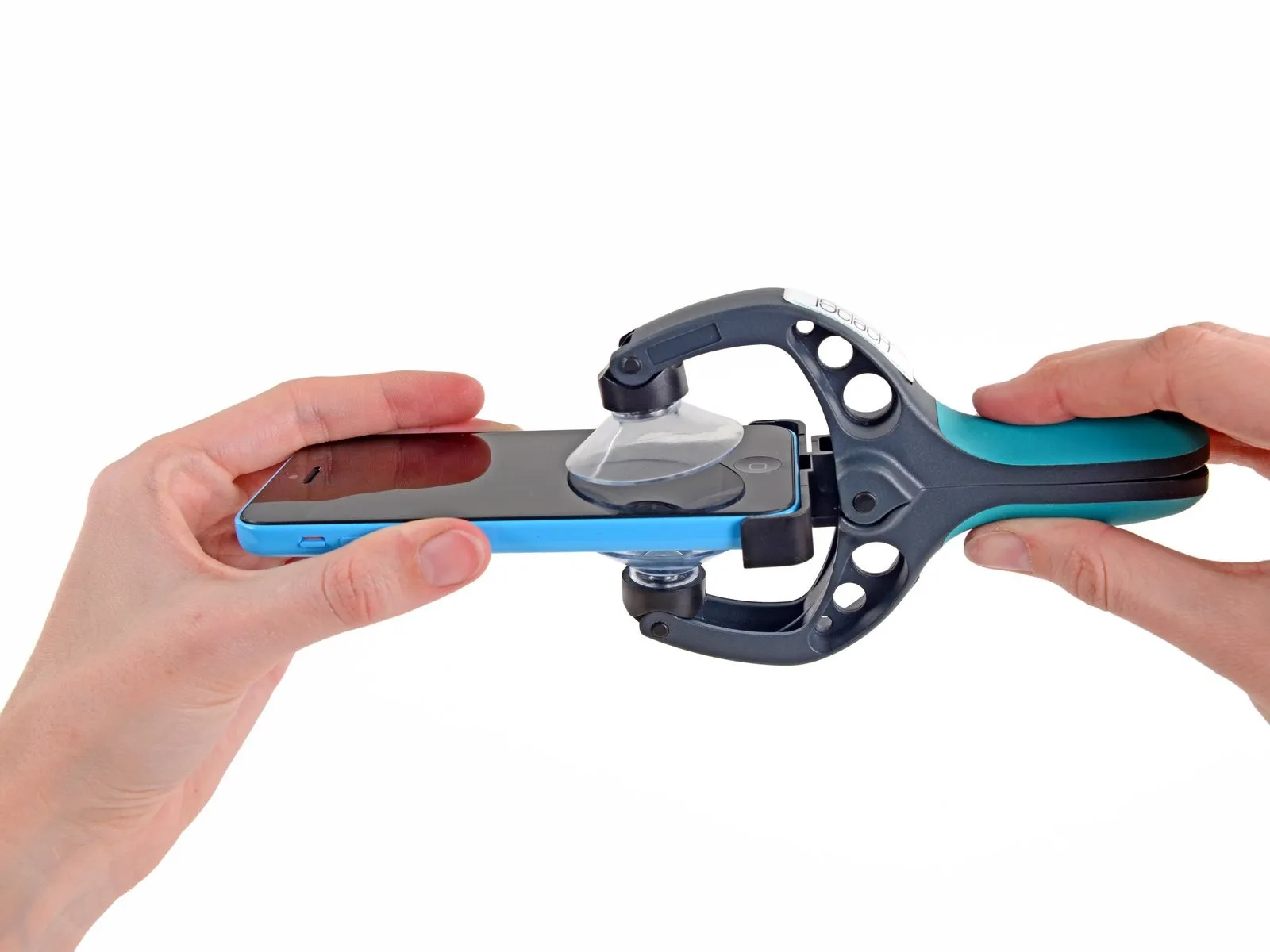
For those performing multiple iPhone 5, 5s, or 5c repairs, we suggest utilizing the iSclack to safely separate the device; the following instructions detail its use, but if you prefer an alternative method, proceed directly to Step 5.
Actuate the iSclack handle to release the clamping force of the suction-cup jaws.
Position the iPhone's lower edge between the suction cups, ensuring it contacts the plastic depth gauge.
Position the uppermost suction cup so that it hovers slightly above the home button.
To secure the iPhone, position the suction cups centrally and apply consistent, strong pressure to both the upper and lower surfaces, ensuring the iSclack jaws are closed by manipulating the handles.
Actuate the iSclack handle to release the clamping force of the suction-cup jaws.
Position the iPhone's lower edge between the suction cups, ensuring it contacts the plastic depth gauge.
Position the uppermost suction cup so that it hovers slightly above the home button.
To secure the iPhone, position the suction cups centrally and apply consistent, strong pressure to both the upper and lower surfaces, ensuring the iSclack jaws are closed by manipulating the handles.
Step 4 | Finishing the iSclack Opening Procedure
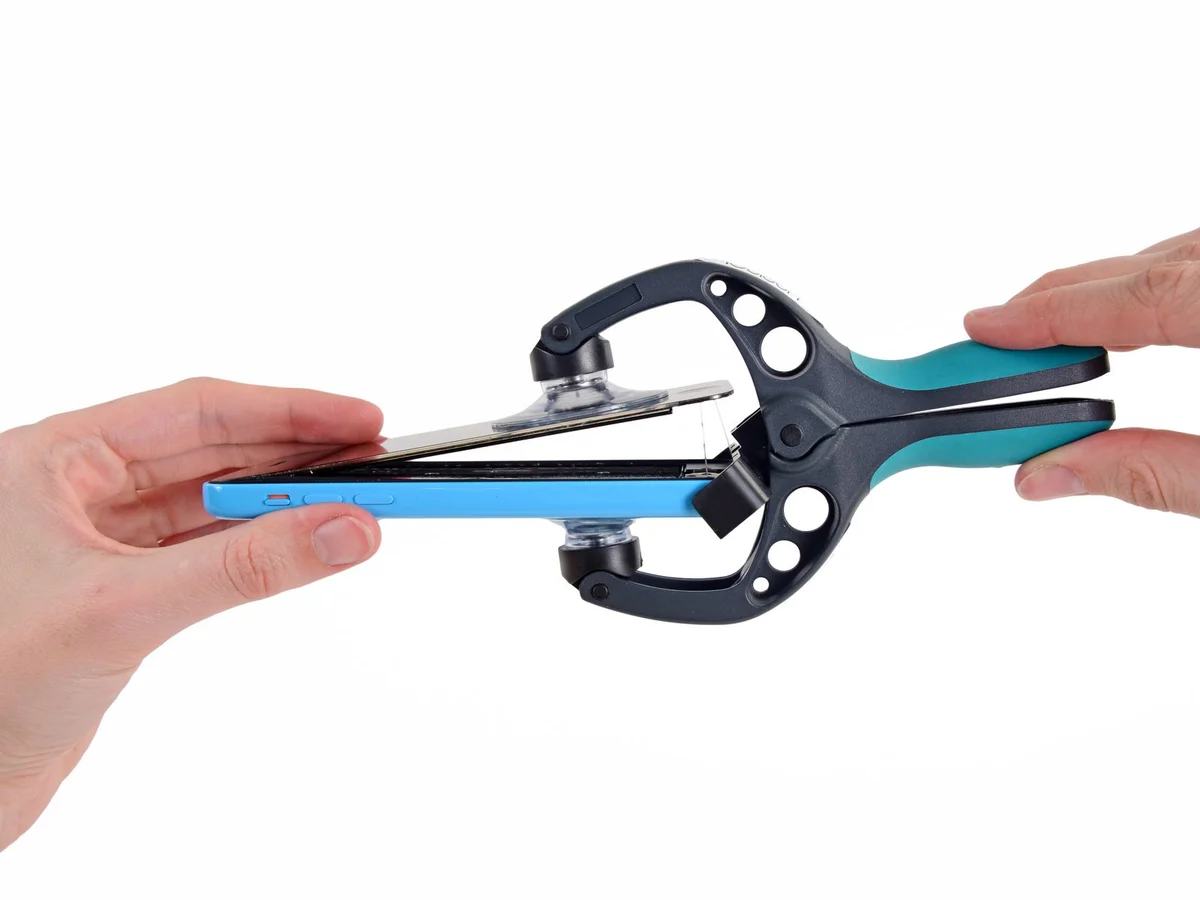
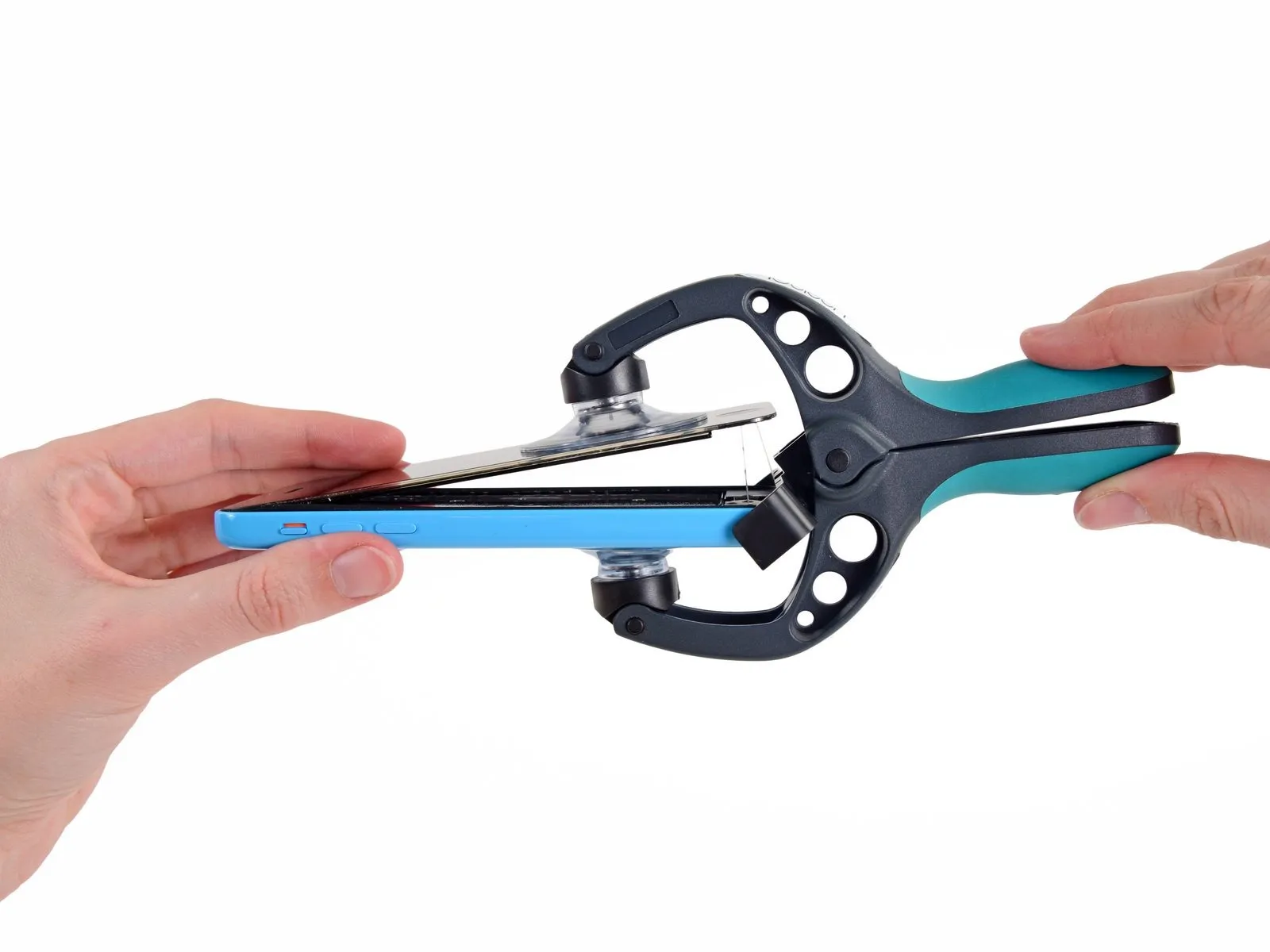
Using a firm grip on the iPhone, disengage the iSclack's handle to release the suction cups, then lift the front panel away from the rear enclosure.
This specialized tool allows for a controlled separation of the iPhone's components, providing access for repair while preventing cable damage.
Detach the iPhone from its mounting surface by removing both suction cups.
Proceed directly to Step 8, bypassing Steps 4, 5, and 6.
This specialized tool allows for a controlled separation of the iPhone's components, providing access for repair while preventing cable damage.
Detach the iPhone from its mounting surface by removing both suction cups.
Proceed directly to Step 8, bypassing Steps 4, 5, and 6.
Step 5 | Manual Opening Procedure
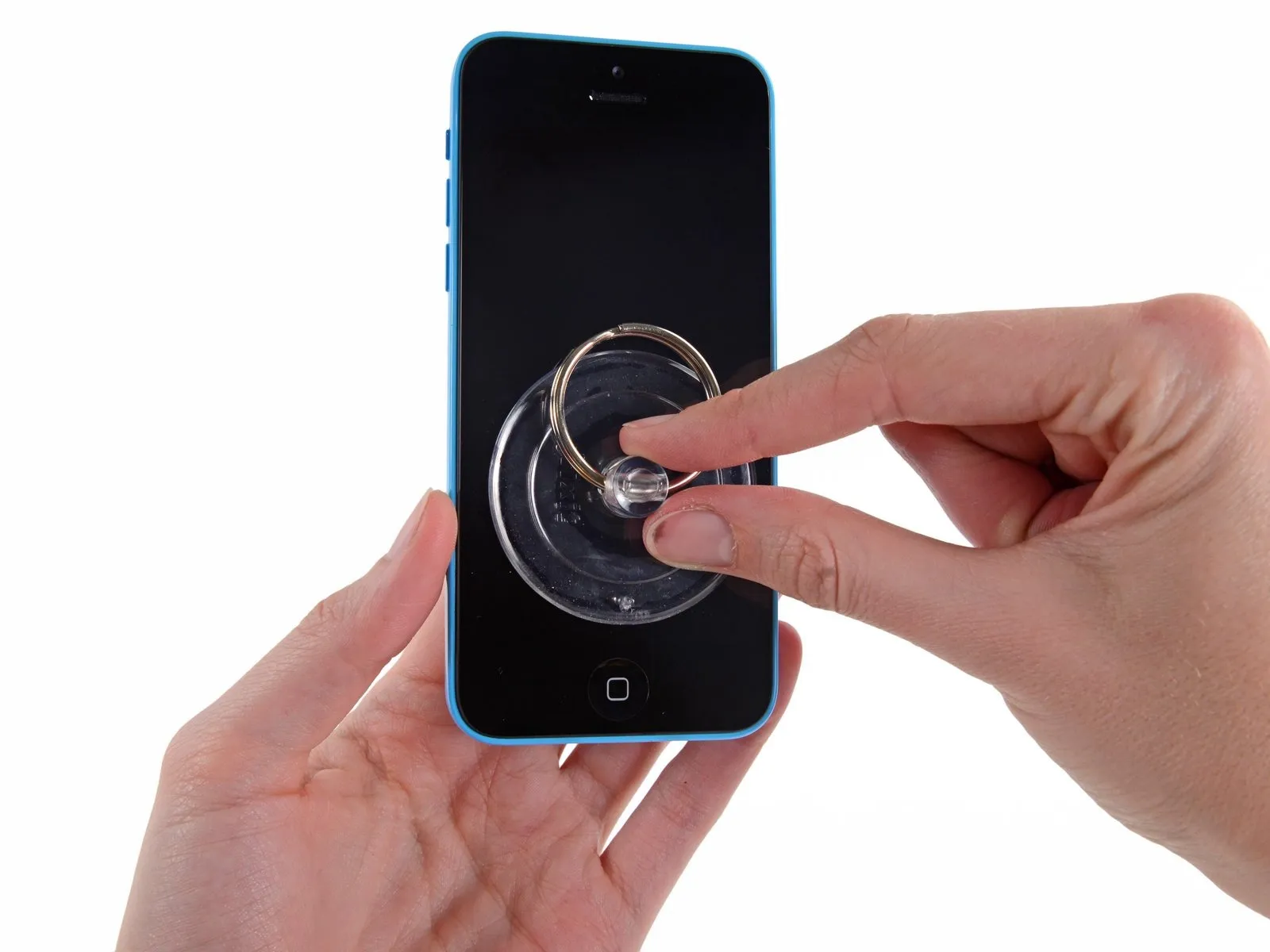
Position a suction cup directly on the display surface, situated slightly higher than the home button's location.
Ensure the entire cup makes contact with the screen surface to guarantee a secure seal.
Ensure the entire cup makes contact with the screen surface to guarantee a secure seal.
Step 6 | Start lifting the front panel assembly
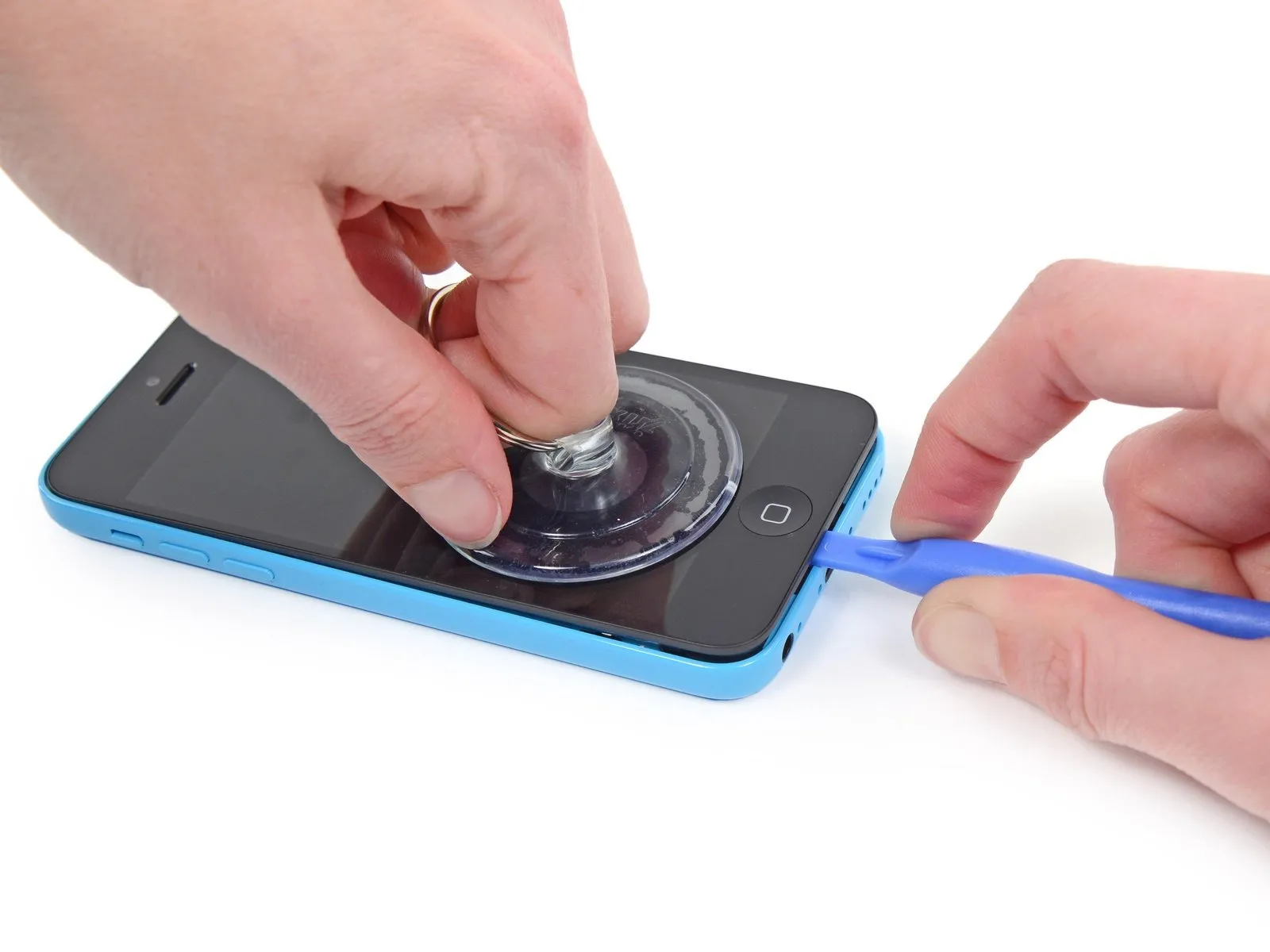
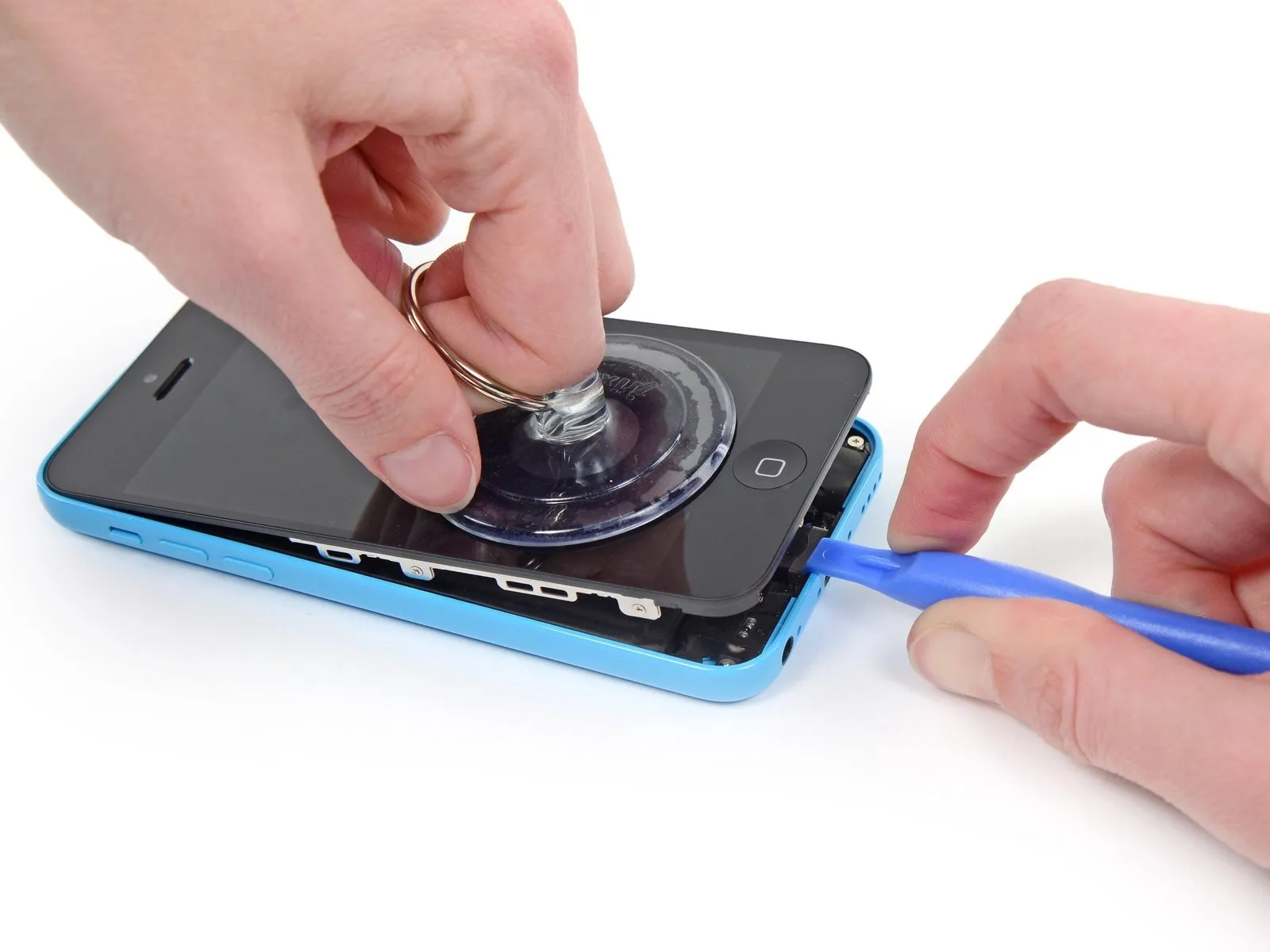
Using a 5/32-inch hex key, carefully tighten the three retaining screws on the motor assembly to a torque of 3.5 inch-pounds; ensure proper alignment to prevent damage and avoid over-tightening.
Secure the front panel assembly by ensuring the suction cup maintains a strong, stable bond.
Using one hand to secure the iPhone, lift the suction cup vertically to gently create a small gap between the front panel and the rear enclosure.
Exercise patience and use steady, even pressure when installing the display assembly, as its fit is considerably more snug than typical device components.
Using a plastic opening tool, carefully separate the rear case from the display assembly by gently levering it upwards, simultaneously applying upward force with a suction cup.
To release the front panel assembly from the rear case, carefully detach the multiple retaining clips, employing both the suction cup and plastic opening tool as needed.
Secure the front panel assembly by ensuring the suction cup maintains a strong, stable bond.
Using one hand to secure the iPhone, lift the suction cup vertically to gently create a small gap between the front panel and the rear enclosure.
Exercise patience and use steady, even pressure when installing the display assembly, as its fit is considerably more snug than typical device components.
Using a plastic opening tool, carefully separate the rear case from the display assembly by gently levering it upwards, simultaneously applying upward force with a suction cup.
To release the front panel assembly from the rear case, carefully detach the multiple retaining clips, employing both the suction cup and plastic opening tool as needed.
Step 7
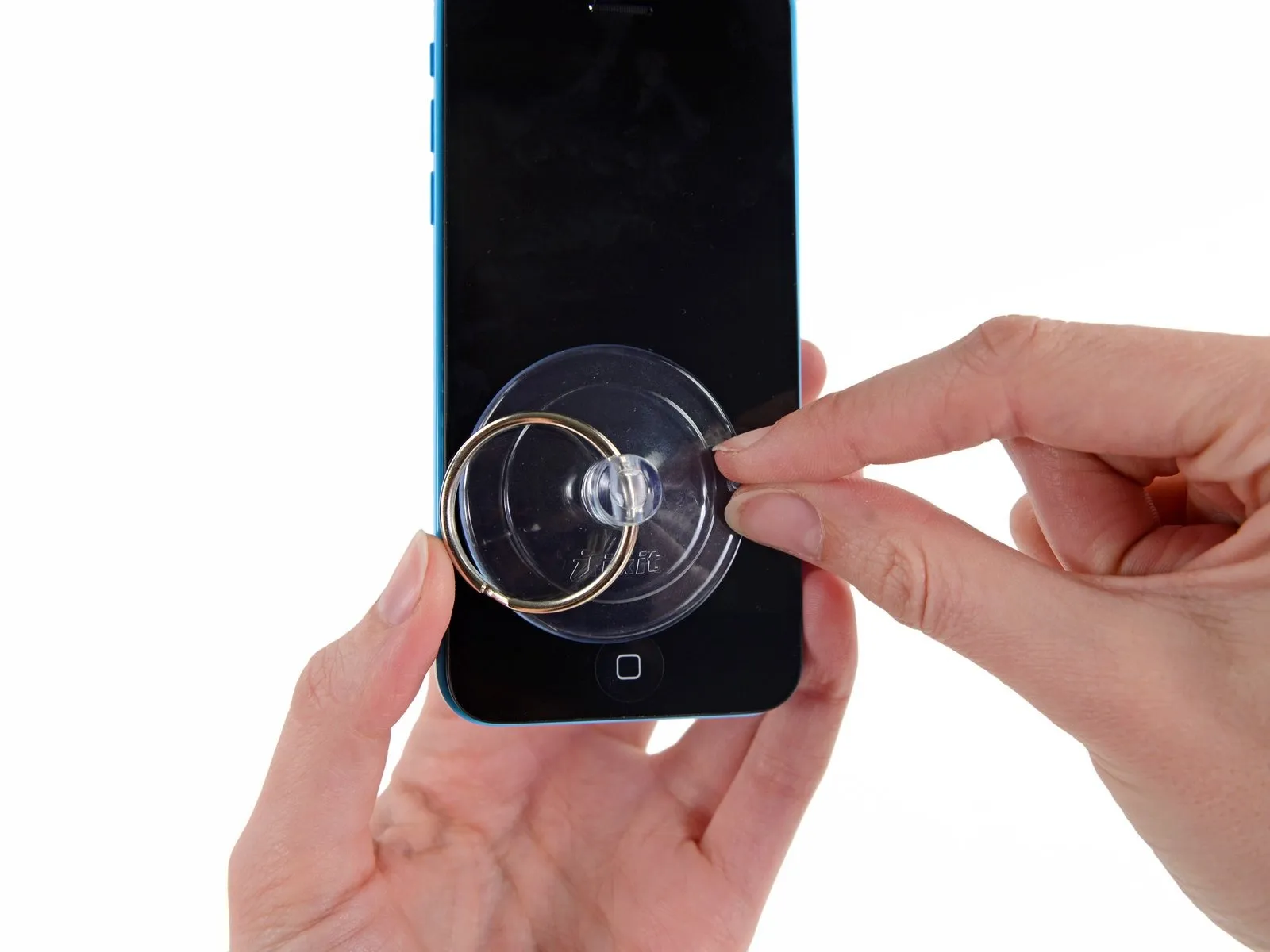
Using a 5/32-inch hex key, carefully tighten the three retaining screws on the motor assembly to a torque of 3.5 inch-pounds, ensuring not to overtighten and potentially strip the threads; observe caution to prevent damage to the motor.
To detach the suction cup, depress the plastic projection to break the airtight seal.
Detach the display assembly's suction cup.
To detach the suction cup, depress the plastic projection to break the airtight seal.
Detach the display assembly's suction cup.
Step 8 | Opening up the phone
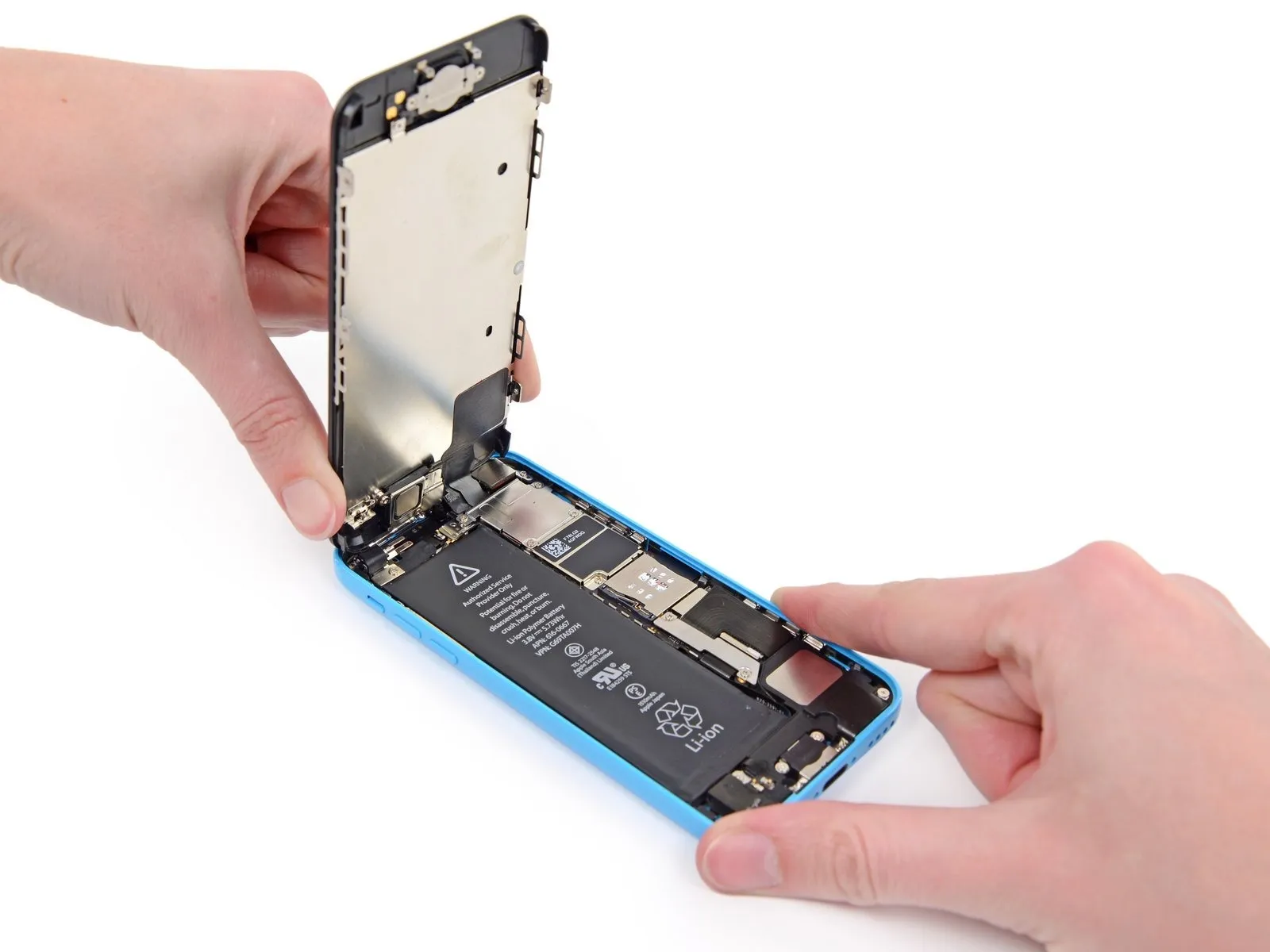
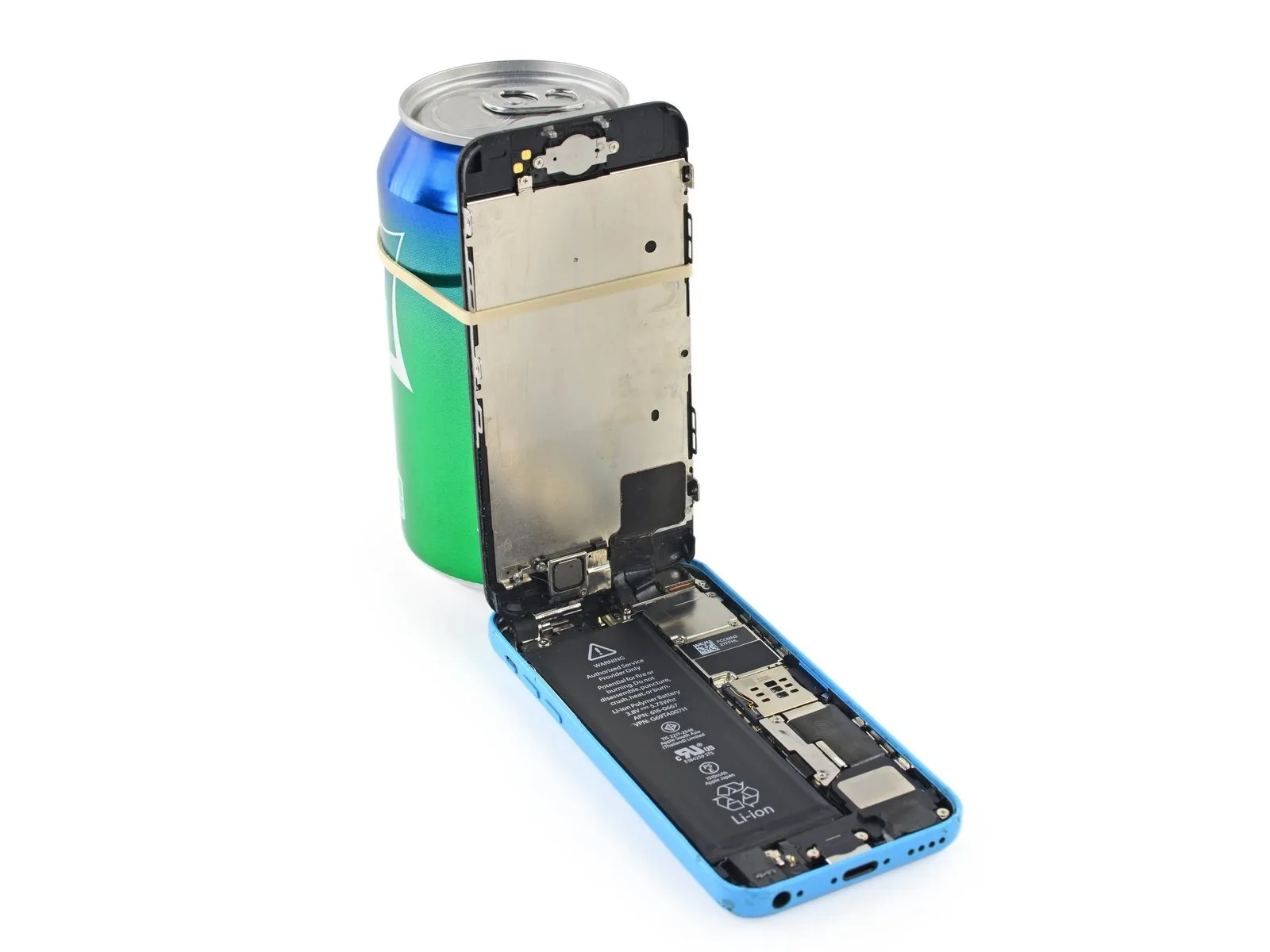
Using a 5/32-inch hex key, carefully tighten the four mounting screws securing the fan assembly to the motor housing, ensuring each is snug but not overtightened to avoid damaging the plastic; observe a torque limit of 6 in-lbs per screw.
To expose the connectors located near the top edge of the device, carefully raise the front panel, starting at the home button end.
Carefully position the display at a roughly 90-degree angle, then secure it in an upright position using a support to allow for hands-free access during the repair process.
As a temporary substitute, an unused, sealed can of soda can be employed to secure the display in place.
To avoid stressing the display's wiring during the repair process, secure it with a rubber band.
To expose the connectors located near the top edge of the device, carefully raise the front panel, starting at the home button end.
Carefully position the display at a roughly 90-degree angle, then secure it in an upright position using a support to allow for hands-free access during the repair process.
As a temporary substitute, an unused, sealed can of soda can be employed to secure the display in place.
To avoid stressing the display's wiring during the repair process, secure it with a rubber band.
Step 9
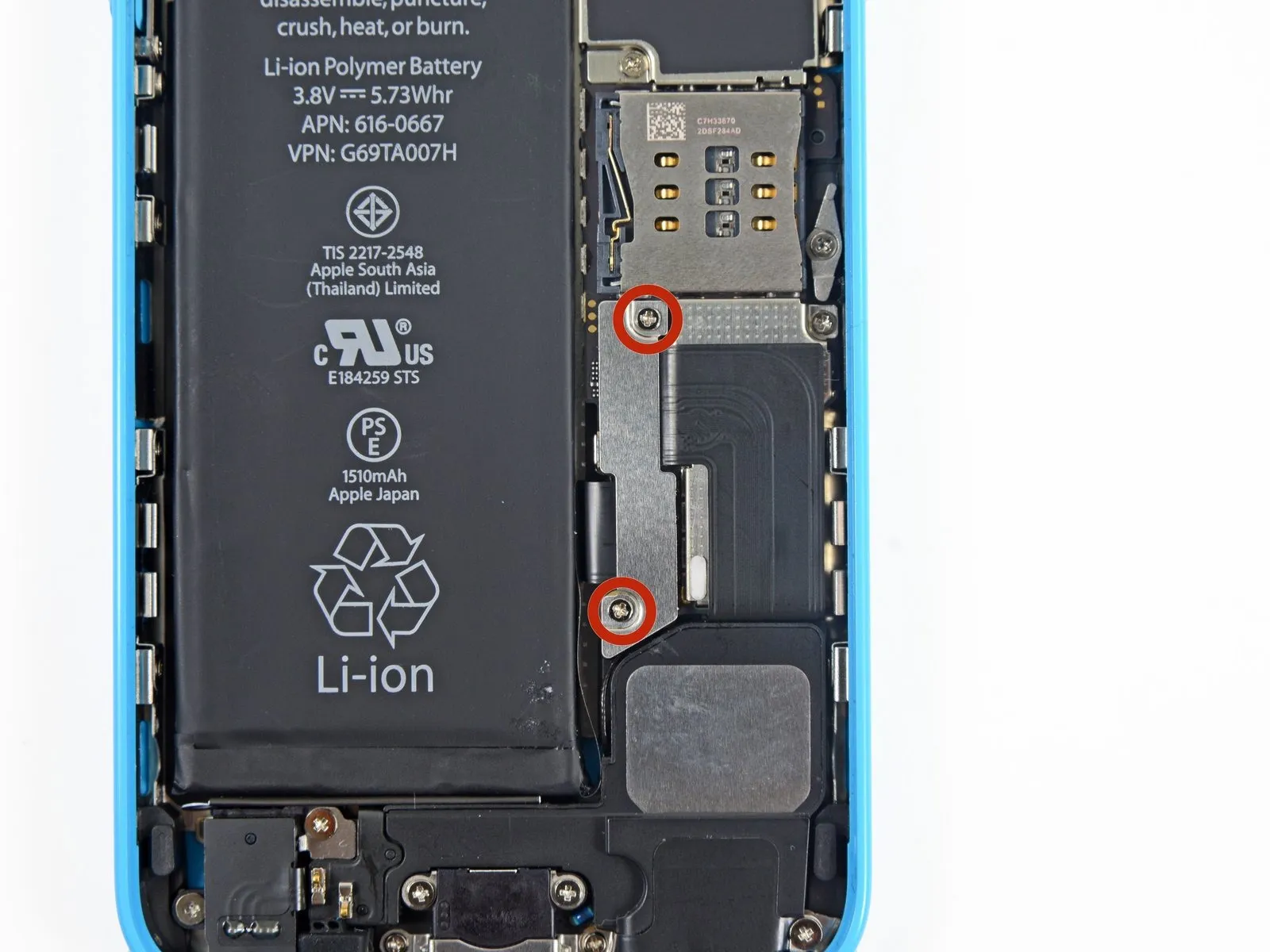
Using a 5/32-inch hex key, carefully tighten the four retaining screws on the motor assembly to a torque of 3.5 inch-pounds, ensuring not to overtighten and potentially strip the threads.
Using a Phillips #000 screwdriver, detach the metal bracket that holds the battery connector by unscrewing the two 1.6 mm screws holding it in place on the logic board.
Using a Phillips #000 screwdriver, detach the metal bracket that holds the battery connector by unscrewing the two 1.6 mm screws holding it in place on the logic board.
Step 10

Using a 5/32-inch hex key, carefully tighten the four retaining screws securing the motor assembly to the gearbox housing, ensuring each is snug but not over-torqued to prevent damage; observe polarity markings during reinstallation.
Detach the bracket securing the battery connector using a tri-point screwdriver.
Detach the bracket securing the battery connector using a tri-point screwdriver.
Step 11 | Disconnecting the battery connector

Carefully lift the battery connector away from its corresponding socket on the logic board, employing a spudger or a clean fingernail to avoid damage.
Exercise extreme caution when releasing the battery connector, focusing solely on the connector itself to avoid lifting the logic board socket; applying force to the socket or the logic board can result in socket destruction or damage to adjacent components.
Exercise extreme caution when releasing the battery connector, focusing solely on the connector itself to avoid lifting the logic board socket; applying force to the socket or the logic board can result in socket destruction or damage to adjacent components.
Step 12

Using a Phillips #000 screwdriver, detach the bracket that secures the front panel assembly cable from the logic board by unscrewing all of its fasteners.
Use two screws, each measuring 1.3 millimeters.
A screw with a 1.7 mm diameter is required.
A screw with a 3.25 mm diameter is required.
Carefully manage all screws during this procedure to ensure correct reassembly; improper screw selection, such as using a 3.25 mm screw instead of a 1.7 mm screw in the bottom right hole, will severely damage the logic board and prevent the device from powering on.
Avoid applying excessive force when tightening screws; if resistance is encountered during installation, verify they are the correct size and do not attempt to force them.
Use two screws, each measuring 1.3 millimeters.
A screw with a 1.7 mm diameter is required.
A screw with a 3.25 mm diameter is required.
Carefully manage all screws during this procedure to ensure correct reassembly; improper screw selection, such as using a 3.25 mm screw instead of a 1.7 mm screw in the bottom right hole, will severely damage the logic board and prevent the device from powering on.
Avoid applying excessive force when tightening screws; if resistance is encountered during installation, verify they are the correct size and do not attempt to force them.
Step 13
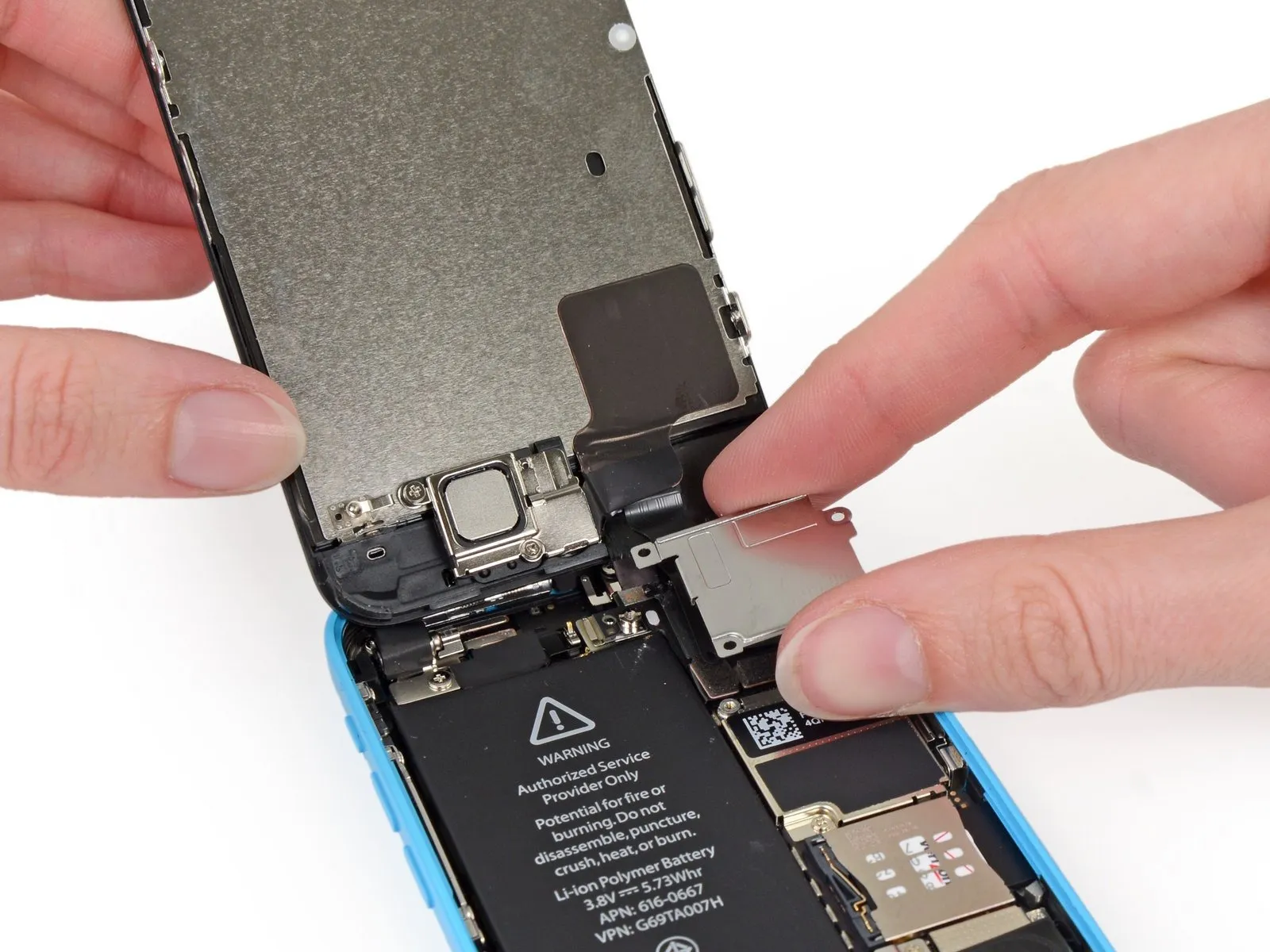
Detach the cable bracket securing the front panel assembly cable to the logic board.
Step 14 | Disconnecting the front panel assembly cables

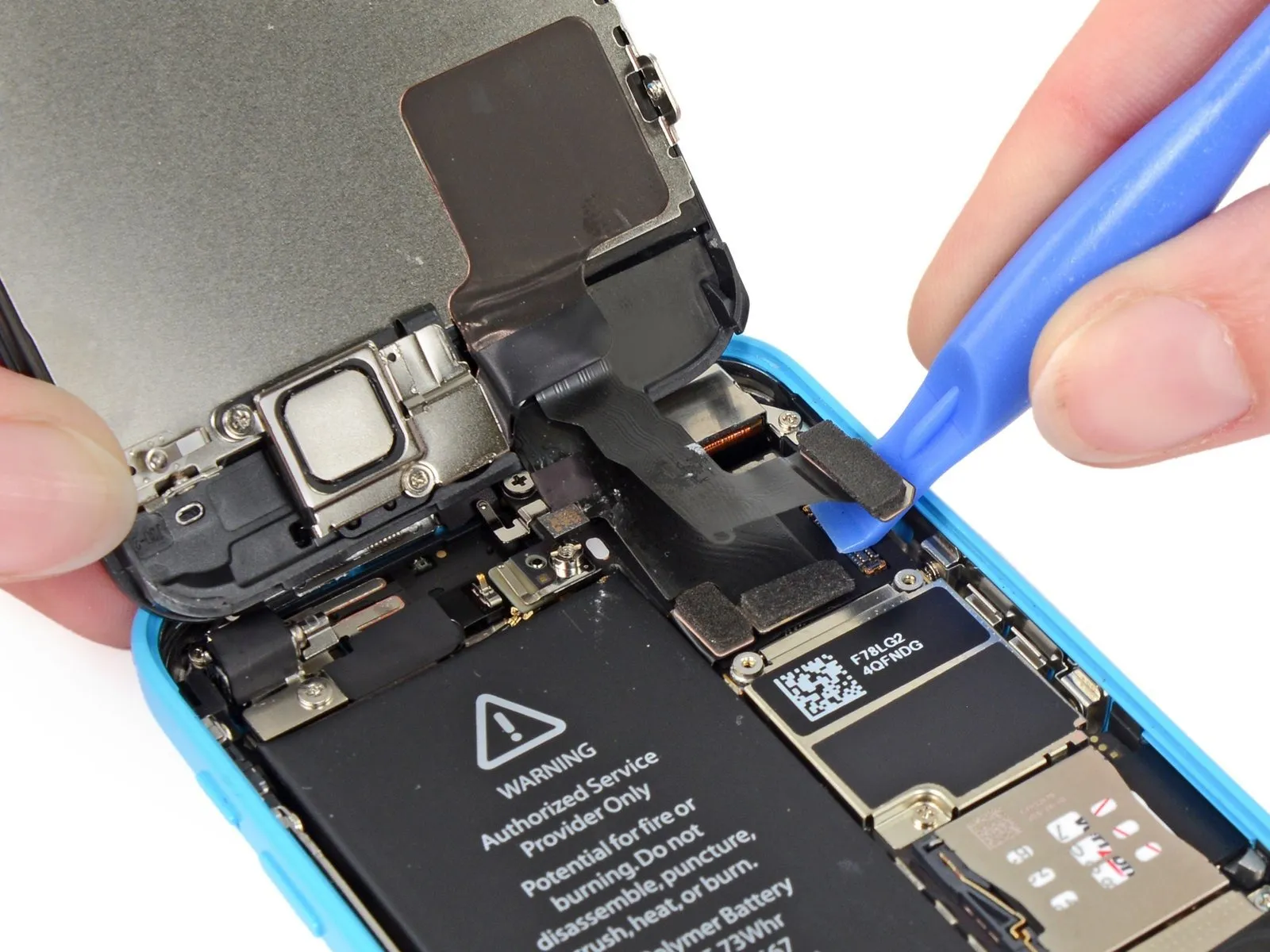
Carefully detach the front camera and sensor cable connector from its socket using a plastic pry tool or your fingernail.
Avoid applying lifting force to the logic board socket; focus solely on the connector itself.
Avoid applying lifting force to the logic board socket; focus solely on the connector itself.
Step 15

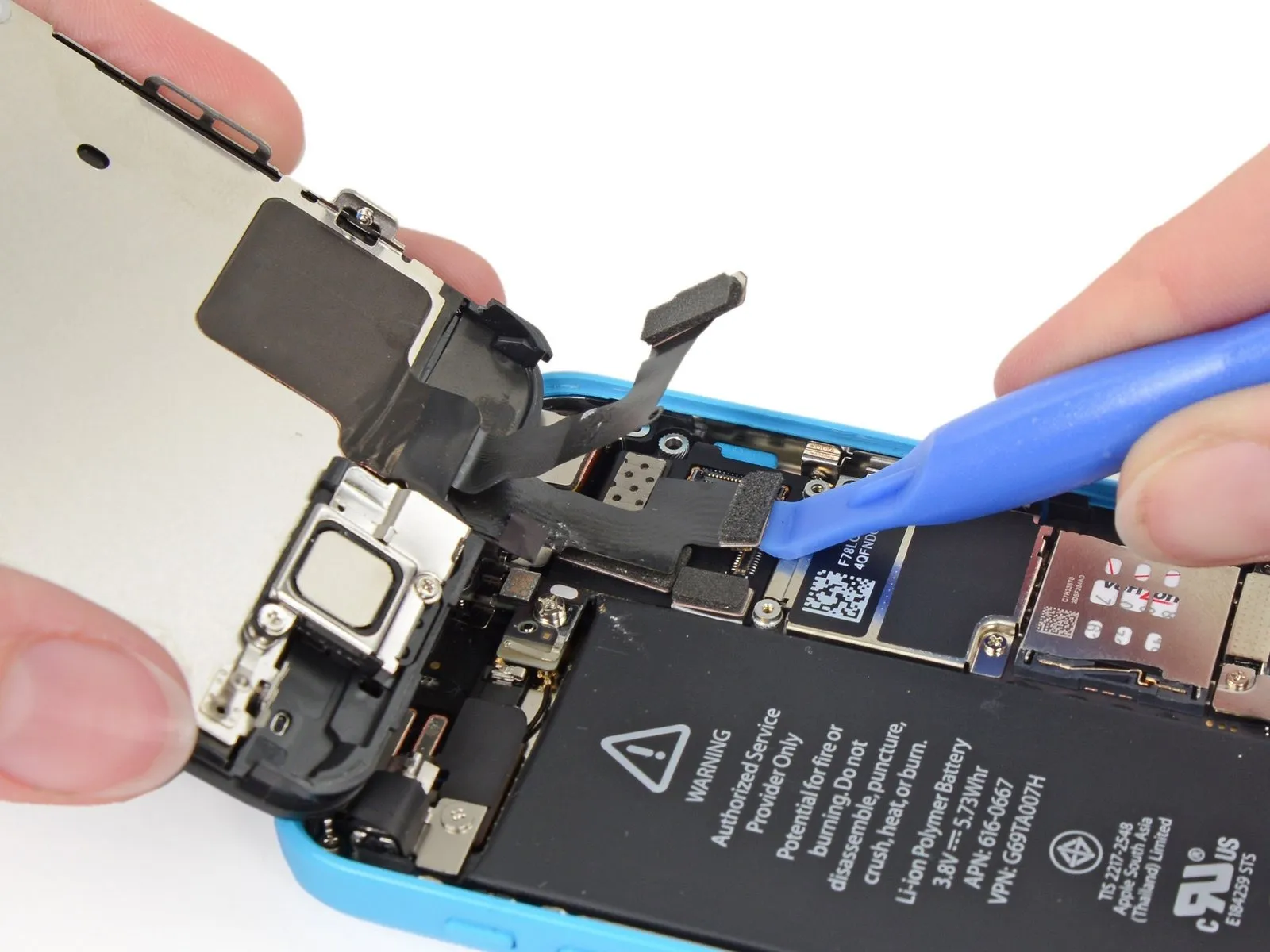
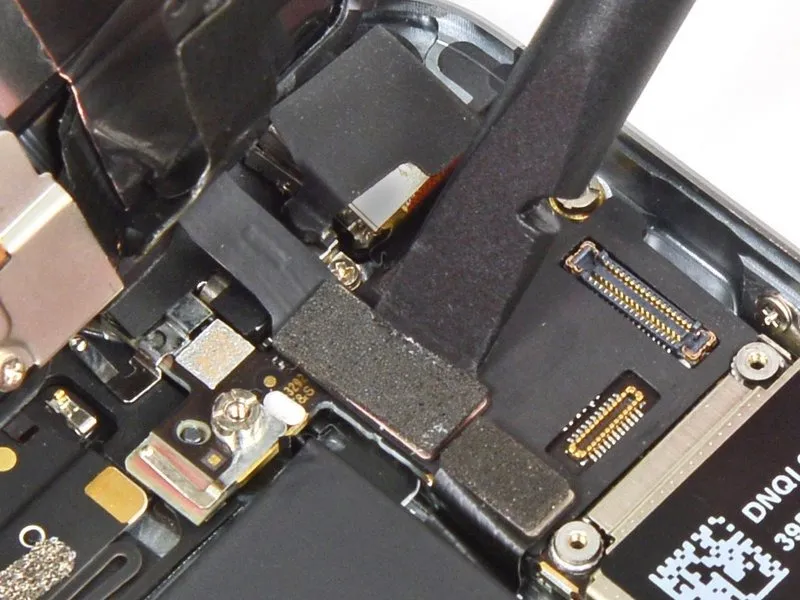
Prior to either detaching or reattaching the cables in this procedure, ensure the battery's power is completely isolated.
Carefully separate the LCD cable connector from its socket using a plastic pry tool or fingernail.
Because the LCD and Digitizer connectors are joined within a single cable assembly, lifting the LCD connector will simultaneously release both connections. Verify complete disconnection of both cables prior to display removal.
A disconnected LCD cable from its connector during reassembly can result in a blank screen or white lines; to resolve this, ensure the cable is properly seated and restart the device by briefly removing and reinstalling the battery.
Carefully separate the LCD cable connector from its socket using a plastic pry tool or fingernail.
Because the LCD and Digitizer connectors are joined within a single cable assembly, lifting the LCD connector will simultaneously release both connections. Verify complete disconnection of both cables prior to display removal.
A disconnected LCD cable from its connector during reassembly can result in a blank screen or white lines; to resolve this, ensure the cable is properly seated and restart the device by briefly removing and reinstalling the battery.
Step 16 | Separating front panel assembly and rear case

Detach the front panel assembly from the rear case.
Step 17 | Earpiece Speaker

Using a Phillips #000 screwdriver, detach the upper component bracket from the display assembly by unscrewing and removing the two screws that hold it in place.
A screw with a 4.2-millimeter head diameter is required.
A screw with a 2.3 mm head diameter is required.
A screw with a 4.2-millimeter head diameter is required.
A screw with a 2.3 mm head diameter is required.
Step 18


Carefully slide the spudger's flat edge between the earpiece speaker bracket and the display assembly to disengage it.
Step 19

Carefully detach the earpiece speaker component from the iPhone.
Step 20 | Front-Facing Camera and Sensor Cable

A light adhesive secures the front camera and its associated cable to the display assembly.
Employing an iOpener to reduce the adhesive's bond strength facilitates safer removal; consult the iOpener instructions for proper usage.
To minimize the risk of harm to the sensitive cable assembly, performing this optional procedure is recommended.
Employing an iOpener to reduce the adhesive's bond strength facilitates safer removal; consult the iOpener instructions for proper usage.
To minimize the risk of harm to the sensitive cable assembly, performing this optional procedure is recommended.
Step 21


Carefully align the 4mm diameter dowel pins with their corresponding holes in both the upper and lower chassis halves, then gently press the two sections together until flush, ensuring no gaps remain and avoiding damage to the pins.
Carefully lift the earpiece speaker contact cable away from its adhesive attachment using the tip of a spudger.
The proximity sensor's operation depends on the small, square component—a combined plastic and metal fixture—which secures it in place.
When substituting the proximity sensor, maintain the holder's secure attachment to the display's rear surface; should the holder detach from the display along with the old sensor, carefully separate it from the discarded sensor and apply a small amount of adhesive to reposition it on the display's back.
Carefully lift the earpiece speaker contact cable away from its adhesive attachment using the tip of a spudger.
The proximity sensor's operation depends on the small, square component—a combined plastic and metal fixture—which secures it in place.
When substituting the proximity sensor, maintain the holder's secure attachment to the display's rear surface; should the holder detach from the display along with the old sensor, carefully separate it from the discarded sensor and apply a small amount of adhesive to reposition it on the display's back.
Step 22


Carefully align the 4mm diameter dowel pins with their corresponding holes in both the upper and lower chassis halves, then gently press the two sections together until flush, ensuring no gaps exist and avoiding damage to the pins.
Using a spudger, gently pry the microphone upward from its molded position within the display assembly.
Using a spudger, gently pry the microphone upward from its molded position within the display assembly.
Step 23 | Front-Facing Camera and Sensor Cable


Carefully align the 4mm hex key to the setscrew located on the motor shaft, ensuring it is securely seated, then rotate the key clockwise until the setscrew is fully tightened, preventing loosening during operation, and always observe the torque specification of 1.2 Nm.
Detach the cable assembly from the LCD shield plate by gently separating them, exercising caution to avoid damage.
Avoid contact with the digitizer and LCD cables during removal of the front-facing camera and sensor assembly; these components are delicate and easily damaged.
Detach the cable assembly from the LCD shield plate by gently separating them, exercising caution to avoid damage.
Avoid contact with the digitizer and LCD cables during removal of the front-facing camera and sensor assembly; these components are delicate and easily damaged.