iPhone 7 Power and Volume Control Cable Replacement
Employ this instructional document to substitute a faulty power and volume button cable assembly, encompassing the operational mechanisms foradjusting volume levels, muting or enabling the ringer, and activating the power function.This cable also incorporates a microphone and a dual-light emitting diode (LED) flash unit.
- Adhere to the instructions detailed within this guide should you intend to substitute the external power button cover.
- Consult the separate guide when your objective is to replace the external volume control button cover.
Step 1 | Pentalobe Screws
- As a preliminary precaution, ensure your iPhone's battery has been depleted to a level below 25% prior to commencing the repair process.A fully charged lithium-ion batteryposes a risk of ignition and/or detonation if it sustains accidental physical damage, such as a puncture.
- Deactivate your iPhone by powering it down completely before you start disassembling it.
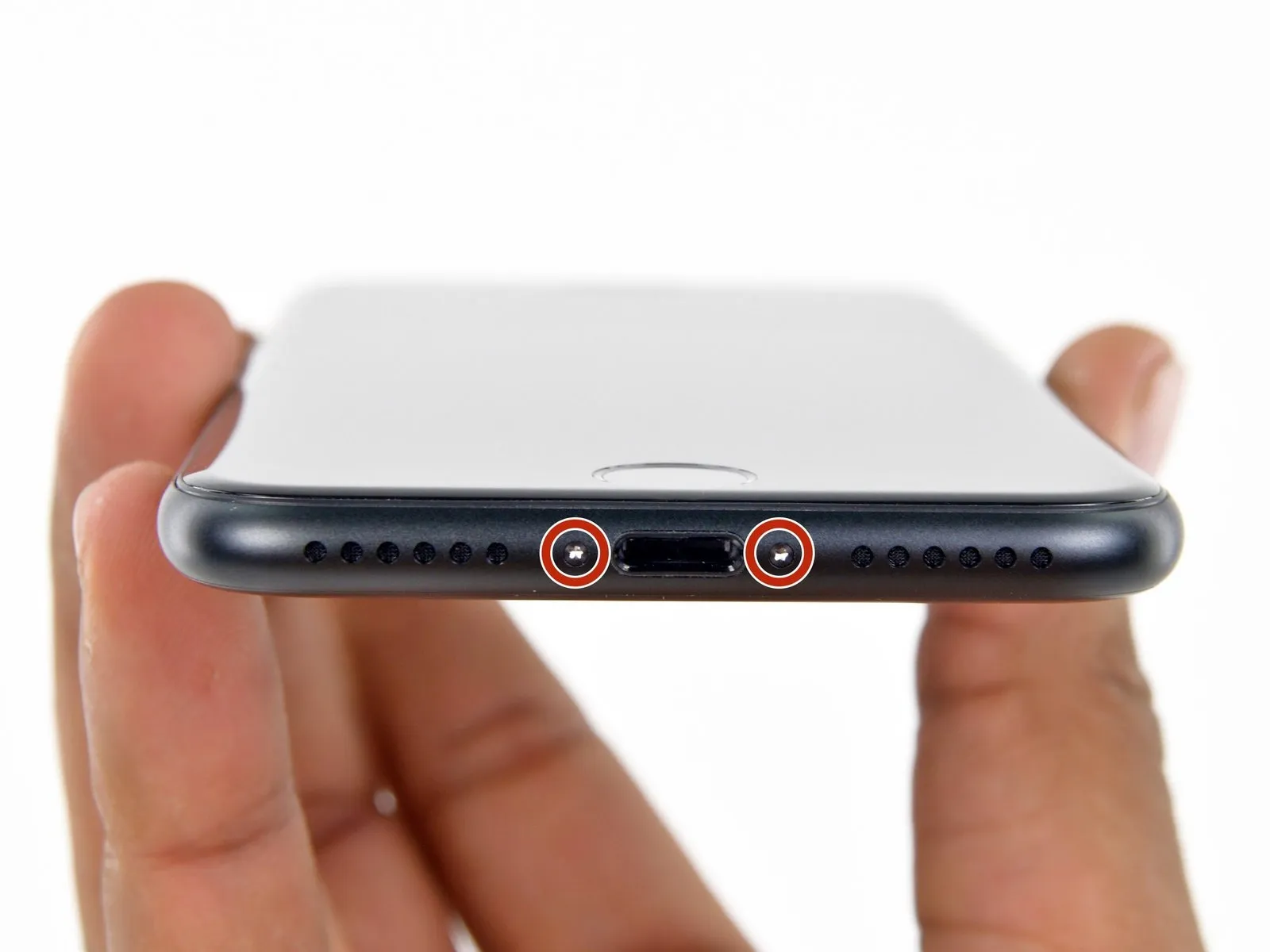
- Using a screwdriver, unscrew and remove the pair of 3.4 mm pentalobe screws situated along the iPhone's lower edge.
- Separating the iPhone's display assembly will damage the integrated waterproof seals; therefore, prepare replacement seals beforehand to prevent liquid ingress, or exercise extreme caution to prevent moisture exposure if you intend to reassemble the iPhone without new seals.
Step 2 | Mark your opening picks


- To avoid potential harm to your device, ensure the opening pick isn't inserted beyond its intended depth; this procedure details how to identify the safe insertion point by marking the pick, thereby minimizing the risk of damage.
- Determine the distance of3 mmfrom the pick's leading edge and use a permanent marker to create a visible indicator on the opening pick.
- For additional reference, consider marking the other corners of the pick with varying measurements to aid in precise positioning.
- As another option, affix a coin to the pick's shaft,3 mmaway from the tip, to serve as a depth gauge.
Step 3 | Anti-Clamp instructions


The following three procedures illustrate the function of the Anti-Clamp, a specialized tool developed to simplify the initial opening process; should you choose not to utilize this tool, proceed past three steps to an alternative approach.
Detailed guidance regarding the Anti-Clamp's operation can be found in a separate, dedicated instructional document.
- To release the locking mechanism, draw the blue handle in a rearward direction, which will disengage the Anti-Clamp's arms.
- Carefully position the arms across either the left or right side of your iPhone's frame.
- Place the suction cups close to the lower edge of the iPhone, situated directly above the home button—one on the front face and one on the rear.
- Apply pressure by compressing the cups together to create a secure vacuum seal on the intended area.
- Should the iPhone's surface prove too smooth for the Anti-Clamp to maintain a firm grip, applying adhesive tape can provide a more textured interface.
Step 4


- To secure the arm assemblies, advance the blue handle in a forward direction.
- Rotate the handle in a clockwise directionthrough a full 360-degree arcor until the vacuum cups begin to deform.
- Maintain proper alignment between the suction cups; should misalignment occur, slightly release the suction cups and reposition the arms.
Step 5


- Employ a heating device, such as an iOpener and carefully guide it between the arms of the Anti-Clamp.
- Alternative heat sources, including hair dryers, heat guns, or hot plates, are acceptable; however, exercise caution as excessive temperatures may compromise the display or internal battery.
- Position the iOpener to rest along the lower edge of the iPhone’s casing.
- Allow a sixty-second interval to permit the adhesive to soften and create a separation.
- Introduce an opening tool into the newly formed space.
- Should the Anti-Clamp fail to establish an adequate separation, increase the heat applied to the area and rotate the handle by ninety degrees.
- Avoid excessive rotation, limiting adjustments to ninety-degree increments, and observe a sixty-second pause between each rotation. Rely on the Anti-Clamp and time to facilitate the separation process.
Step 6 | Heat the display
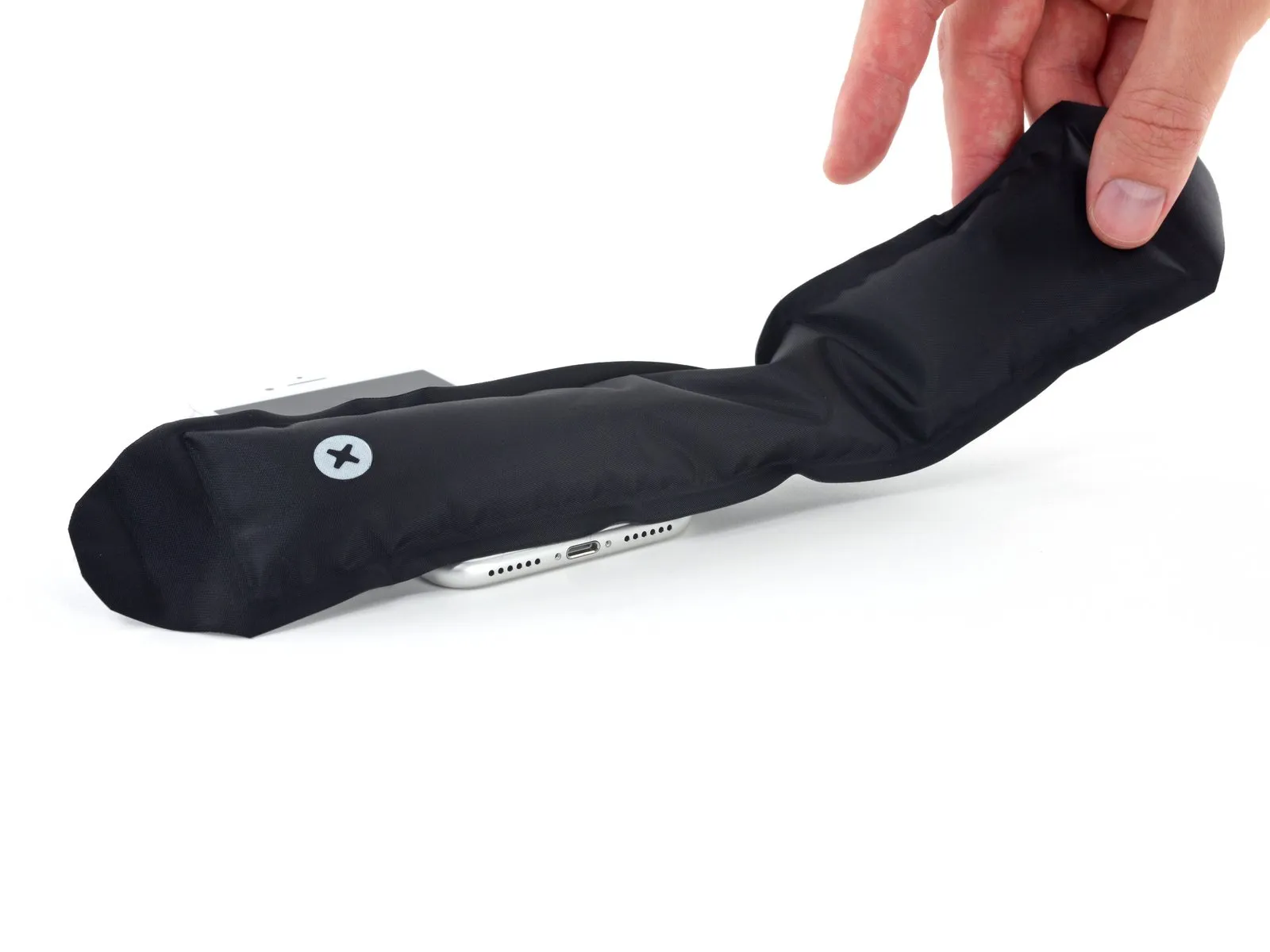
The following three procedures detail the process of detaching the display assembly with the aid of a suction cup.
Applying heat to the bottom edge of the iPhone facilitates the loosening of the adhesive bonds holding the display in place, thereby simplifying the separation process.
Employ a hairdryer, or alternatively prepare aniOpenerand apply it to the lower edge of the device for approximately 90 seconds to reduce the adhesive's tackiness.
Step 7 | Separate the display
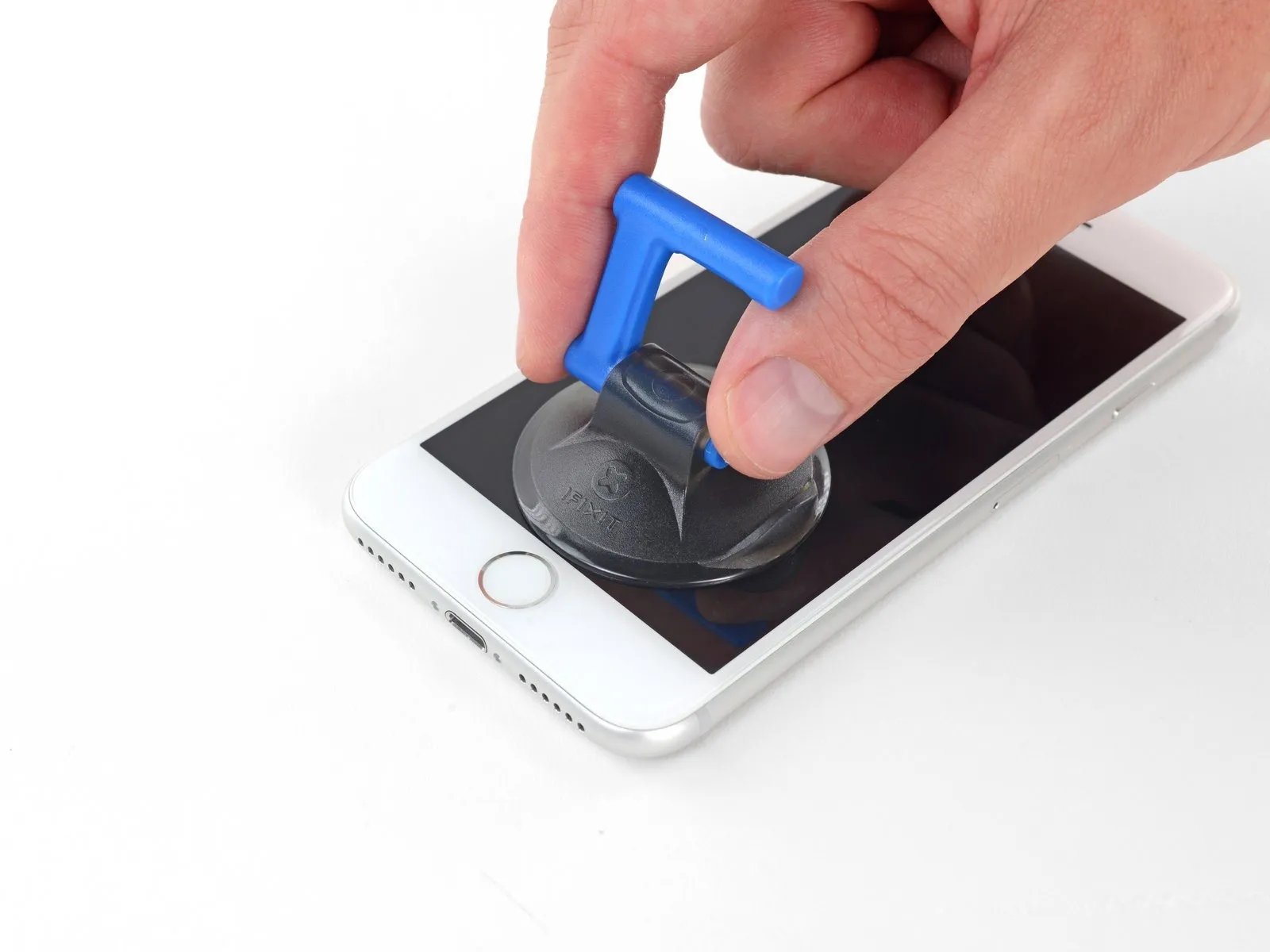

Securely attach a suction cup to the bottom portion of the front panel, positioning it directly over the home button area.
Ensure the suction cup's surface remains clear of the home button's location, because overlapping it will obstruct the creation of a tight bond between the suction device and the glass.
Step 8
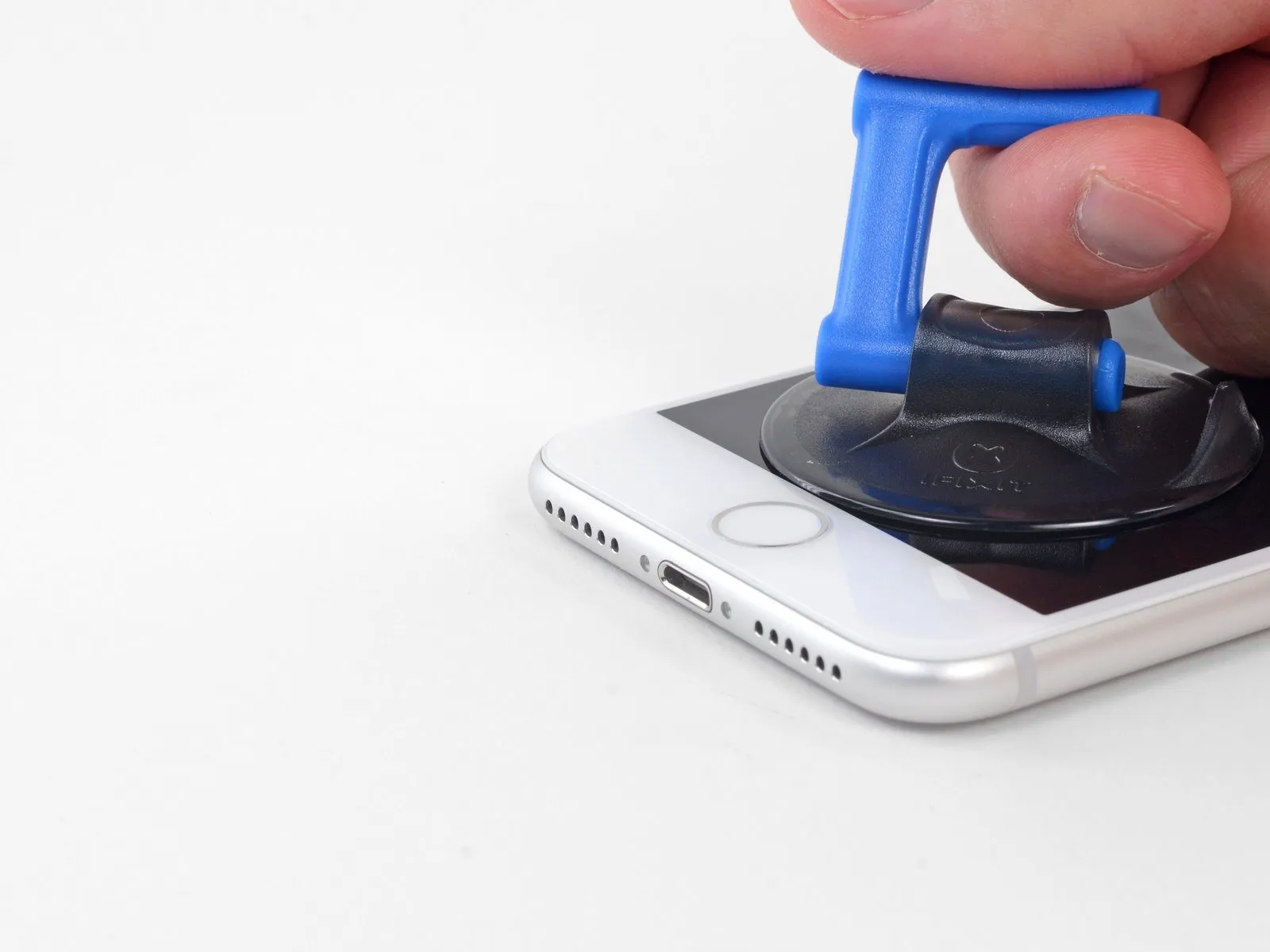


Apply steady, forceful upward pressure to the suction cup to generate a small separation between the display assembly and the device's surrounding structure.
Carefully slide an opening tool into the newly formed space.
Due to the robust, waterproof sealant securing the display, establishing this initial separation requires considerable exertion; should you encounter difficulty, apply additional heat and gently oscillate the display upward and downward to reduce the adhesive's strength, enabling sufficient space for tool insertion.
Step 9
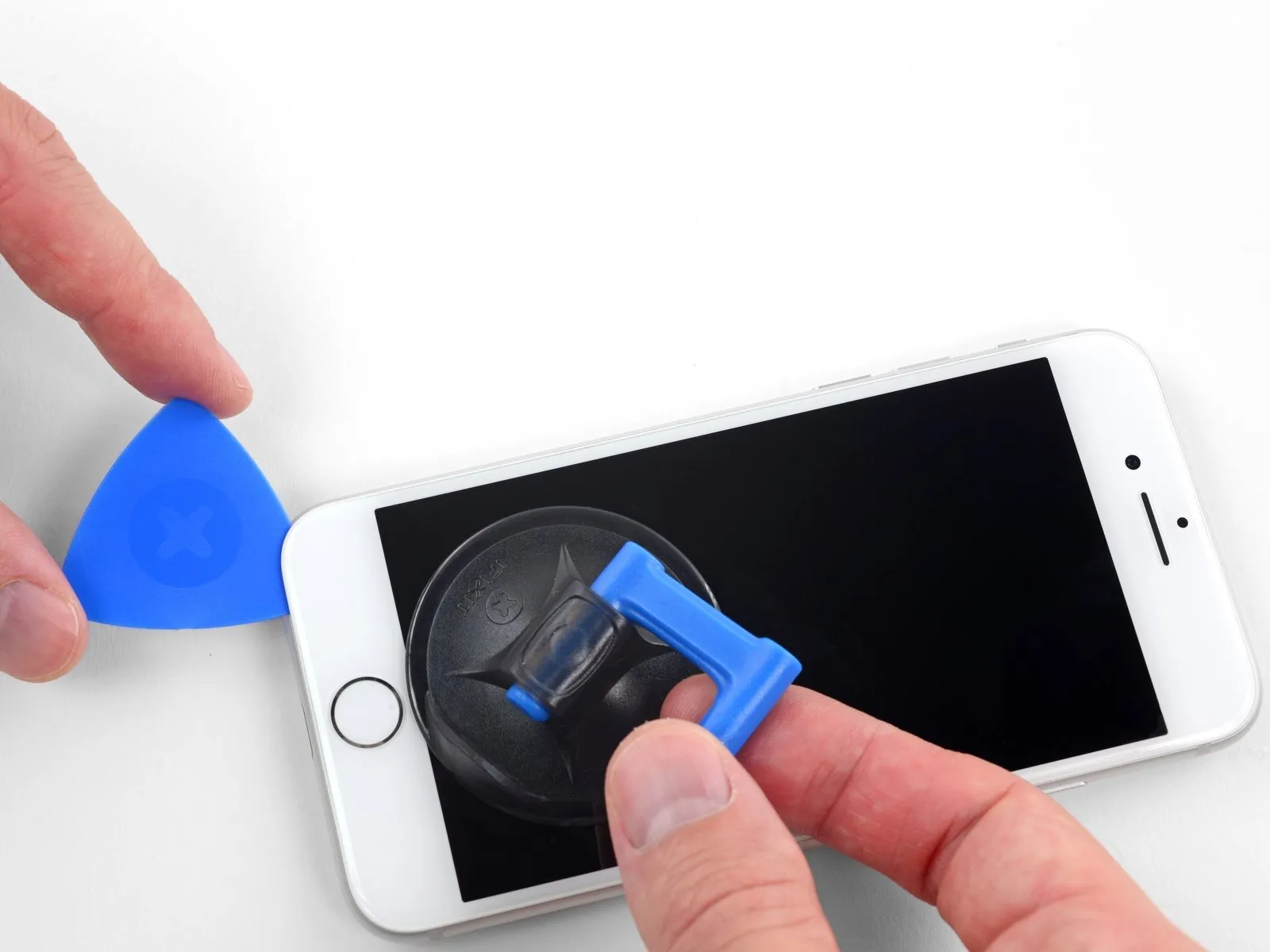


- Begin separating the display assembly from the device's frame by inserting a separation tool beneath the left edge, initiating the process at the bottom and progressing upwards towards the volume controls and the silent switch, effectively disrupting the adhesive bond securing the display.
- Cease the separation procedure close to the upper-left corner of the display panel.
- Refrain from attempting to dislodge the display's upper edge from the rear casing, because it is secured by fragile plastic retaining clips that are susceptible to damage.
Step 10 | Screen information

Along the right side of your iPhone, you'll find sensitive wiring; avoid inserting any tools in this area to prevent potential cable damage.
Step 11
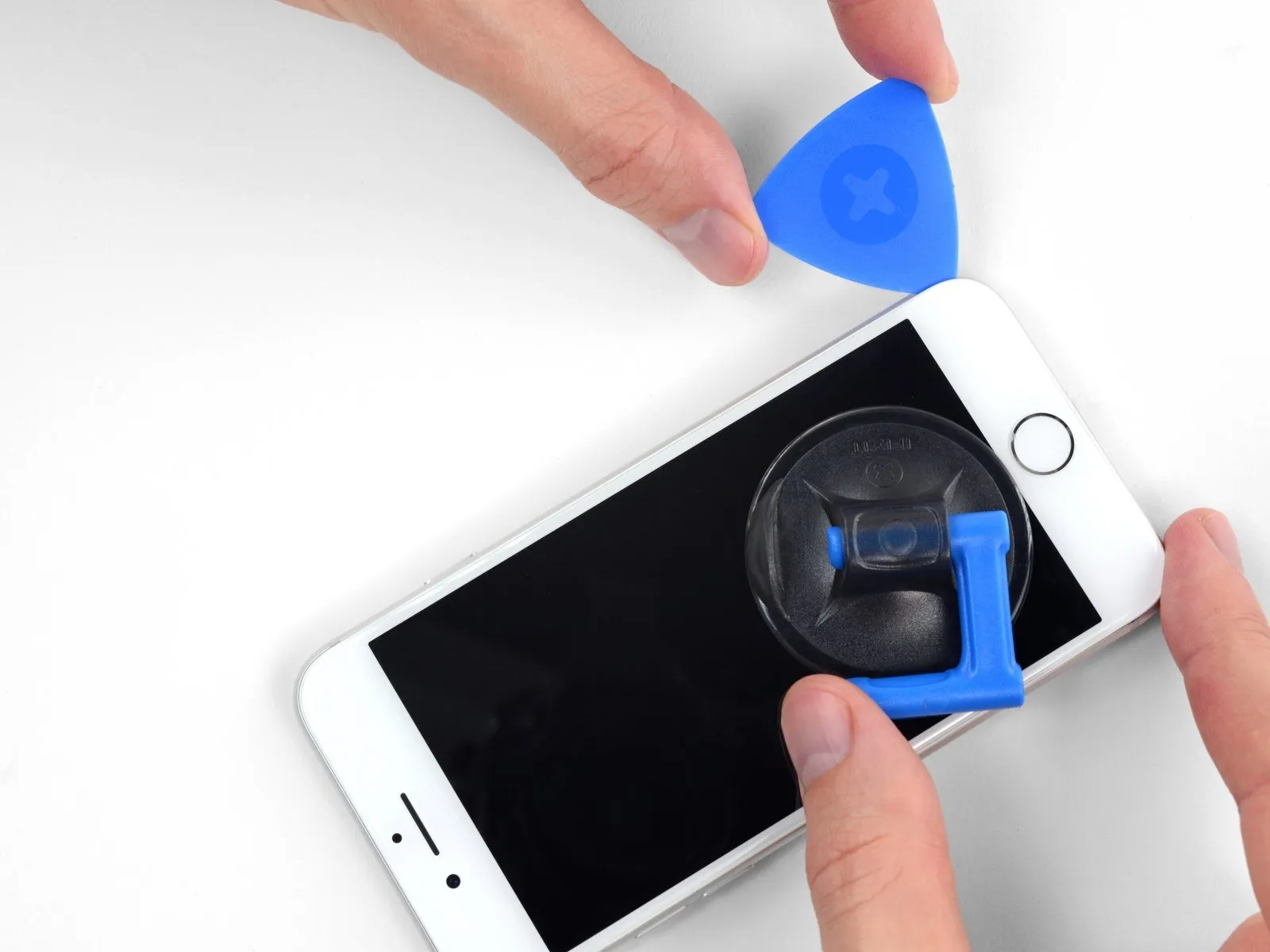


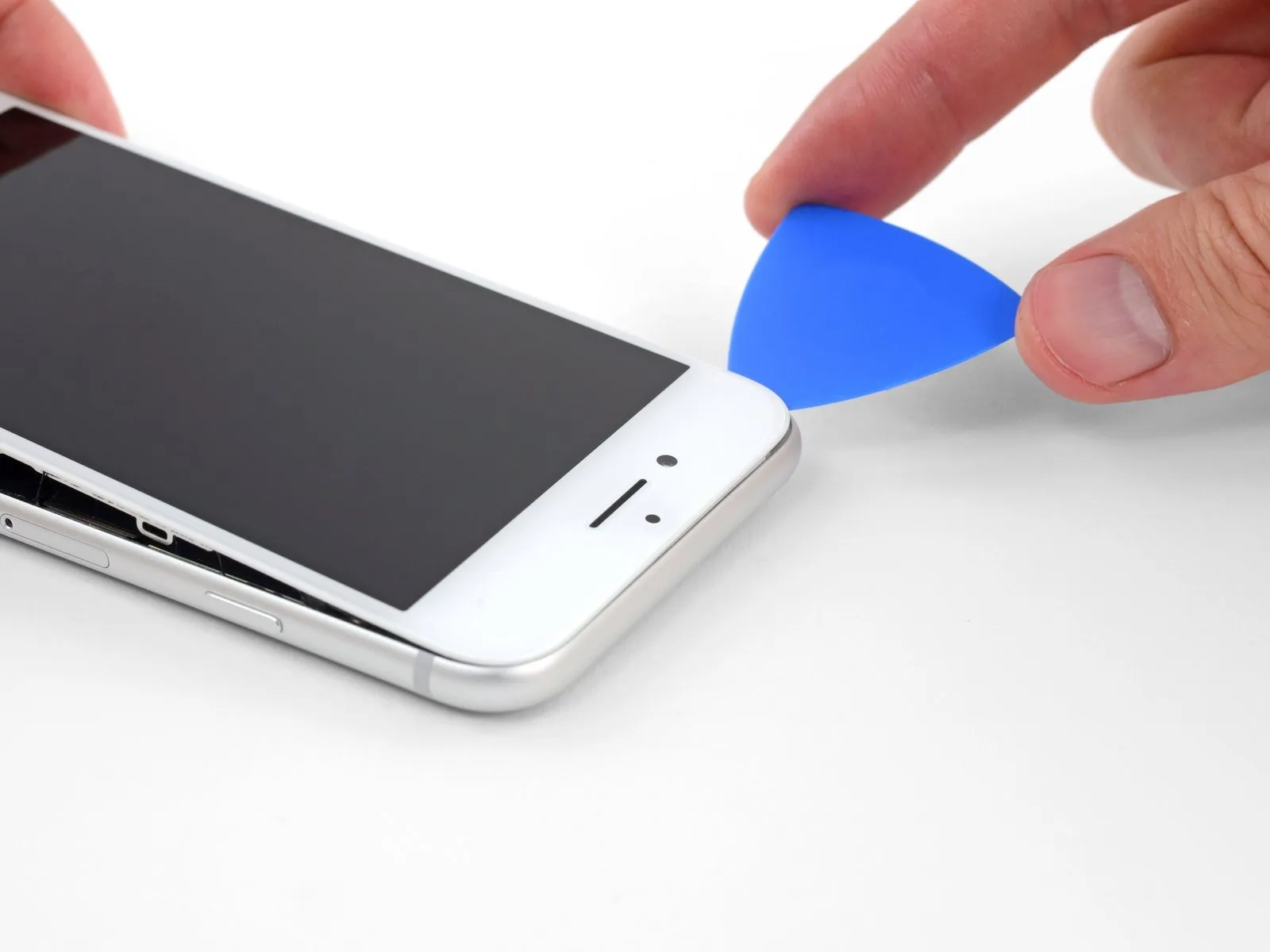
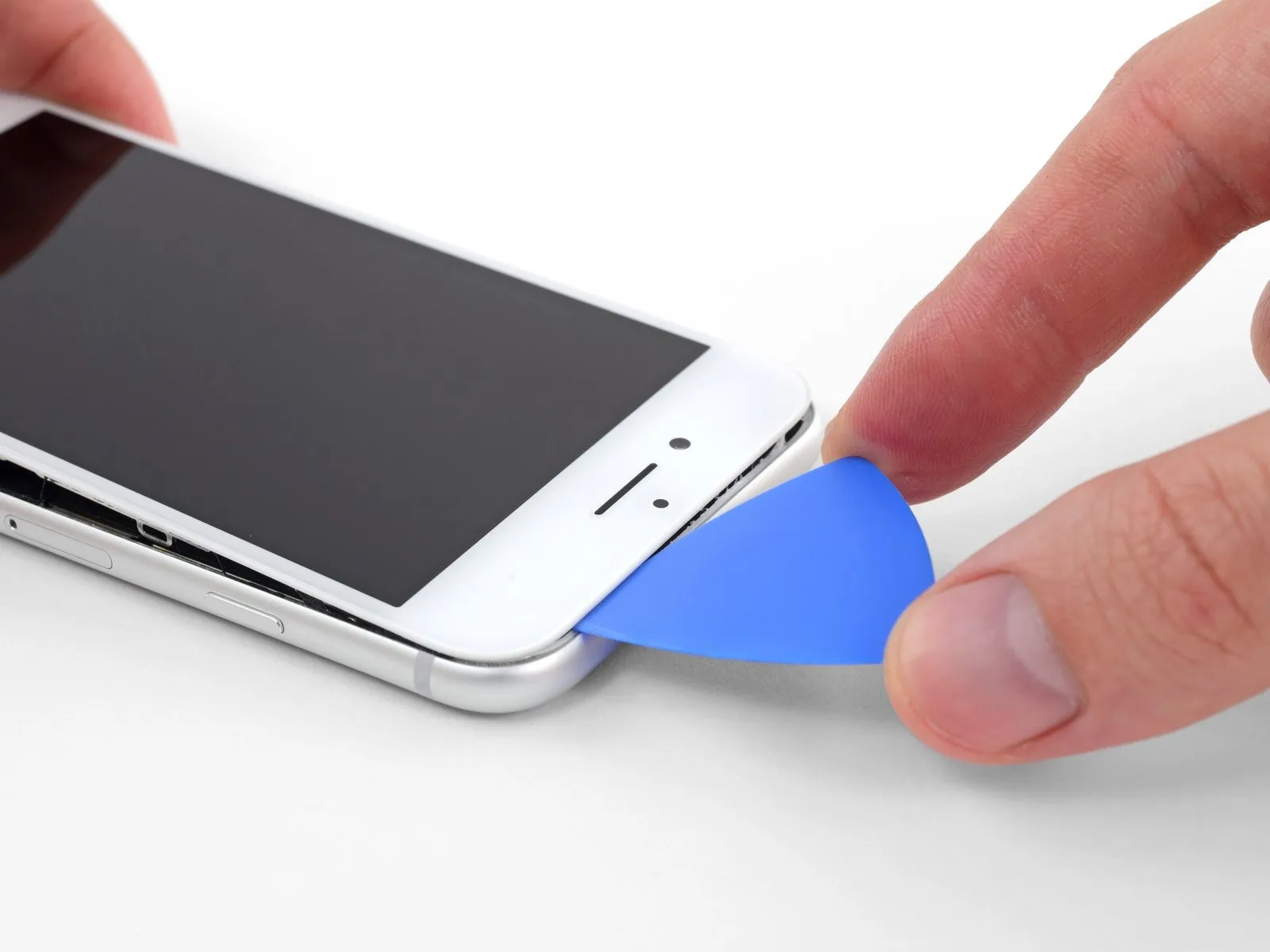
- To release the adhesive, carefully reposition your tool at the lower-right edge of the iPhone, then maneuver it along the corner and up the right side, sliding it to detach the adhesive.
- Ensure your opening tool does not penetrate beyond 3 mm, to prevent potential harm to the delicate display cable connections.
Step 12


- Carefully elevate the display's lower border by applying upward force to the suction cup.
- Avoid raising the display beyond an angle of 15 degreeslest you jeopardize the integrity of the flexible ribbon cables that interface with the display.
- Detach the suction cup from the front panel by grasping and pulling on the small protrusion located on its surface.
Step 13

Step 14


Step 15


Prevent the display from closing by securing it in an elevated position using a support.Avoid forcing separation, as several sensitive ribbon cables remain linked between the display and the iPhone's logic board.
To facilitate your work, position the display at an angle, utilizing a prop to hold it open.
Step 16 | Battery Disconnection
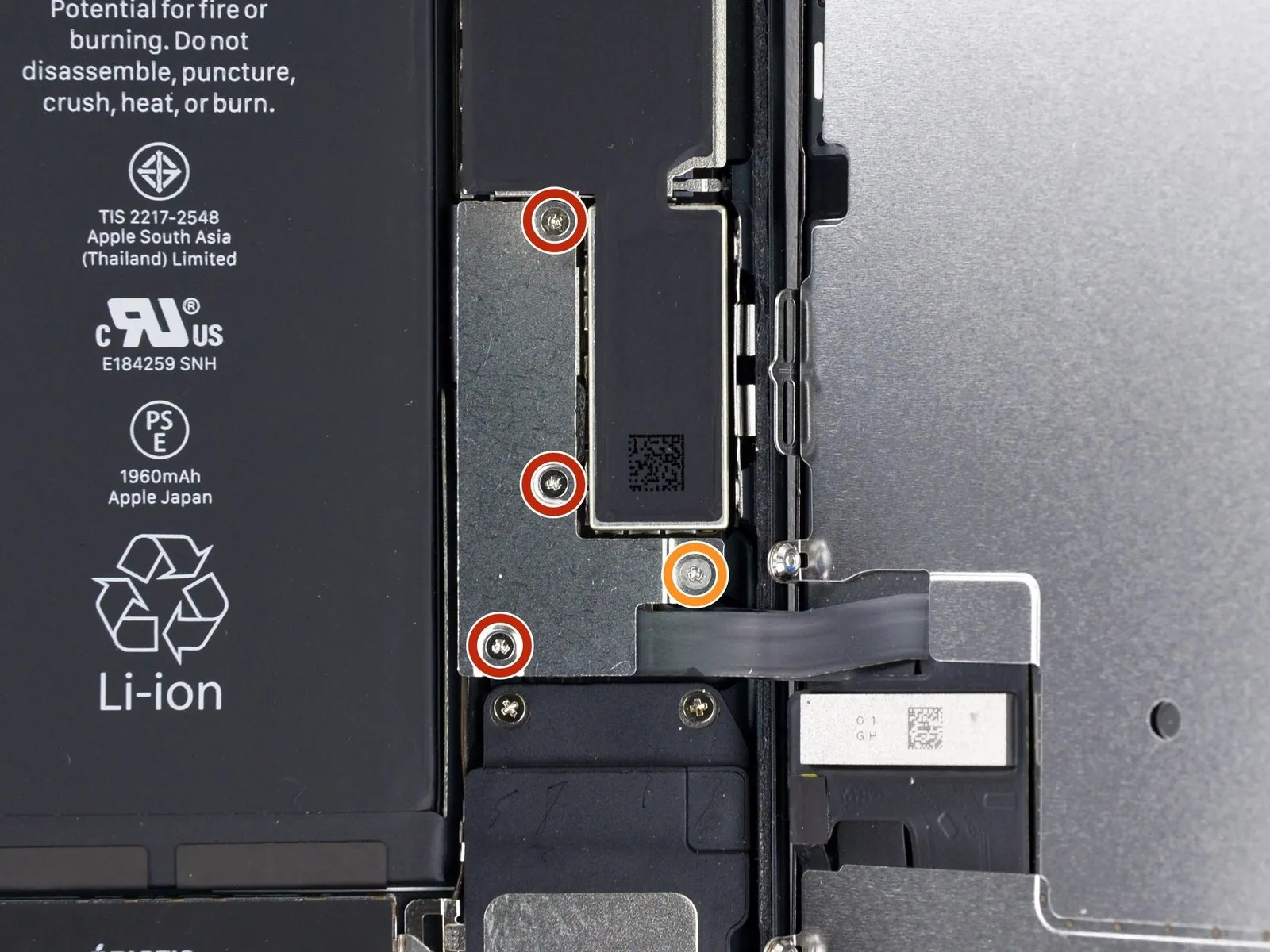
- A quantity of three1.2 millimeters fasteners
- A single2.4 millimeters fastener
Step 17
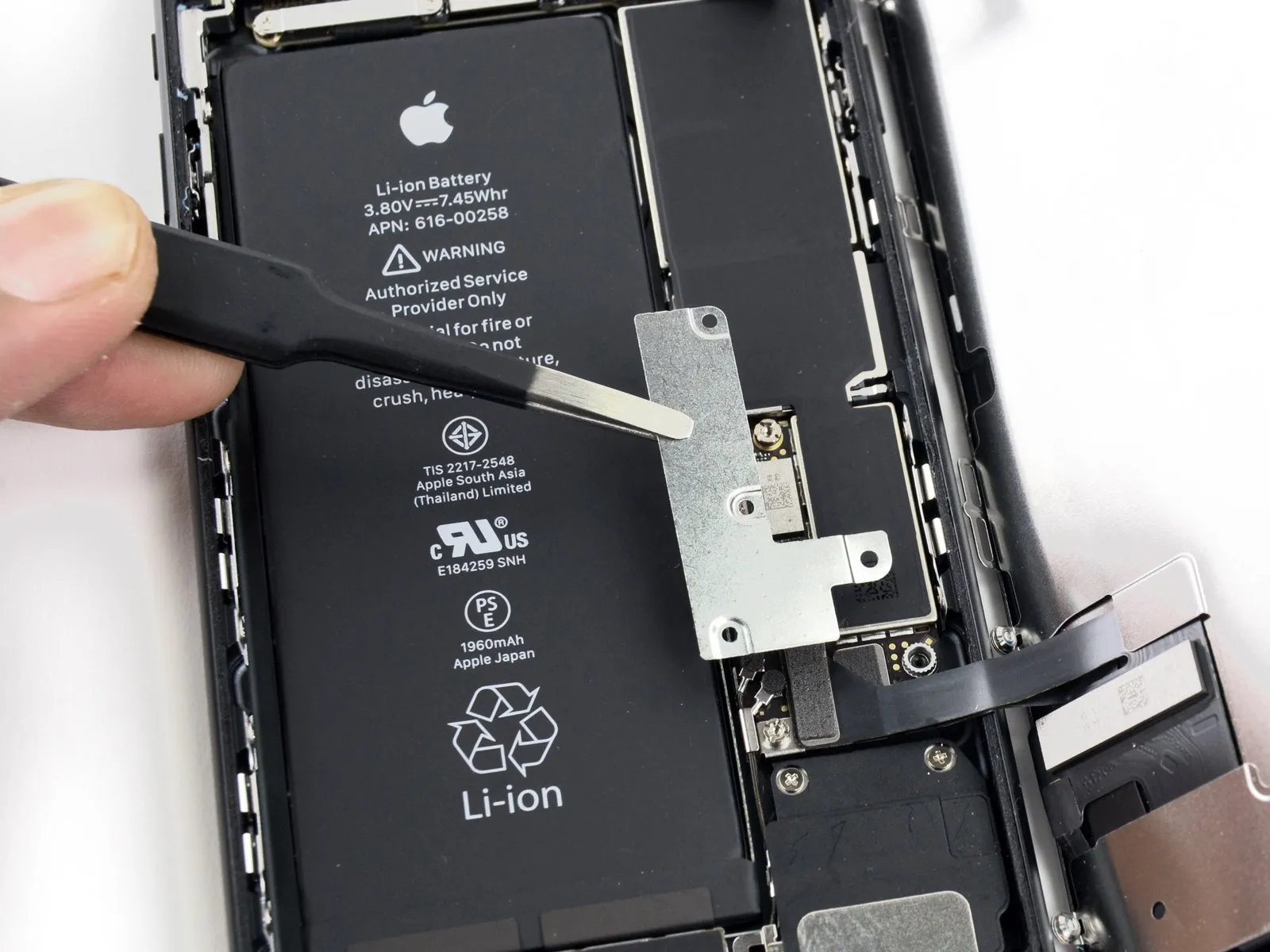
Step 18
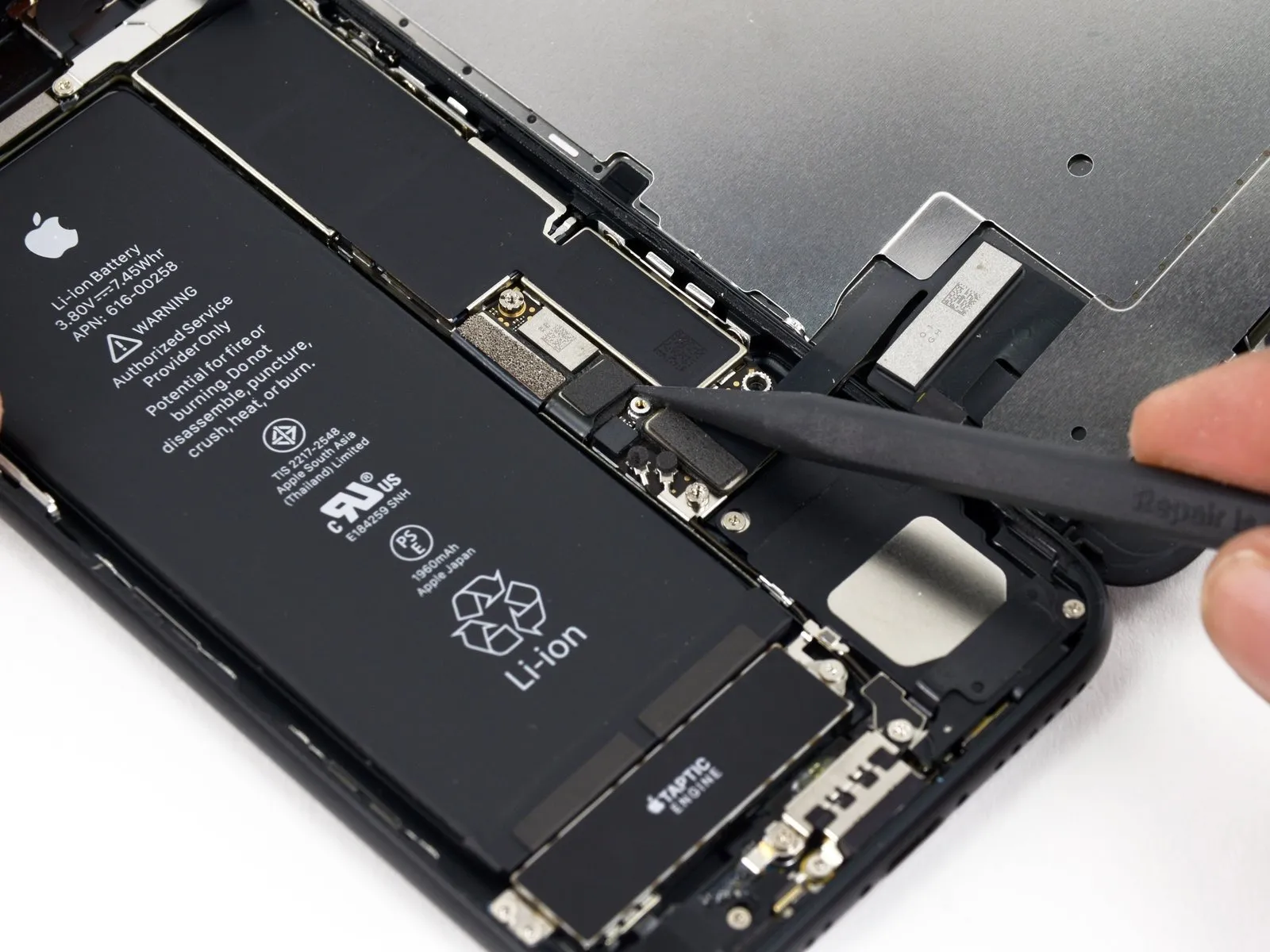
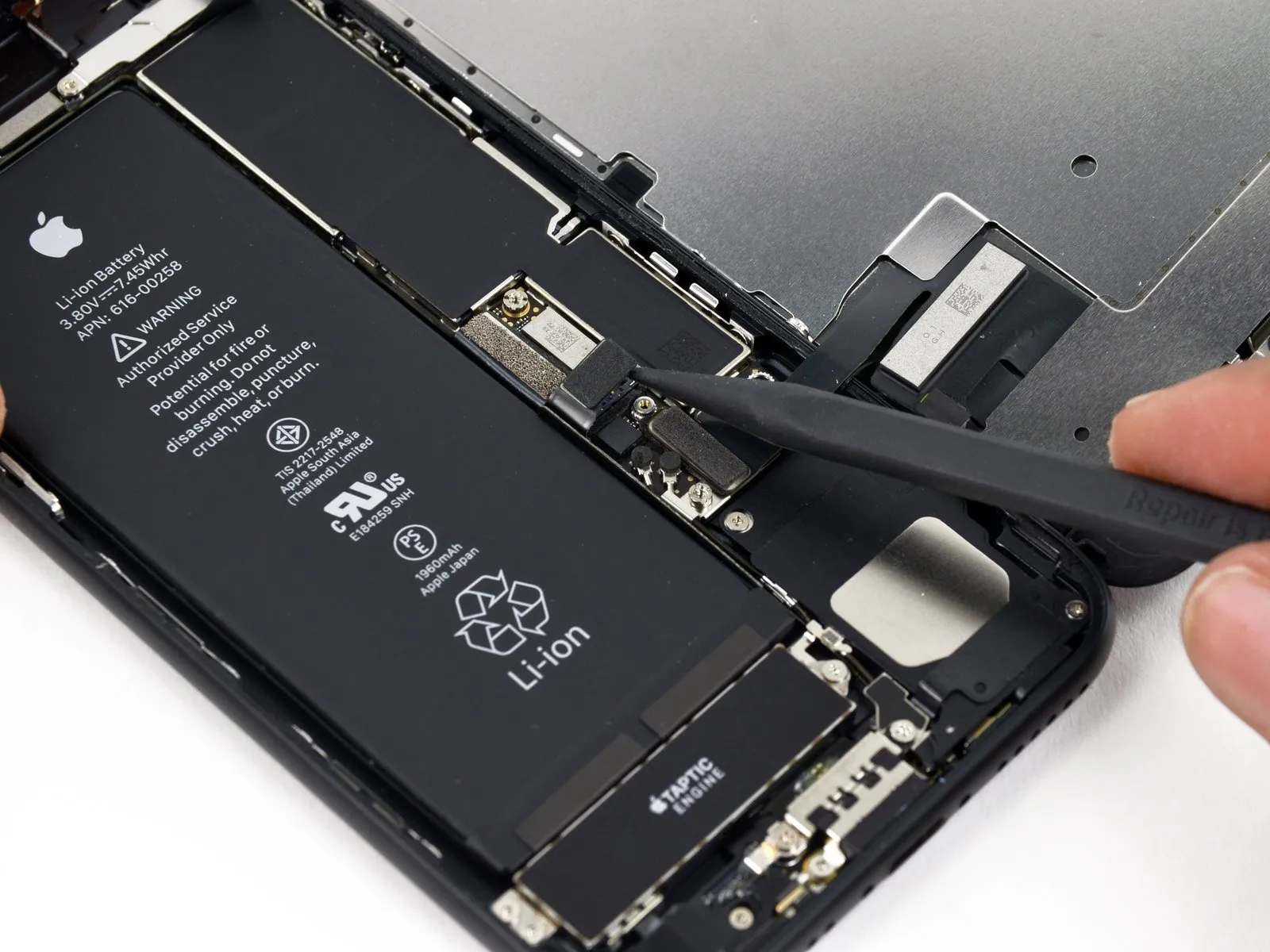
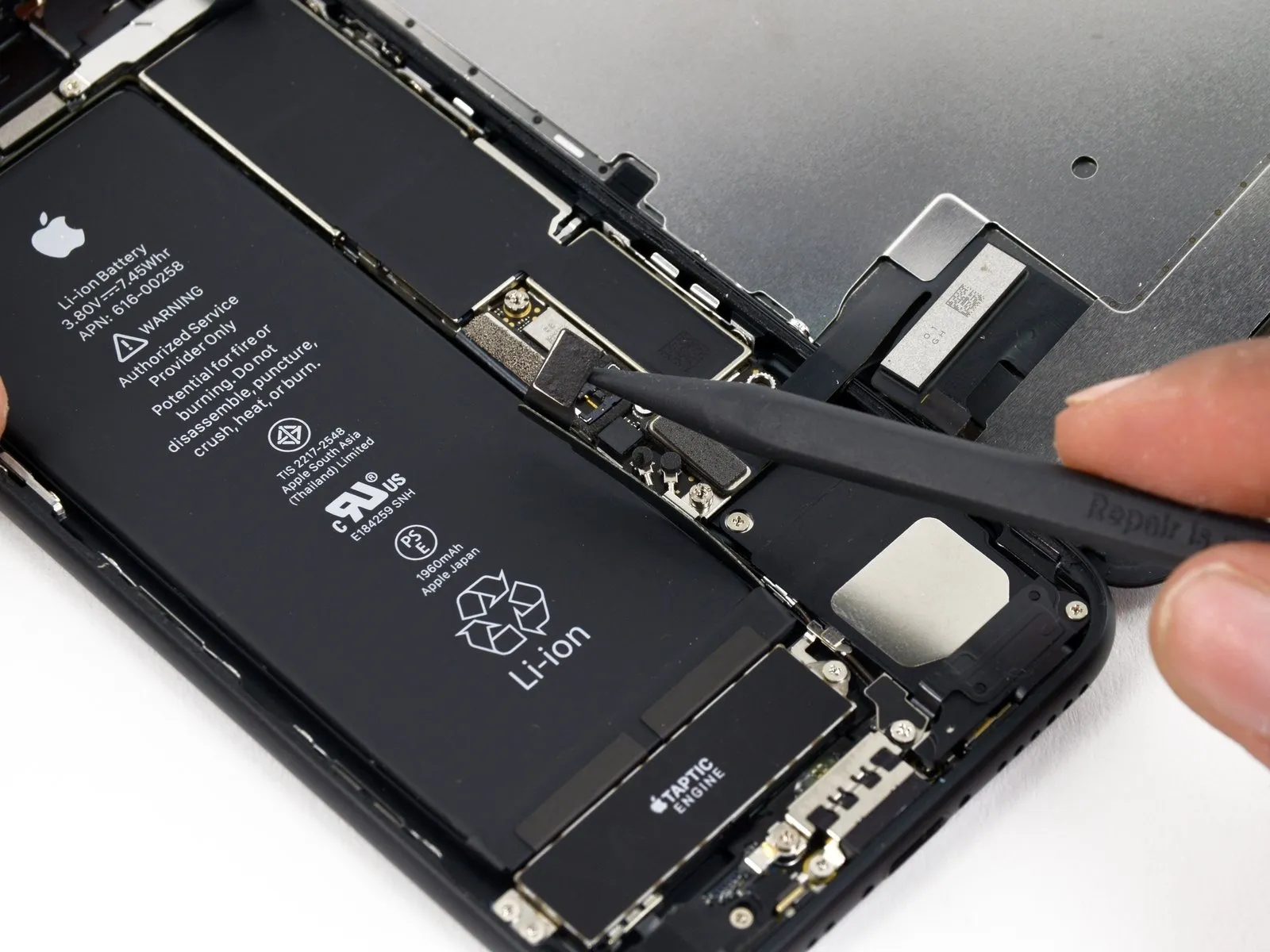
- Employ the tip of a spudgerto disengage the battery connector from its corresponding receptacle on the logic board. Gently elevate the connector's cable to ensure it remains disconnected from the socket, thus preventing any unintended power delivery to the device.
Step 19 | Display Assembly
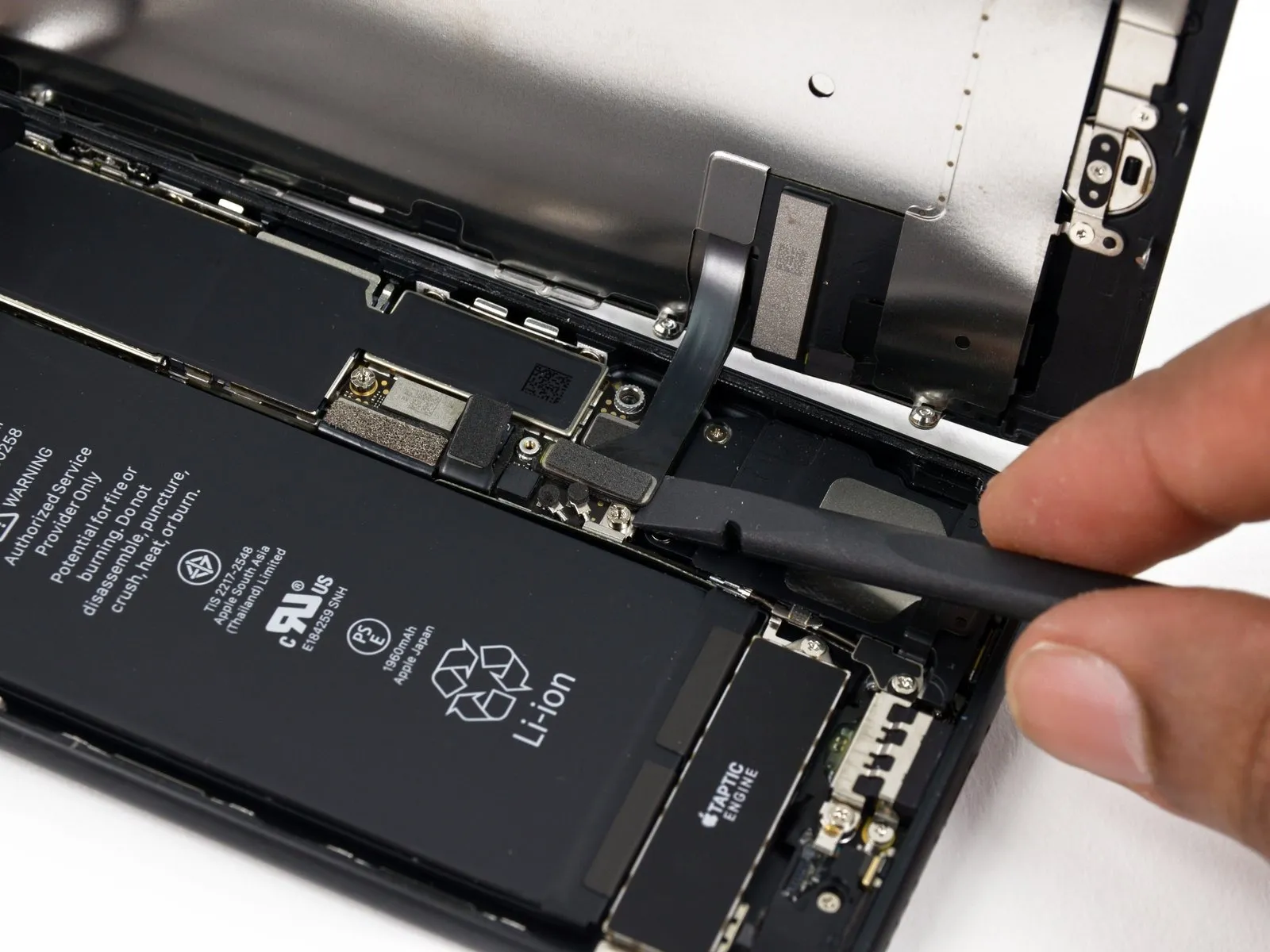
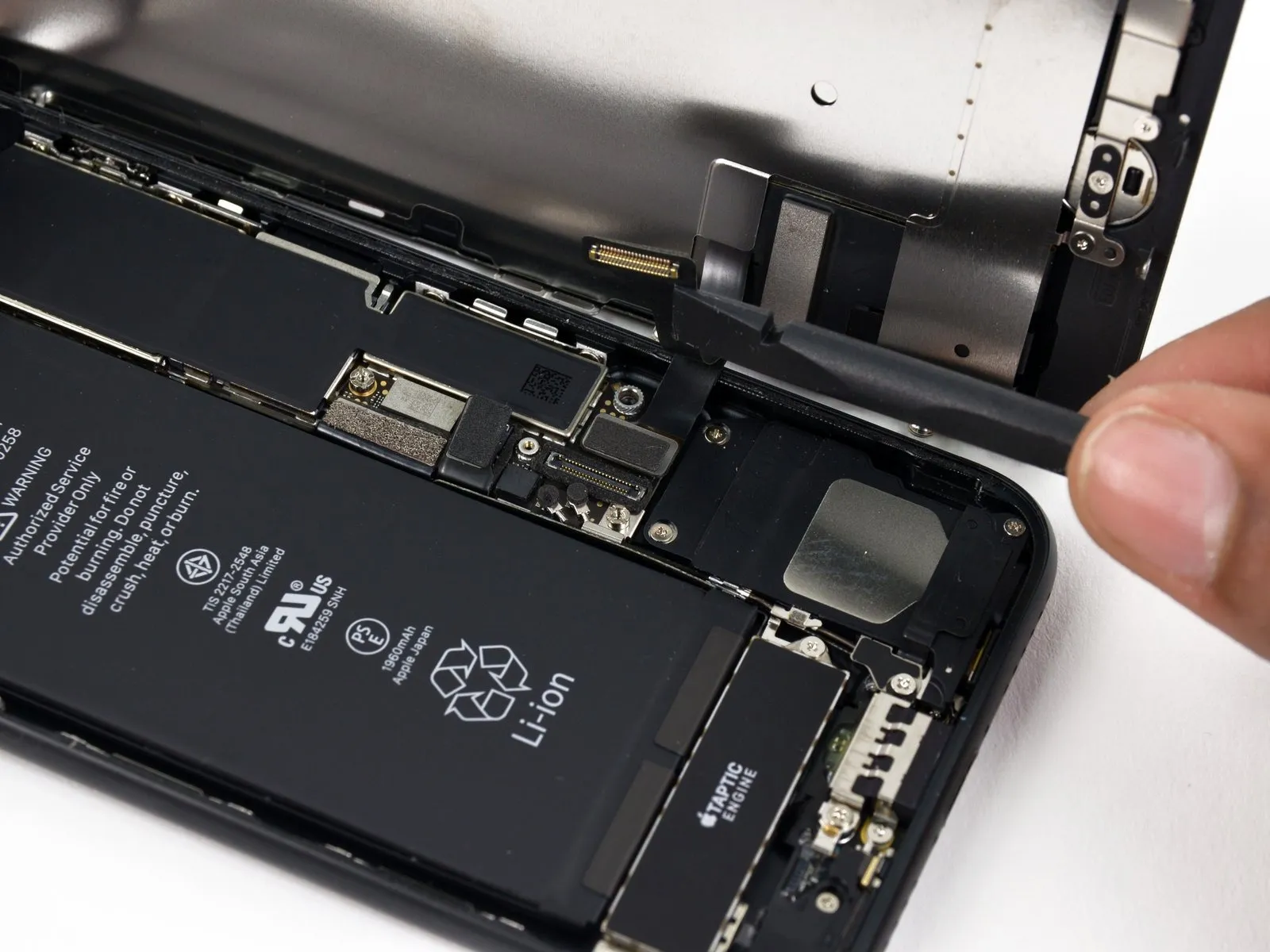
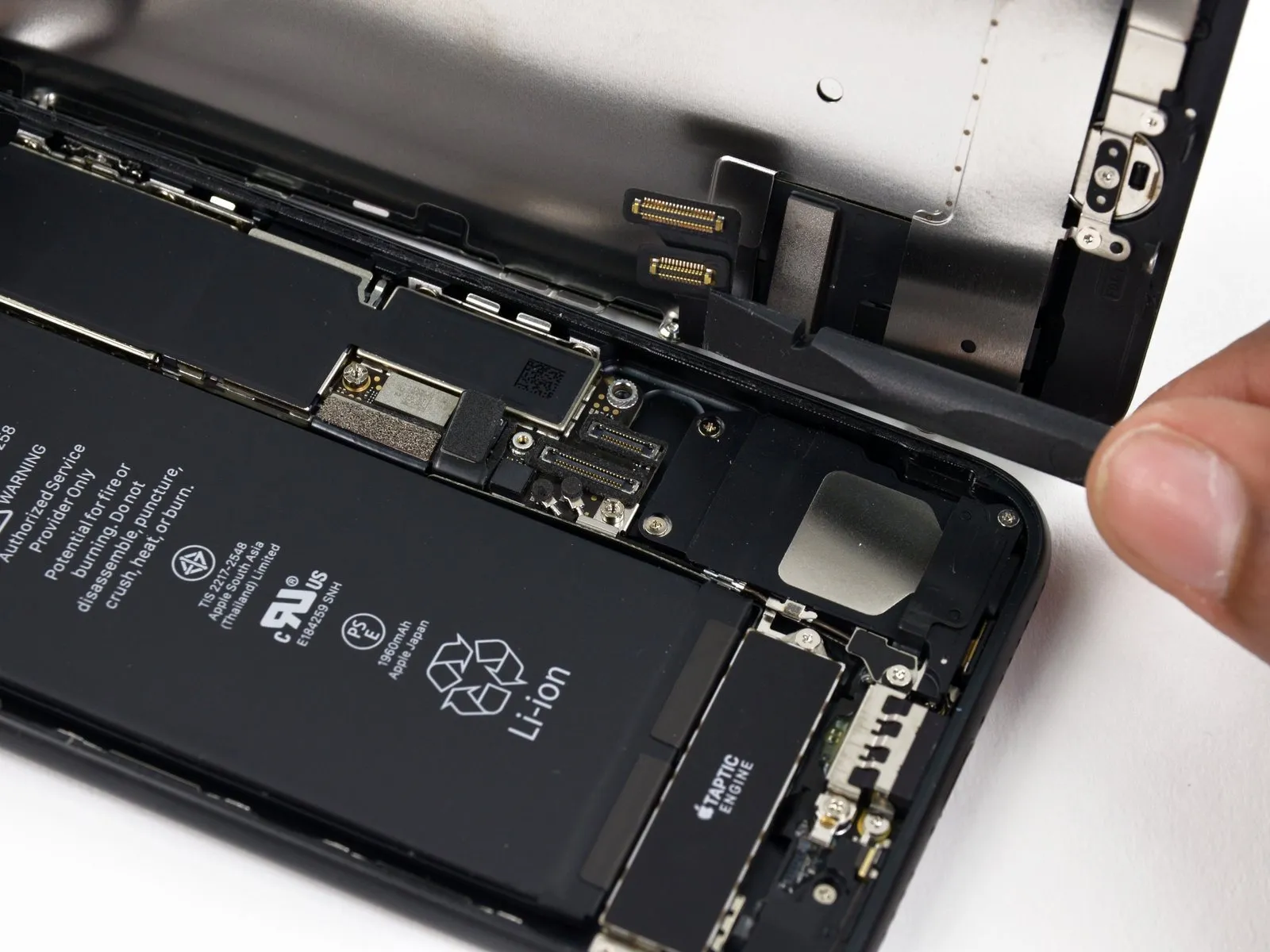
- Prior to proceeding with cable manipulation, ensure the power source is isolated by disconnecting the battery.Before detaching or reattaching the cables within this procedure, it is essential that the battery is disconnected to prevent electrical hazards.
- Employ aspudgeror a fingernail to release the two lower display connectors; achieve this by applying upward pressure directly above the sockets located on the logic board. When reattaching these connectors, apply pressure to one end until a distinct clicking sound is heard, then repeat the process on the opposing end. Avoid applying pressure to the central portion of the connector, as this can lead to bending and irreversible damage. Any minor misalignment during reconnection can result in connector deformation and permanent component failure.
- Should you observe a blank screen, the appearance of white lines on the display, or a diminished or absent touch response following reassembly, attempt to carefully detach and then firmly reseat both connectors to guarantee proper alignment.
Step 20
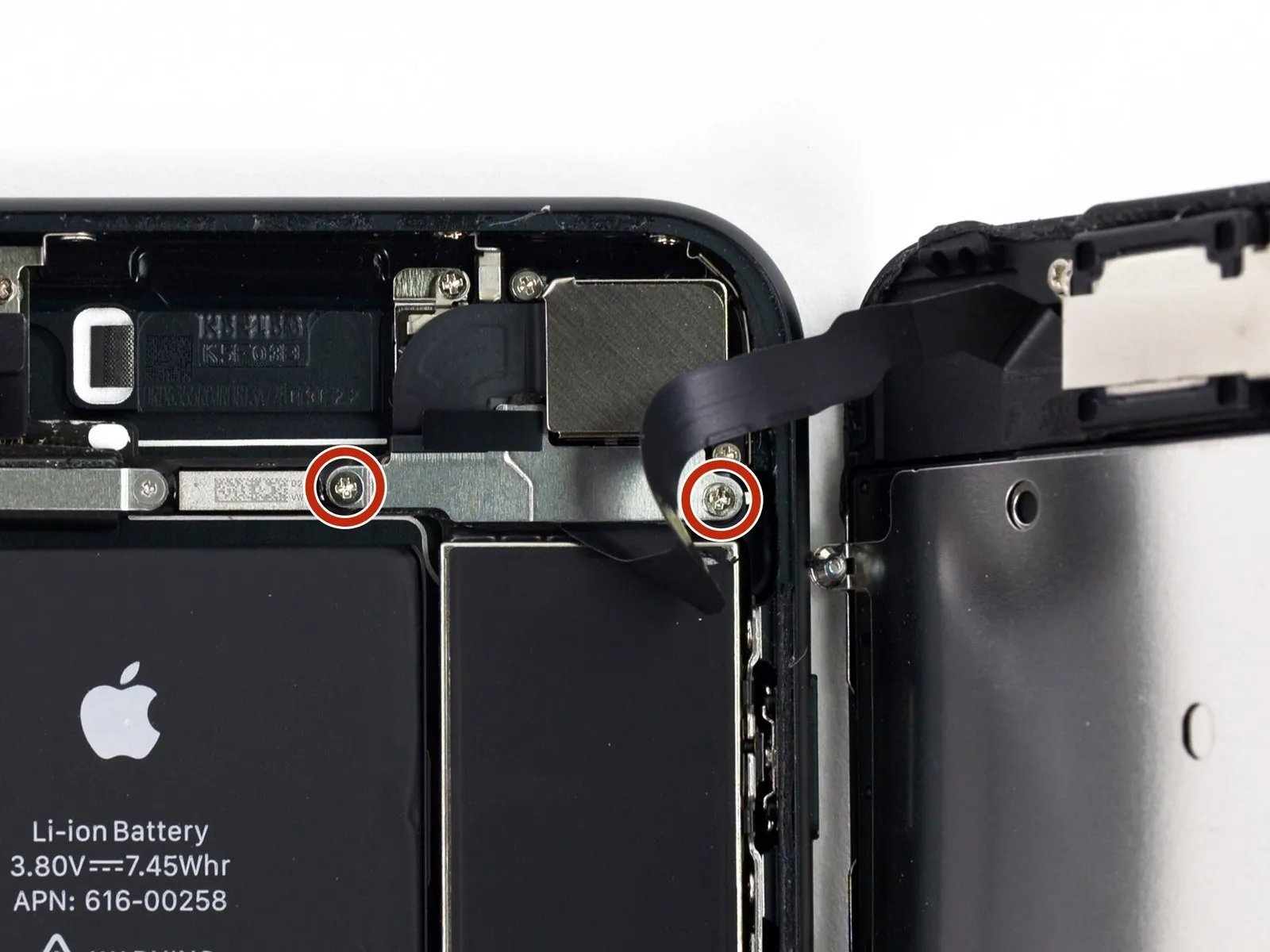
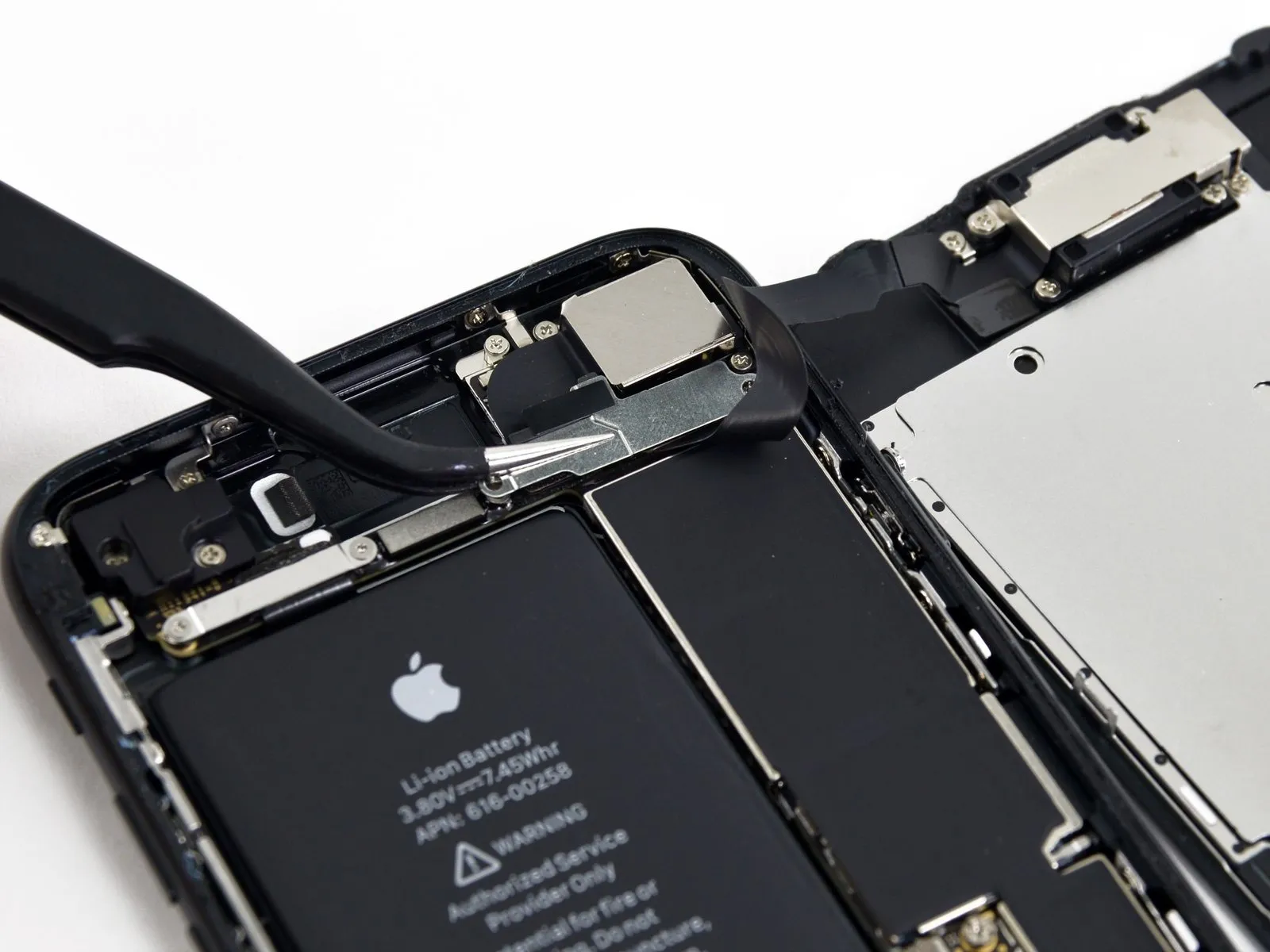
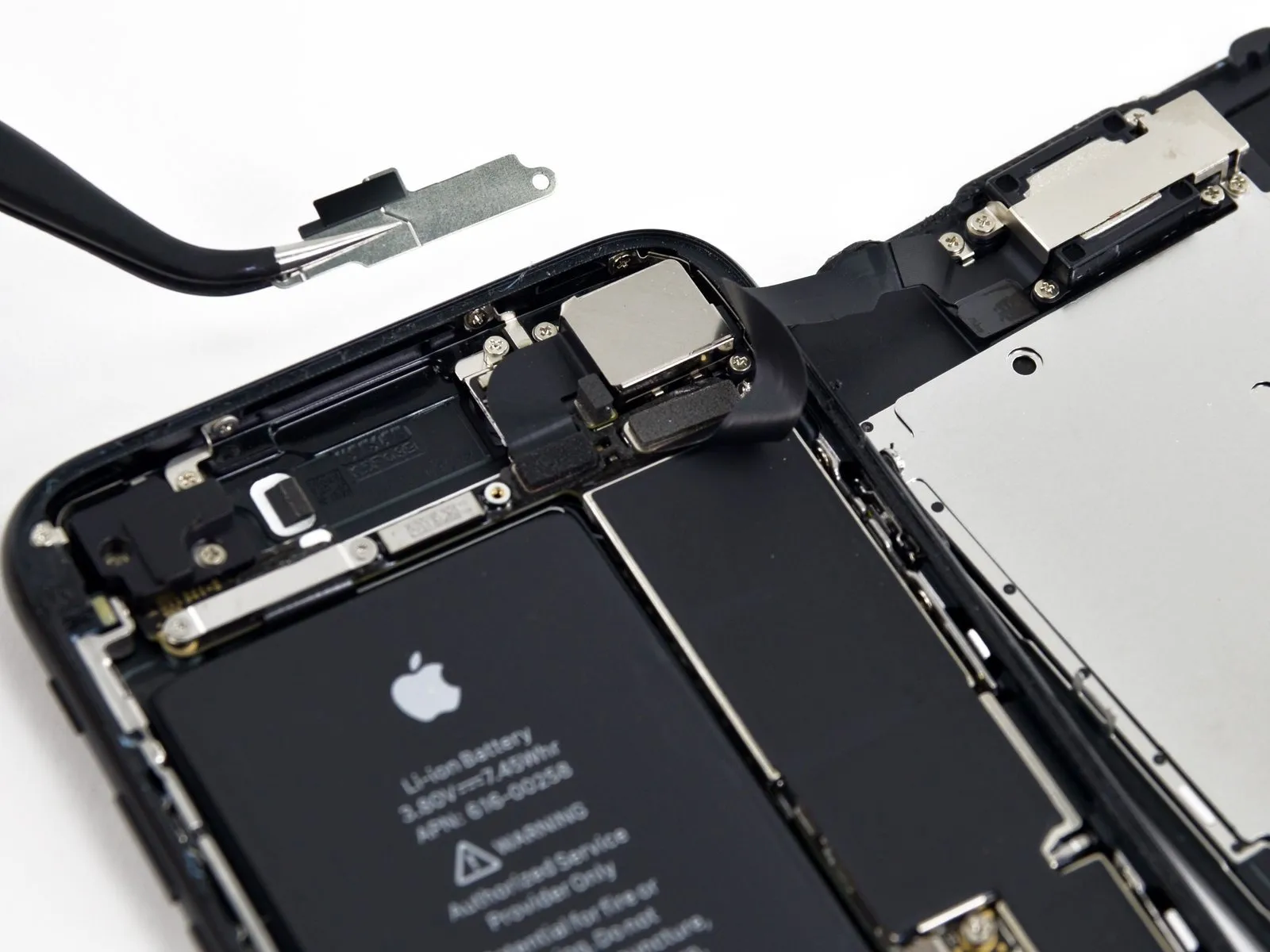
- Detach the pair of 1.3-millimeter Phillips #000 screwswhich hold the bracket positioned above the front panel sensor assembly's connector.
- Certain devices may be designated as Y000; Apple introduced this identifier during the product's lifespan.
Step 21
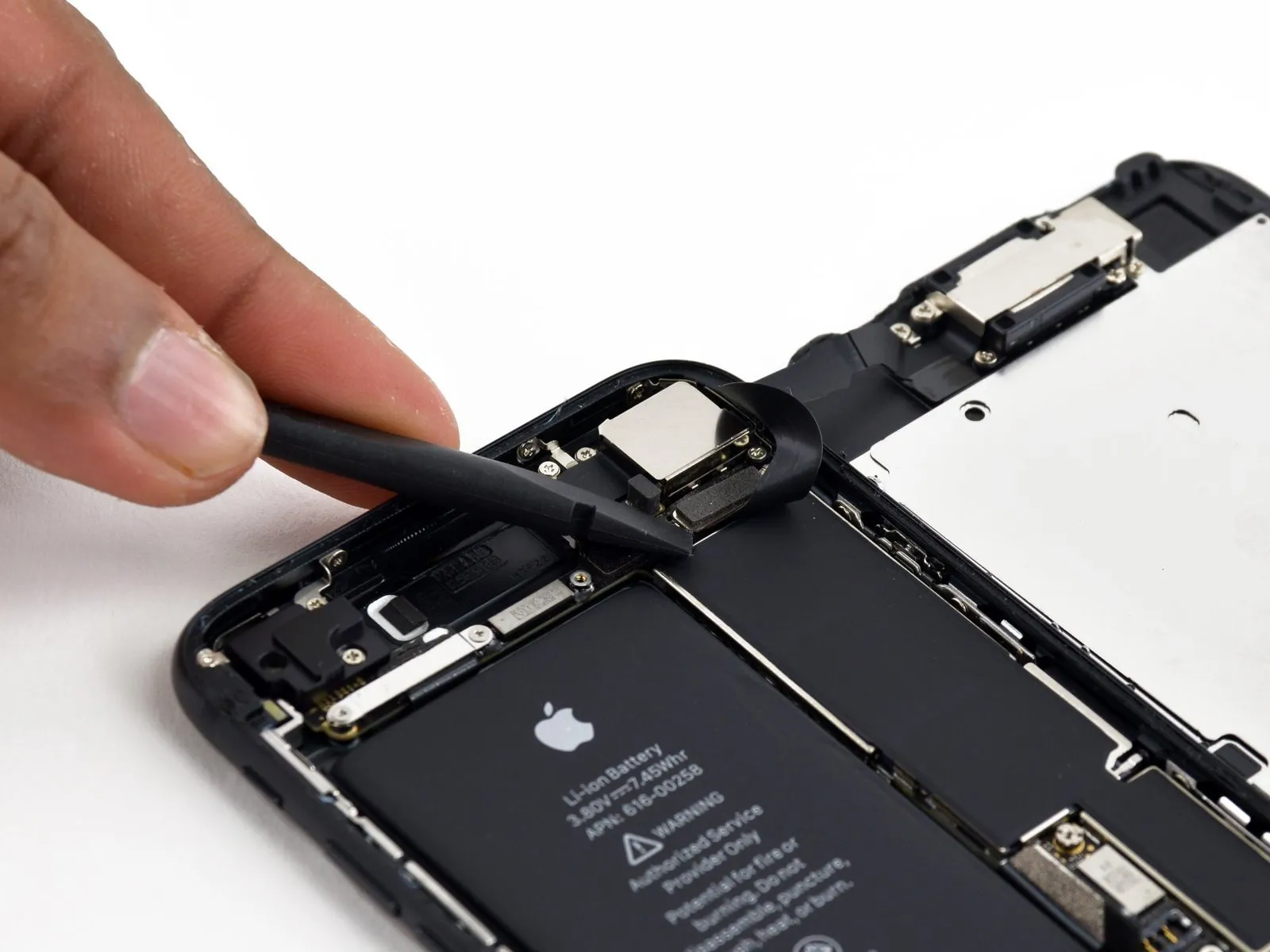
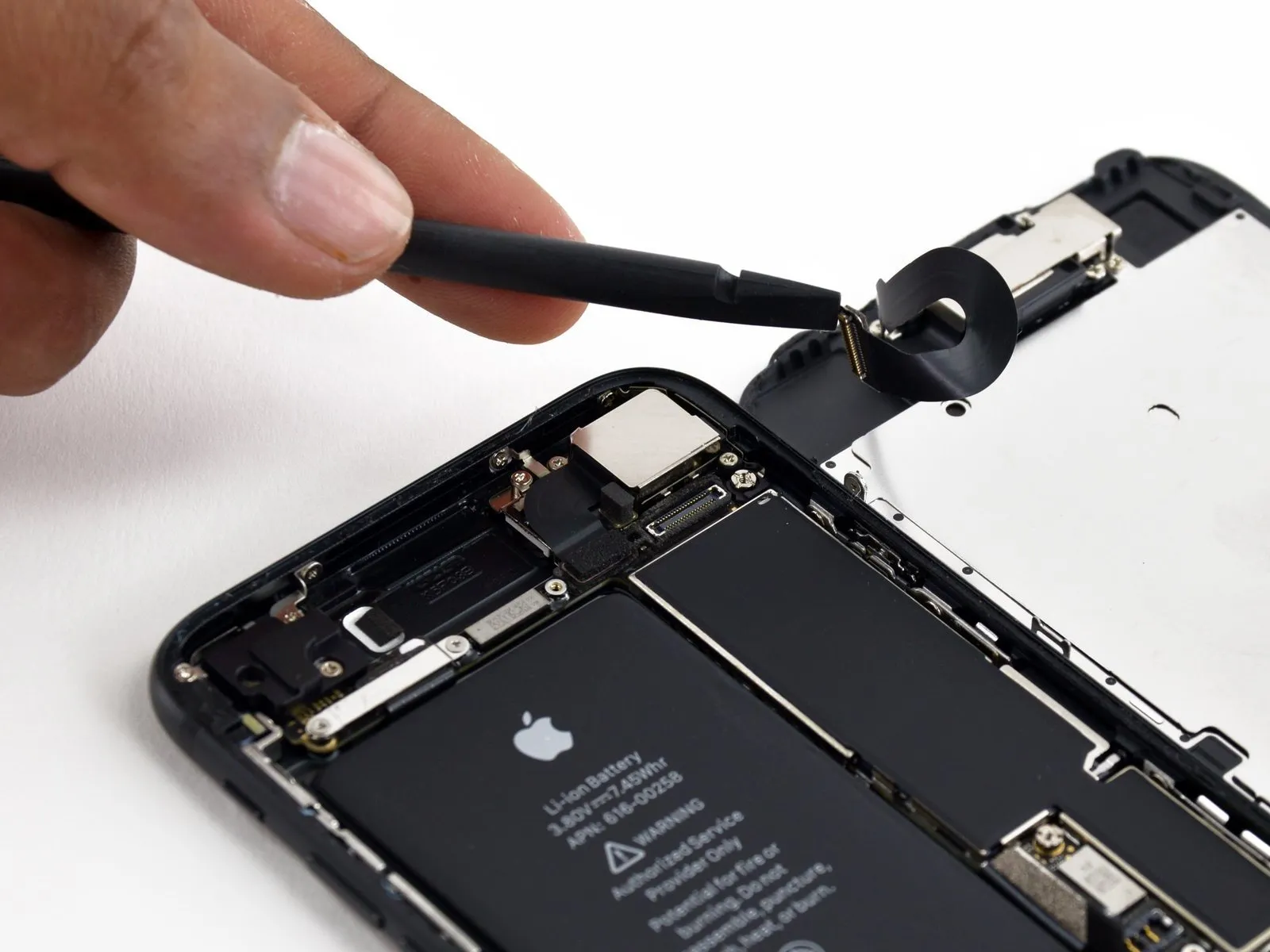
- To prevent damage, detach the connector linking the front panel sensor assembly to its corresponding socket on the main circuit board.
- To reduce the potential for deformation, when reattaching this press-fit connector, ensure that you connect it incrementally, one end at a time.
Step 22
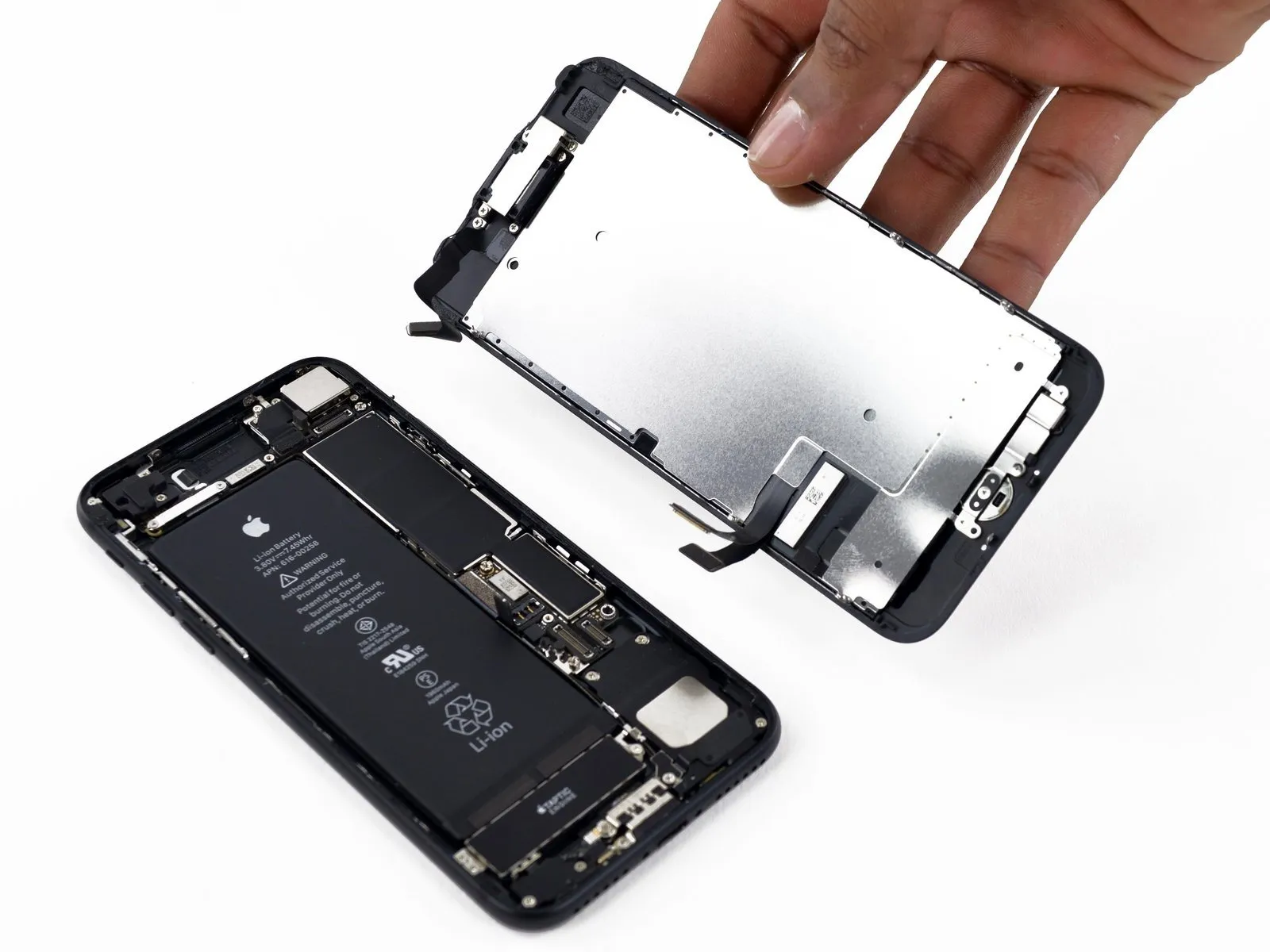
- Detach the display assembly from the device.
- If you intend to substitute the adhesive securing the display's perimeter during reassembly, halt the process at this stage.
Step 23 | SIM Card
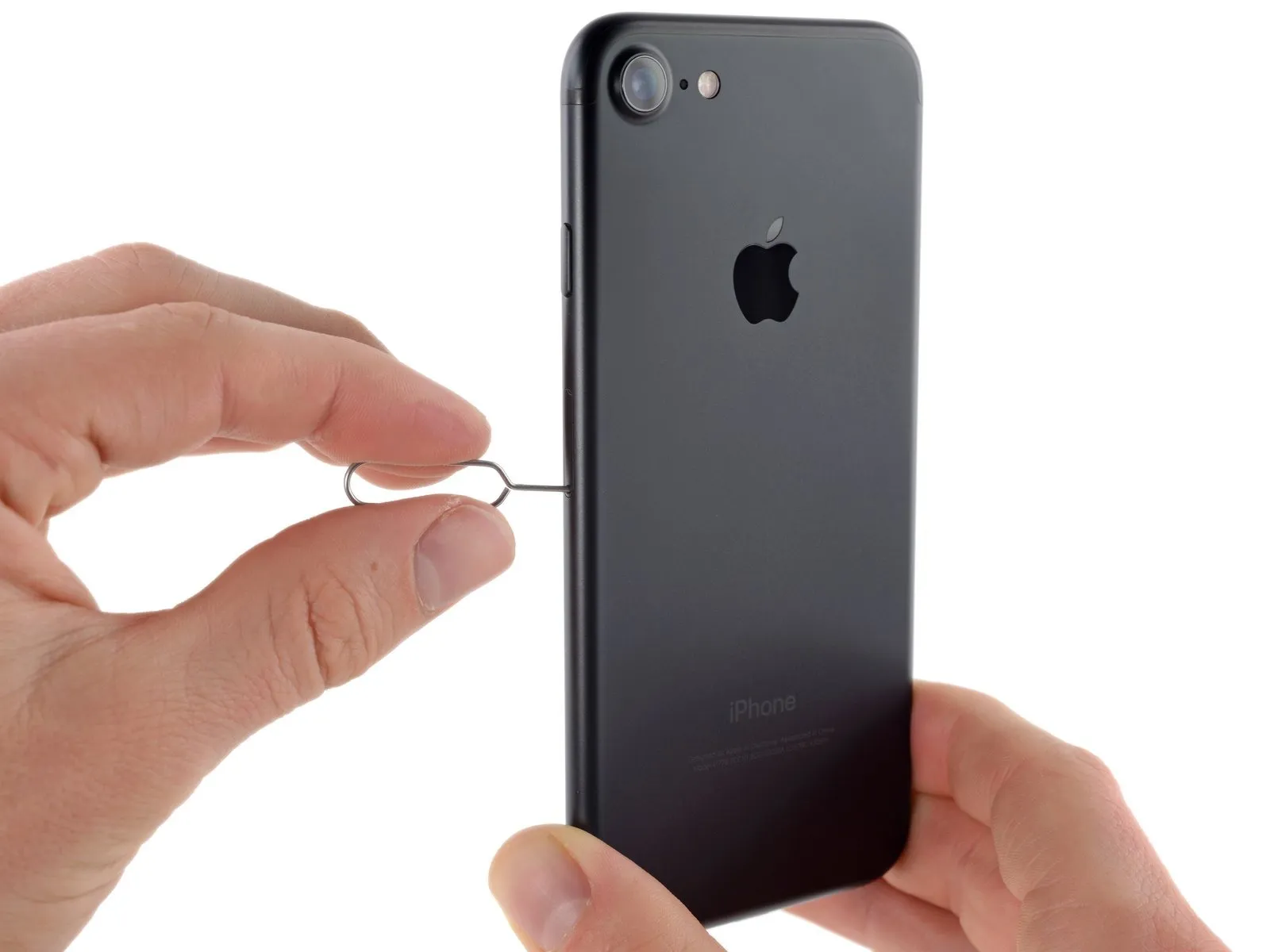
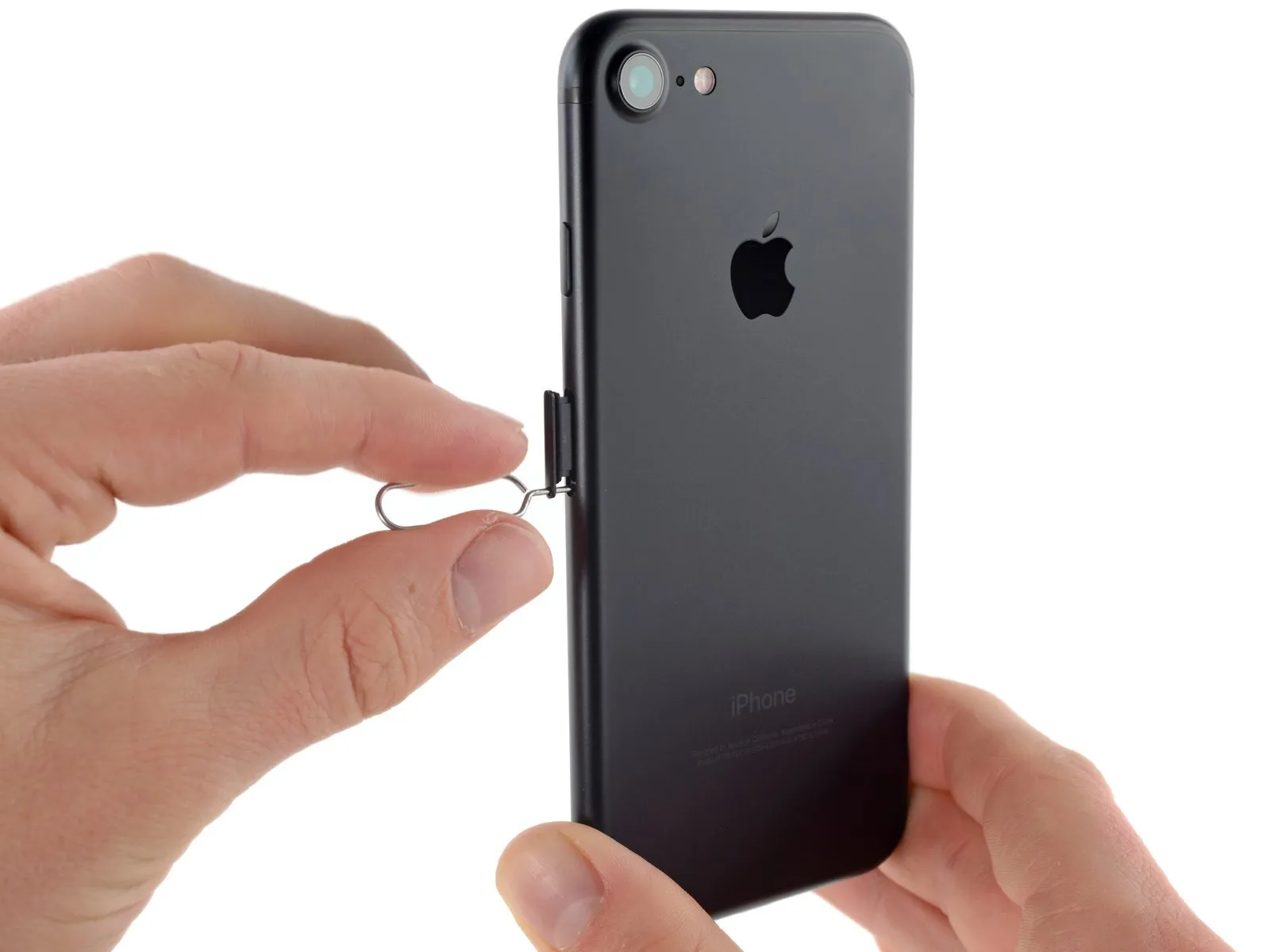

- To access the SIM card, utilize a SIM card eject tool or a straightened paperclip, carefully inserting it into the aperture located on the SIM card tray.
- Apply pressure to release the tray from its housing.A considerable amount of force might be necessary for this action.Prior to applying force, confirm the eject tool is precisely positioned to prevent potential damage to the internal ejection components within the device.
- Carefully extract the SIM card tray assembly from the iPhone.
- During the reinsertion of the SIM card, verify its correct alignment with the tray.
Step 24 | Logic Board Connectors
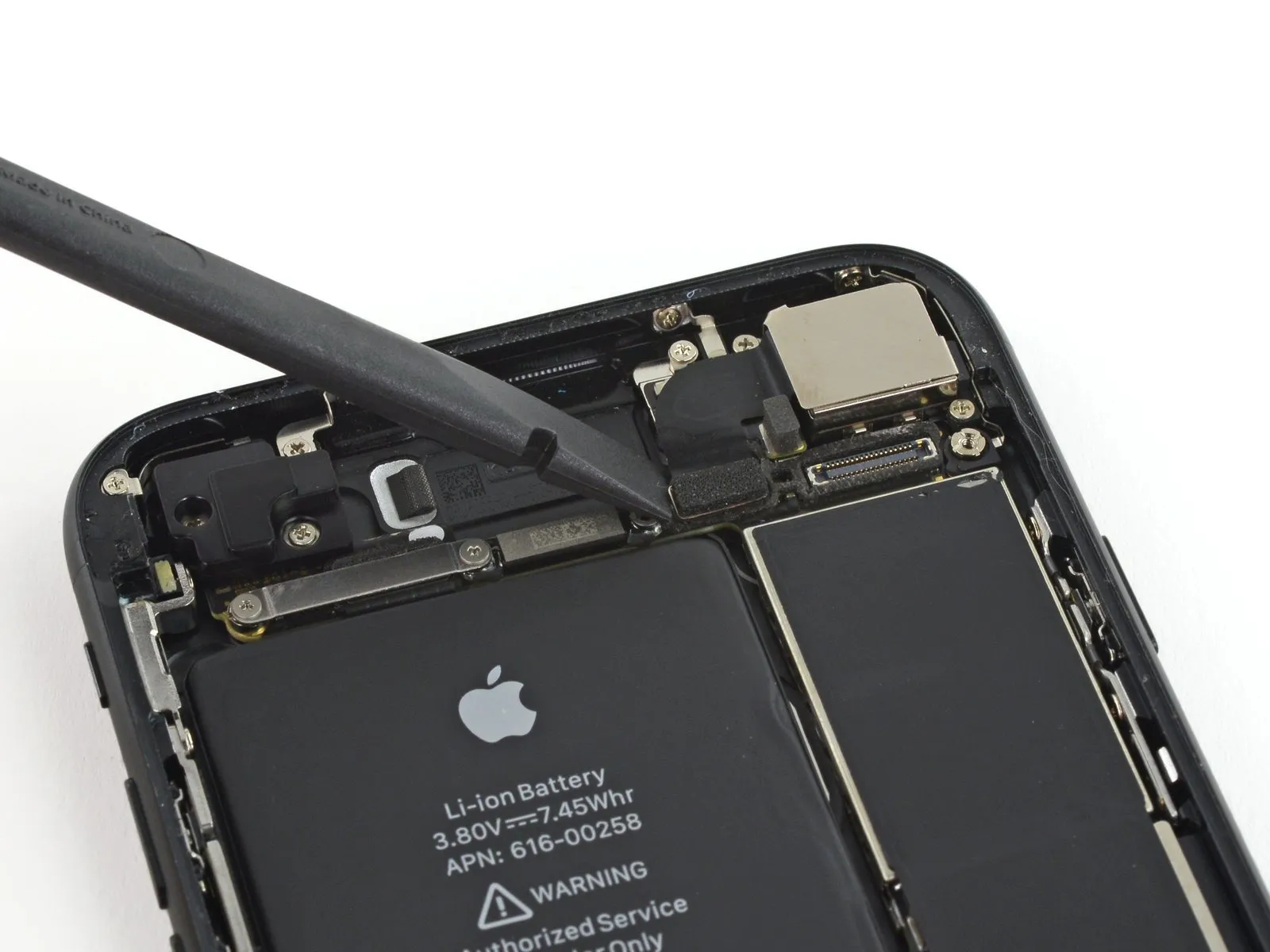

Employ the planar edge of aspudgerto carefully separate the rear-facing camera connector from its socket.
Step 25

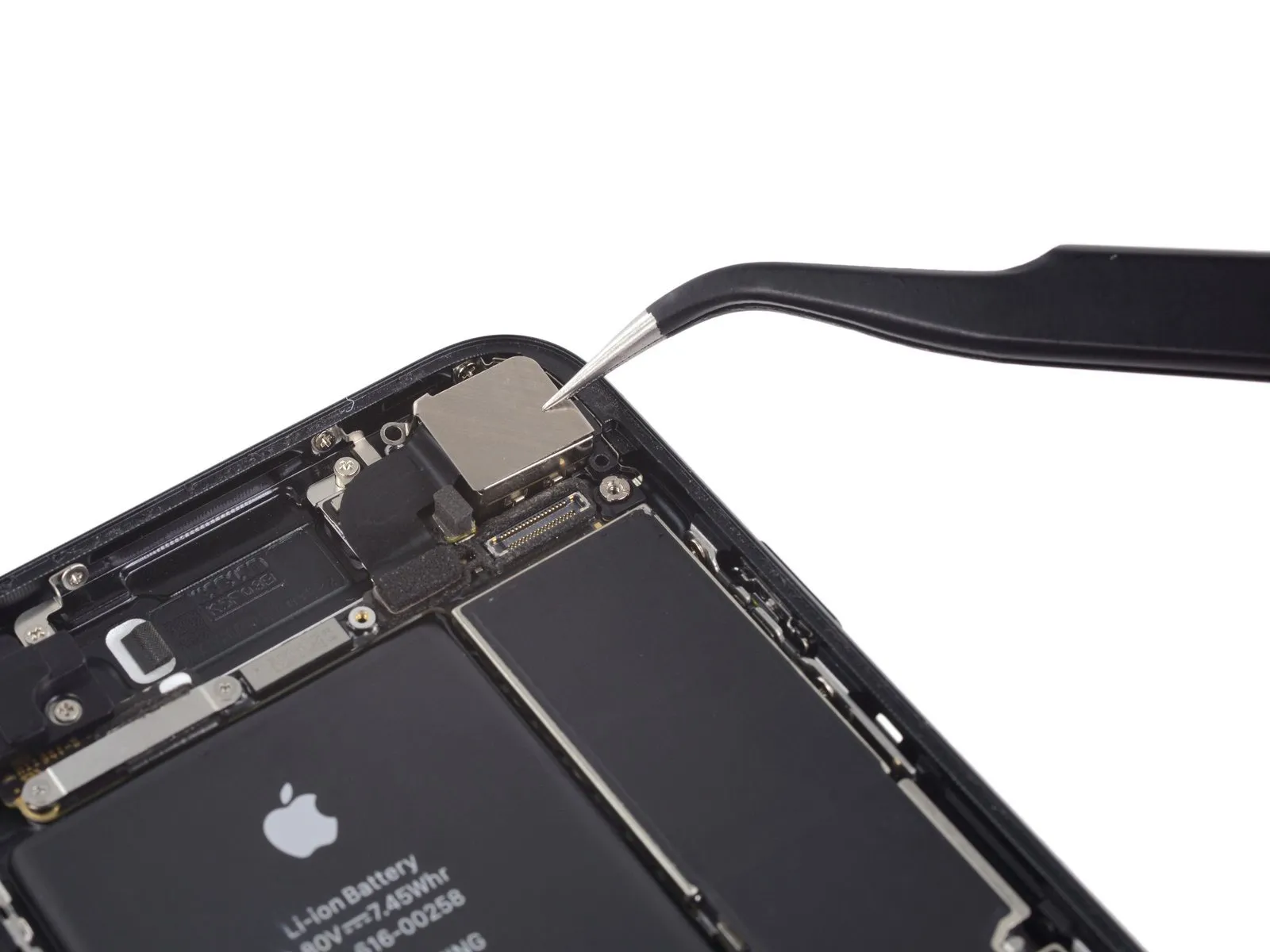
- To detach the rear camera bracket, you must first eliminate these fasteners.Utilize a Phillips head screwdriver for this task.These screws hold the bracket in place on the back housing.
A single 1.3-millimeter screw is required for removal.
Additionally, one 2.5-millimeter screw must be taken out.
Step 26

- Detach the bracket from its affixed location.
Step 27

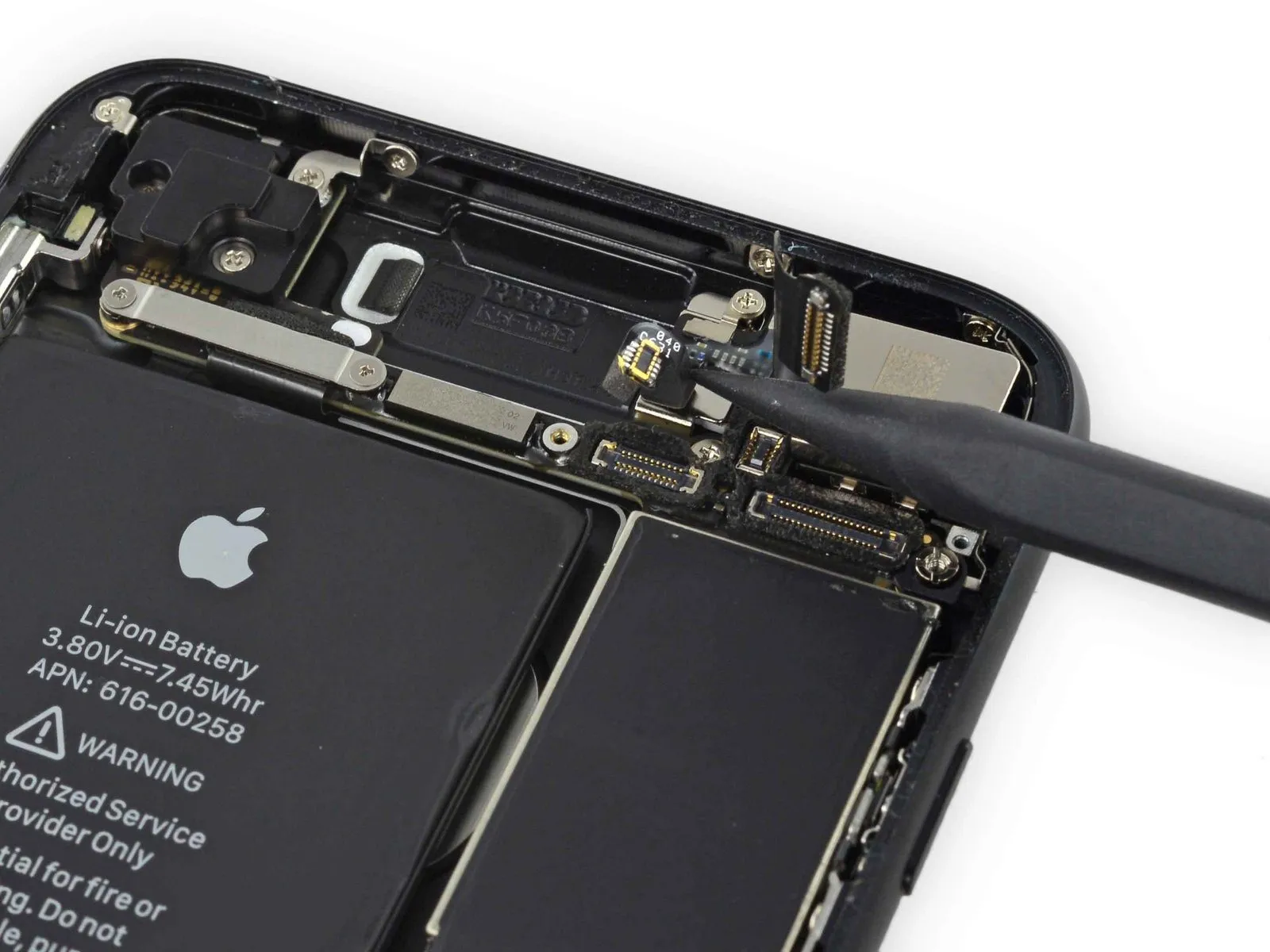
- Carefully leverage the tapered edge of a spudger to lift and detach the antenna bus connector, situated to the left of the rear camera module.
Step 28

- Detach the upper cable bracket by first eliminating the pair of 1.2 mm tri-point screws which hold it in place.
Step 29


Step 30

Step 31
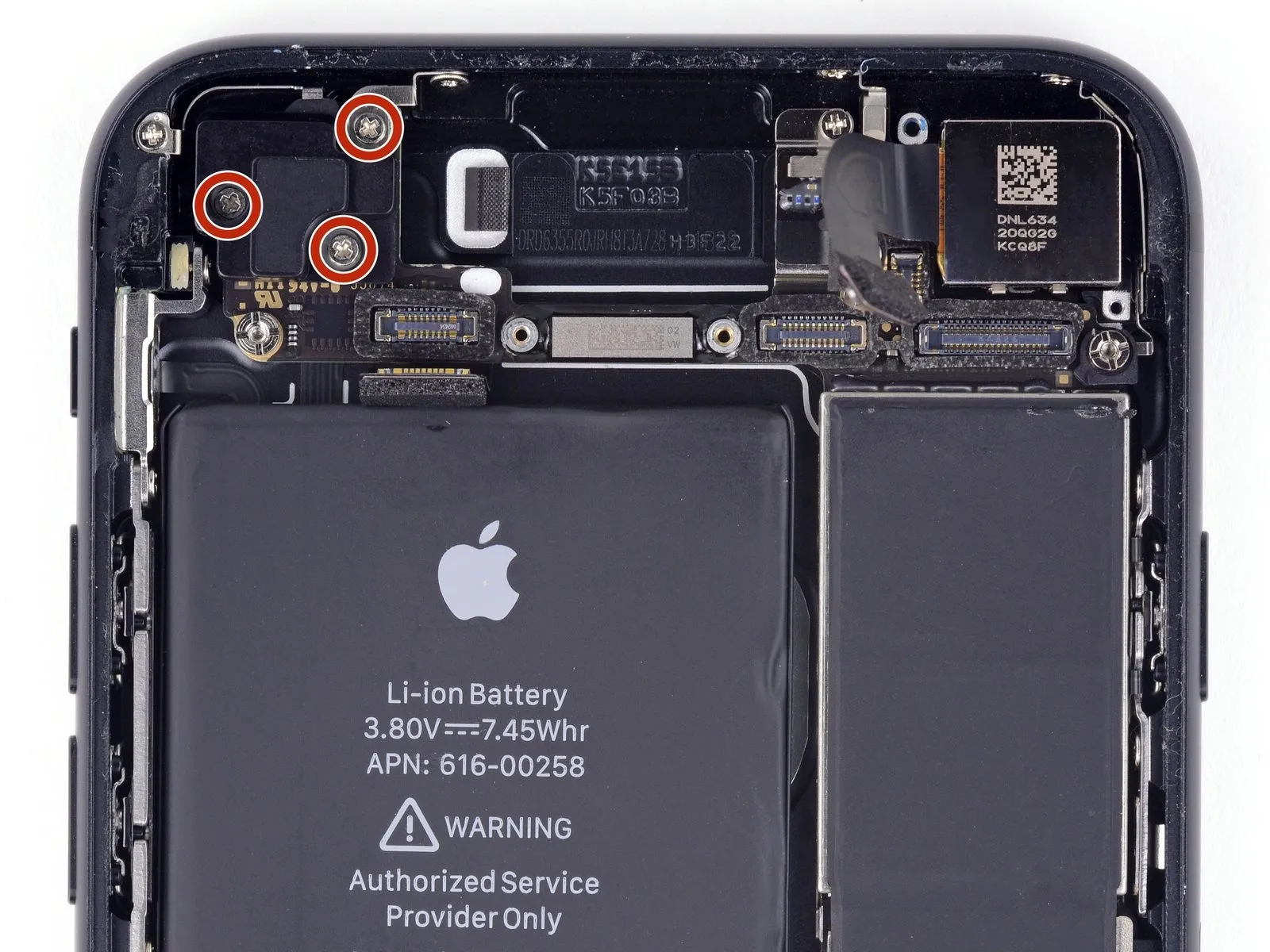
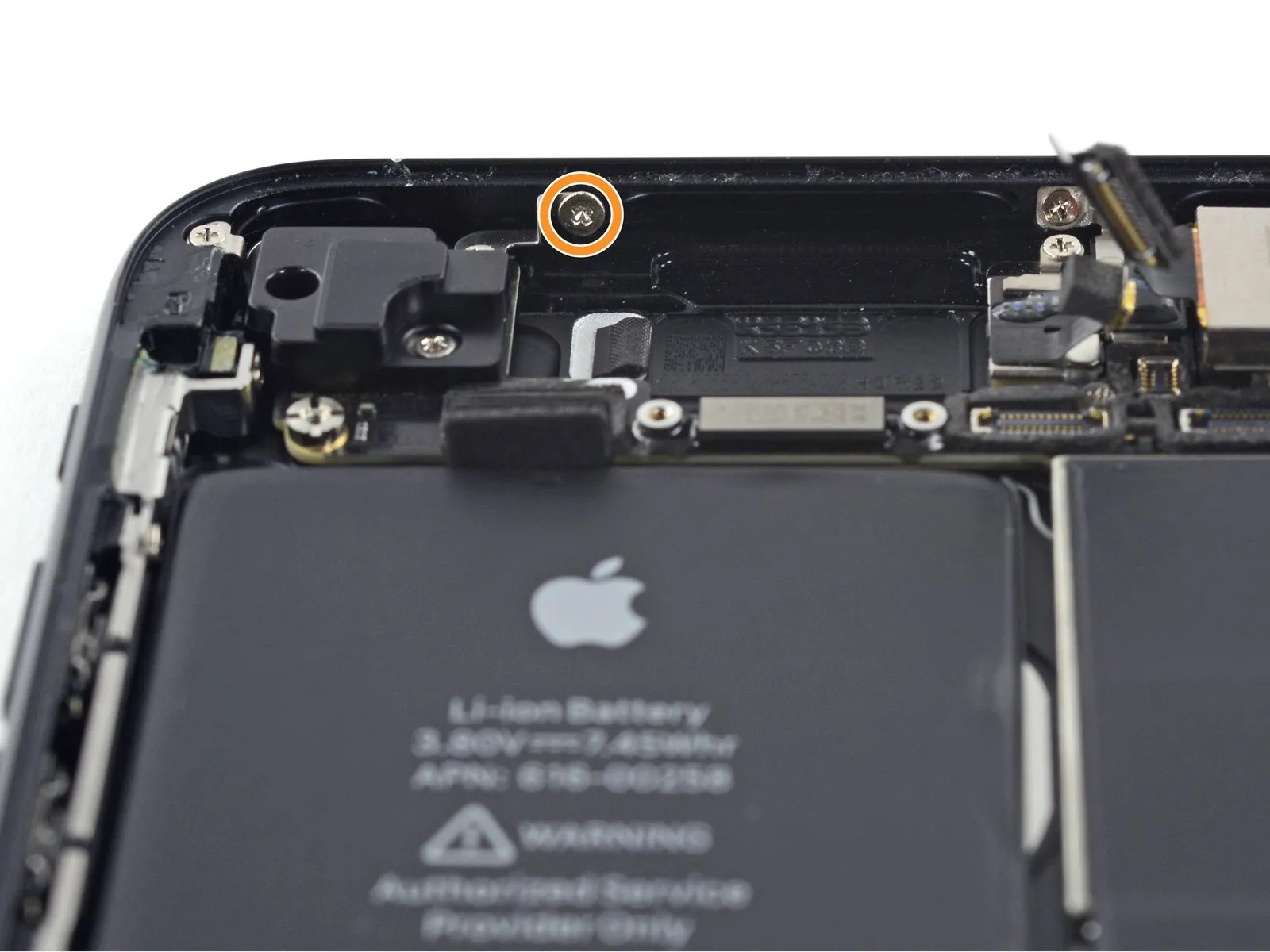
- To detach the Wi-Fi antenna, first eliminate the four Phillips head fasteners that hold it in place.
Subsequently, utilize three1.2-millimeterfasteners.
Additionally, employ one1.7-millimeterfastener.
Step 32

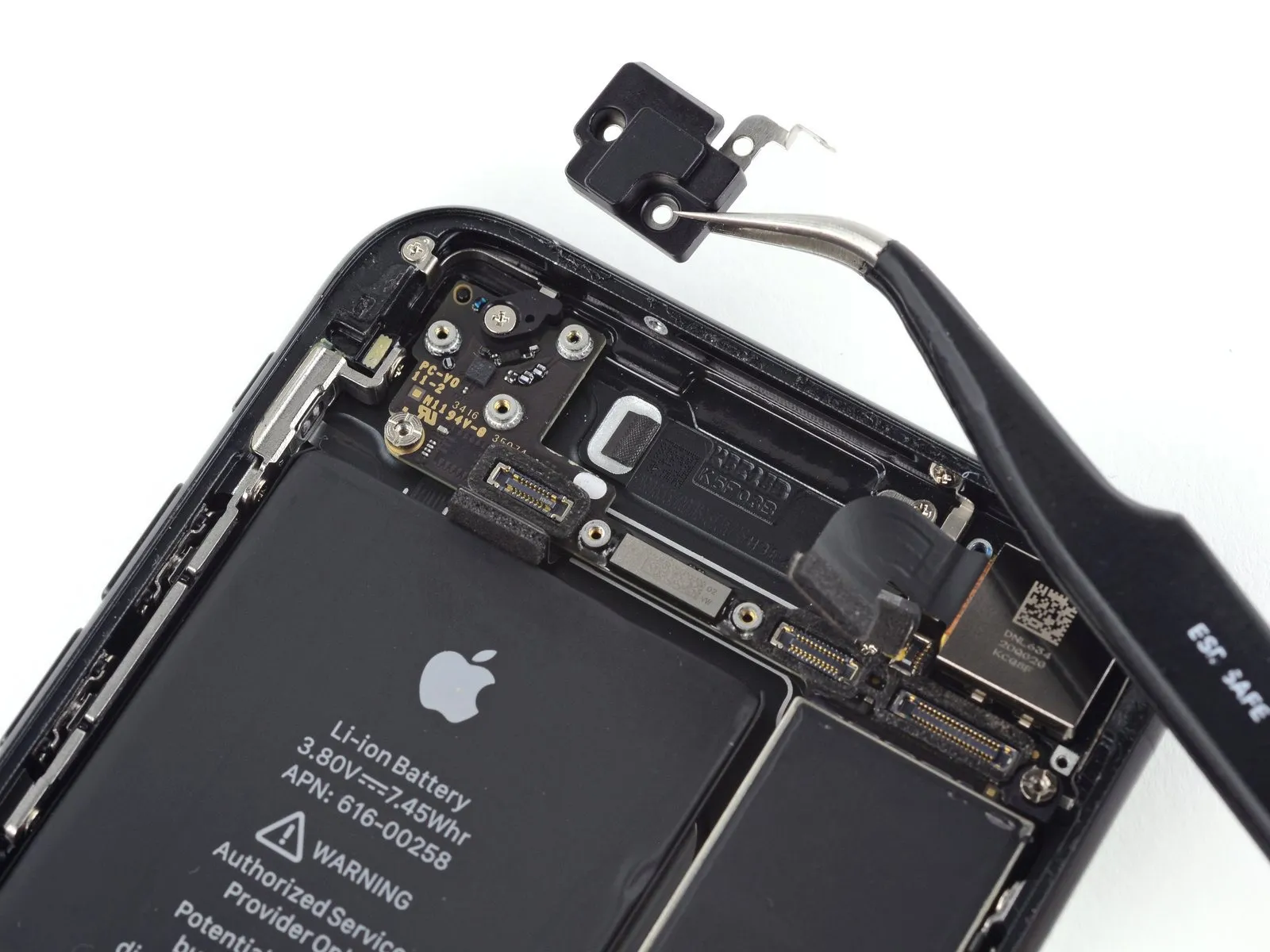
- Carefully detach the antenna situated in the upper-left corner.
Step 33
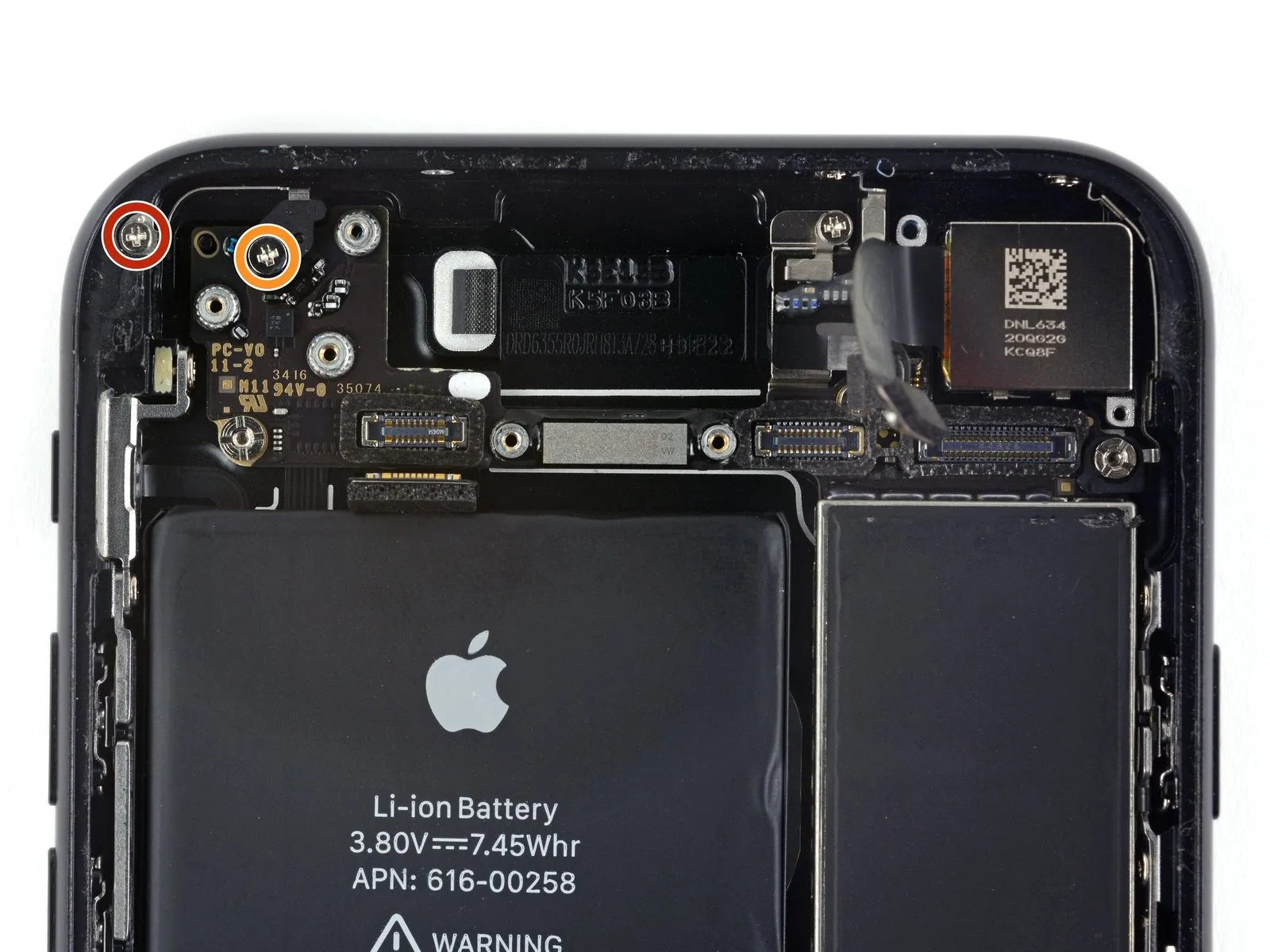
- To proceed with the repair, detach the listed Phillips screws.
Utilize a 1.3 millimeter
Employ a 2.2 millimeter
Step 34

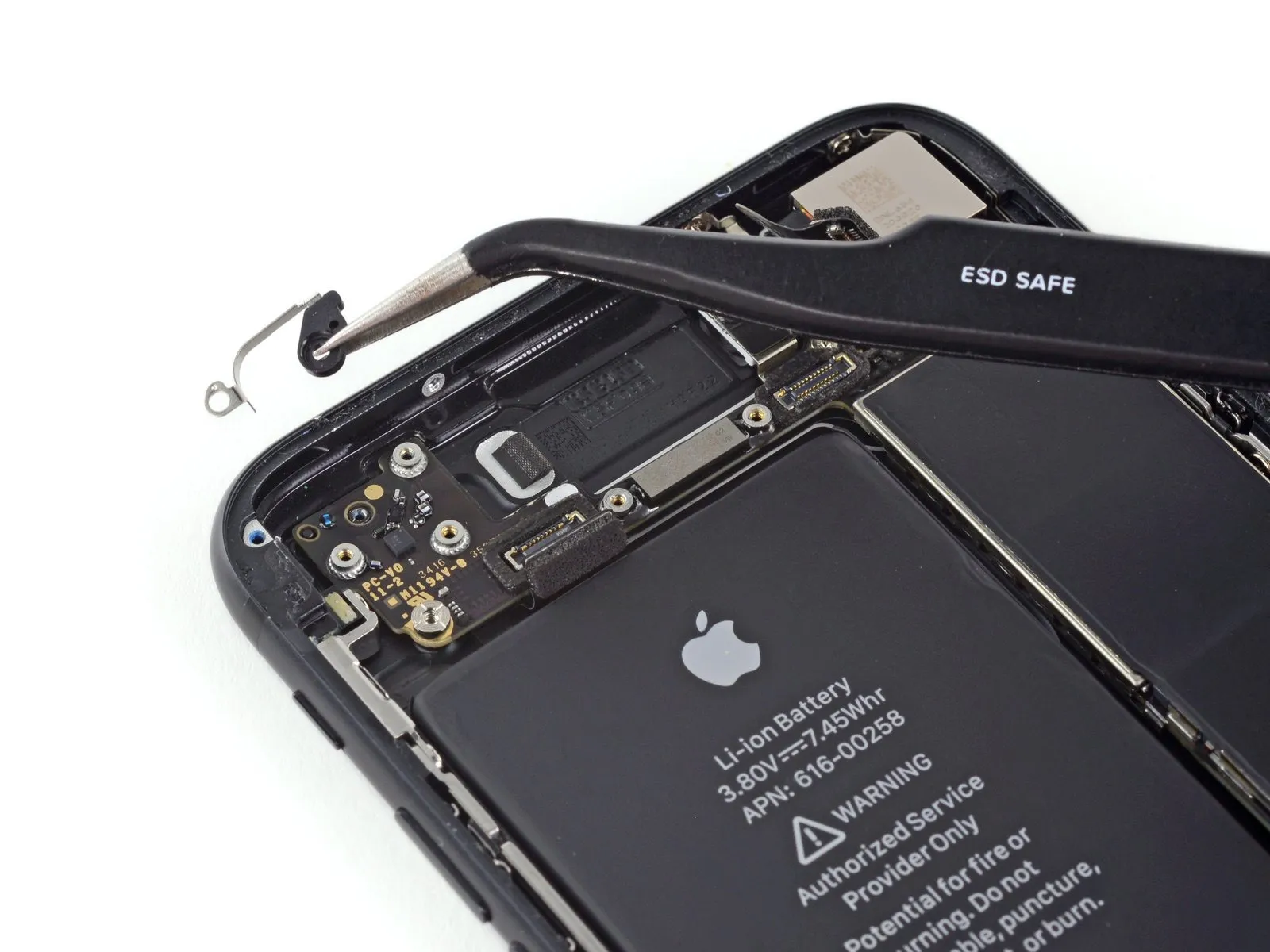
- Detach the bracket from its affixed location.
Step 35
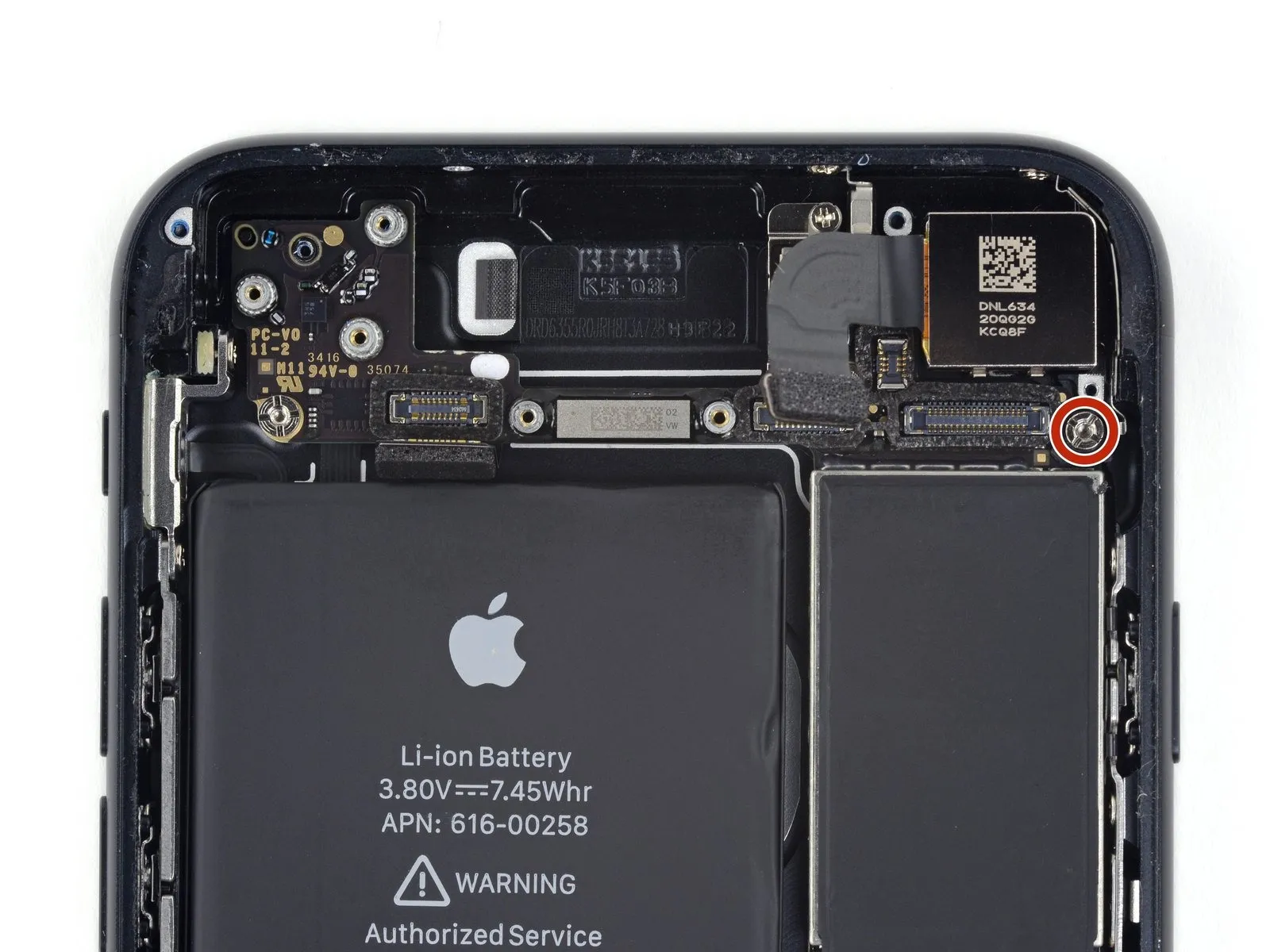
- Detach the2.2 mmgrounding bracket's standoff screw.
Employing a standoff screwdriver or bit is the preferred method for standoff screw removal.
If a standoff screwdriver isn't available, a small flathead screwdriver can be utilized; however, exercise heightened care to prevent slippage and potential harm to nearby parts.
Step 36
Step 37 | Logic Board


Step 38


Step 39

Step 40
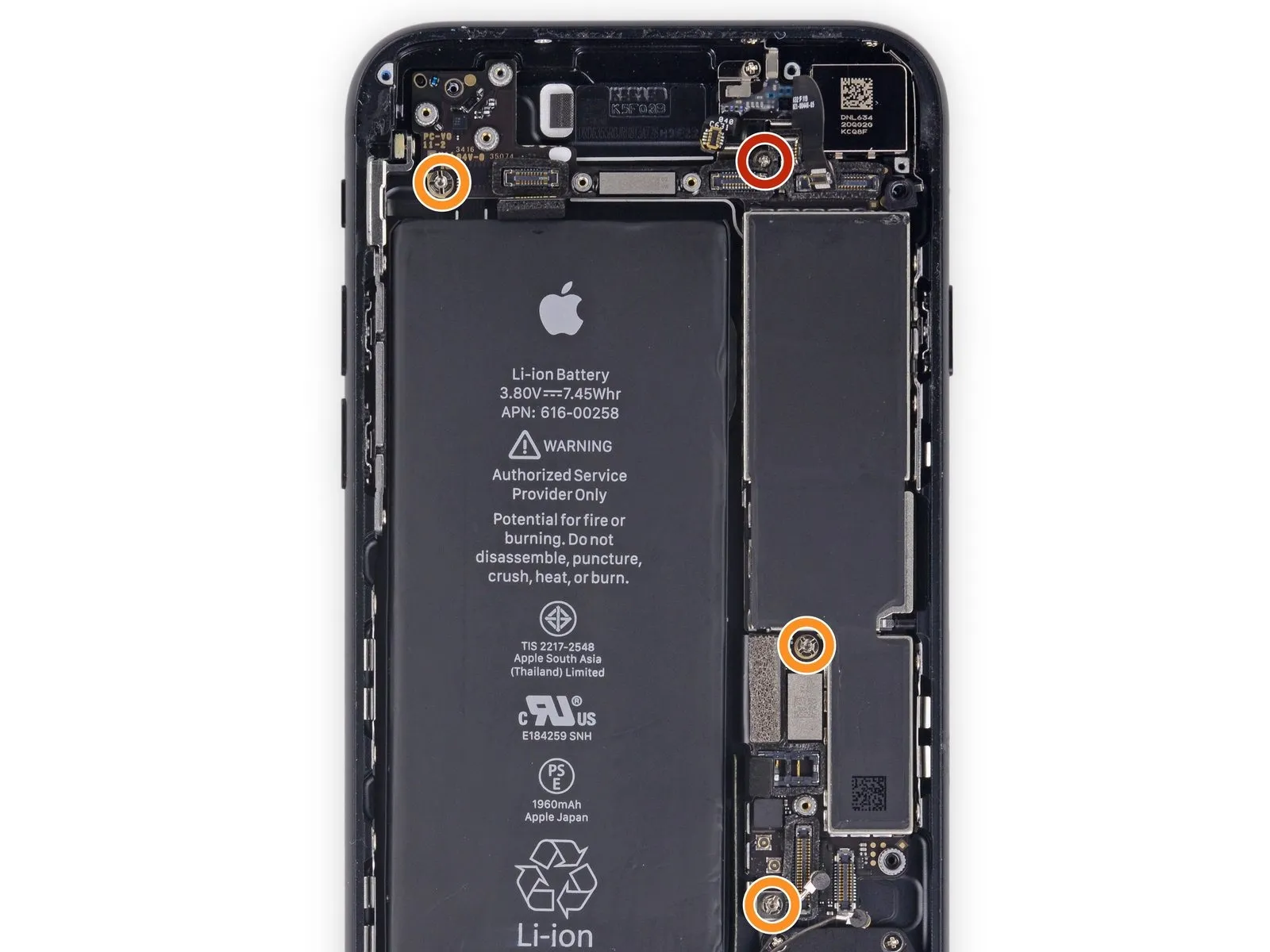
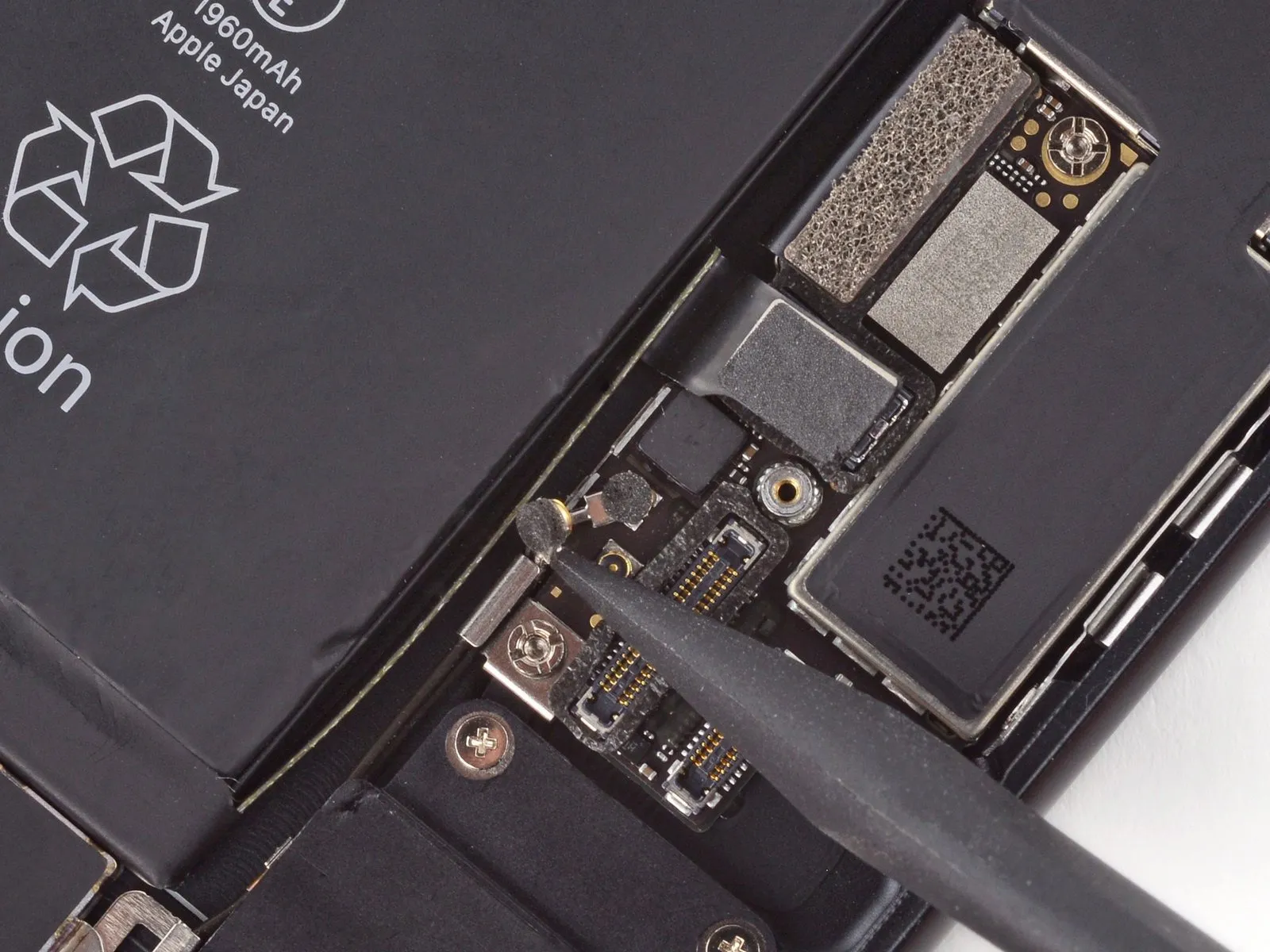
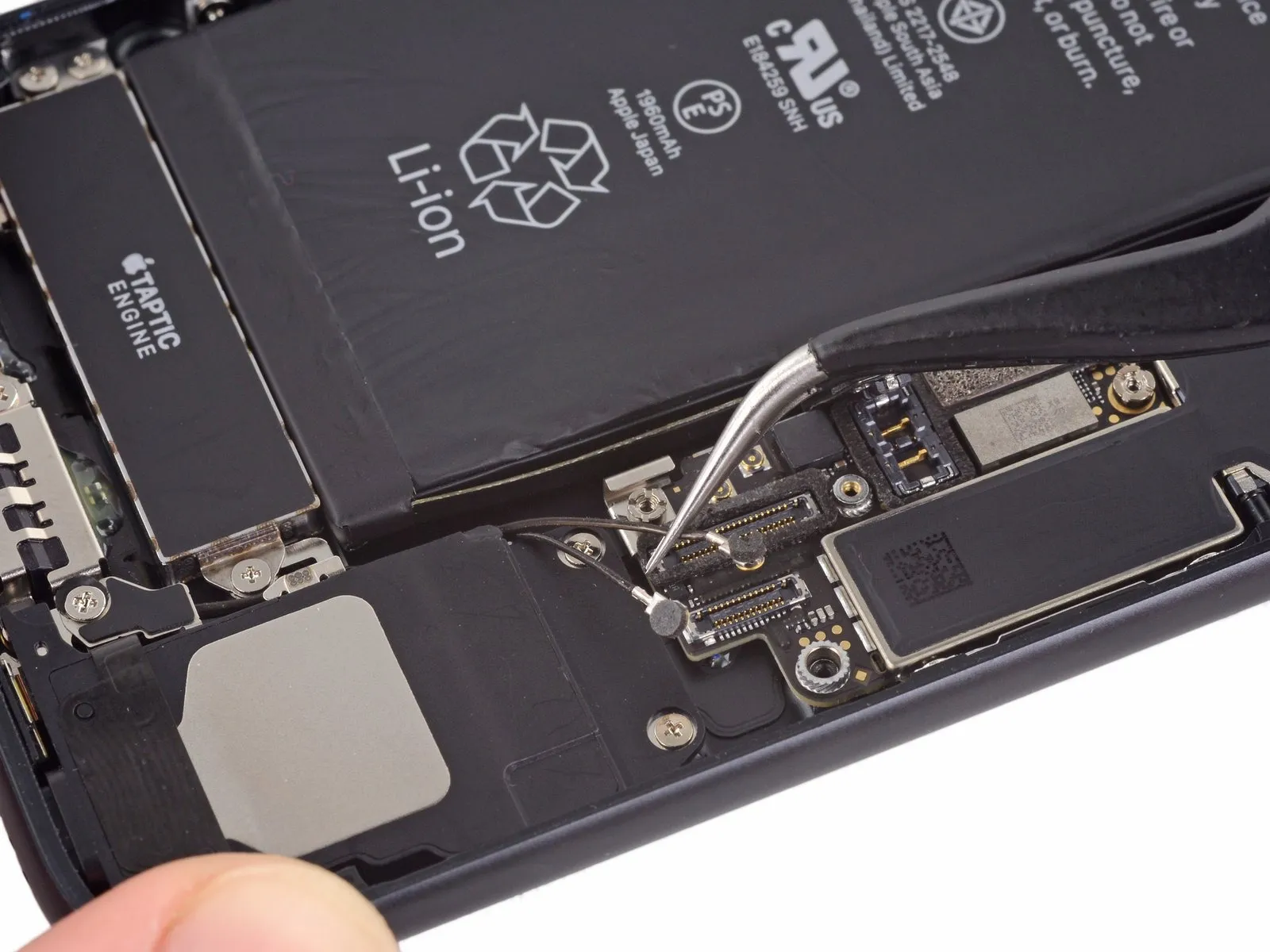
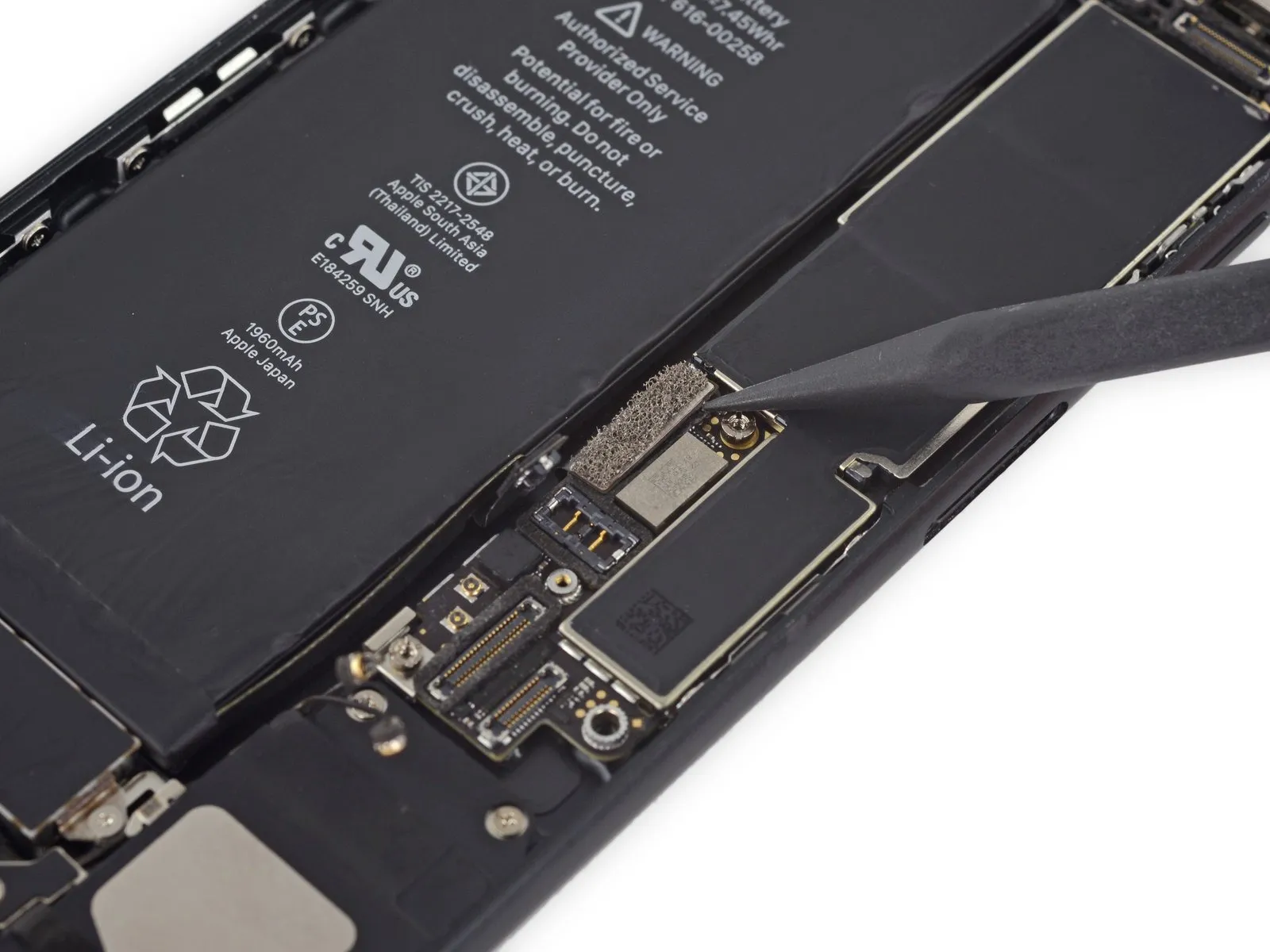
- To proceed with the repair, first detach the listed fasteners:
A single Phillips screw, measuring 1.4 millimeters in width, must be extracted. - Three screws, each with a 2.2-millimeter diameter, secure the standoffs and require removal.
- Employing a specialized standoff driver is the preferred method for extracting standoff screws.A standoff driver is the ideal tool for this task..
- If a standoff driver is unavailable, a small flathead screwdriver can be substituted; however, exercise heightened care to prevent slippage and potential harm to nearby parts.
Step 41

Step 42

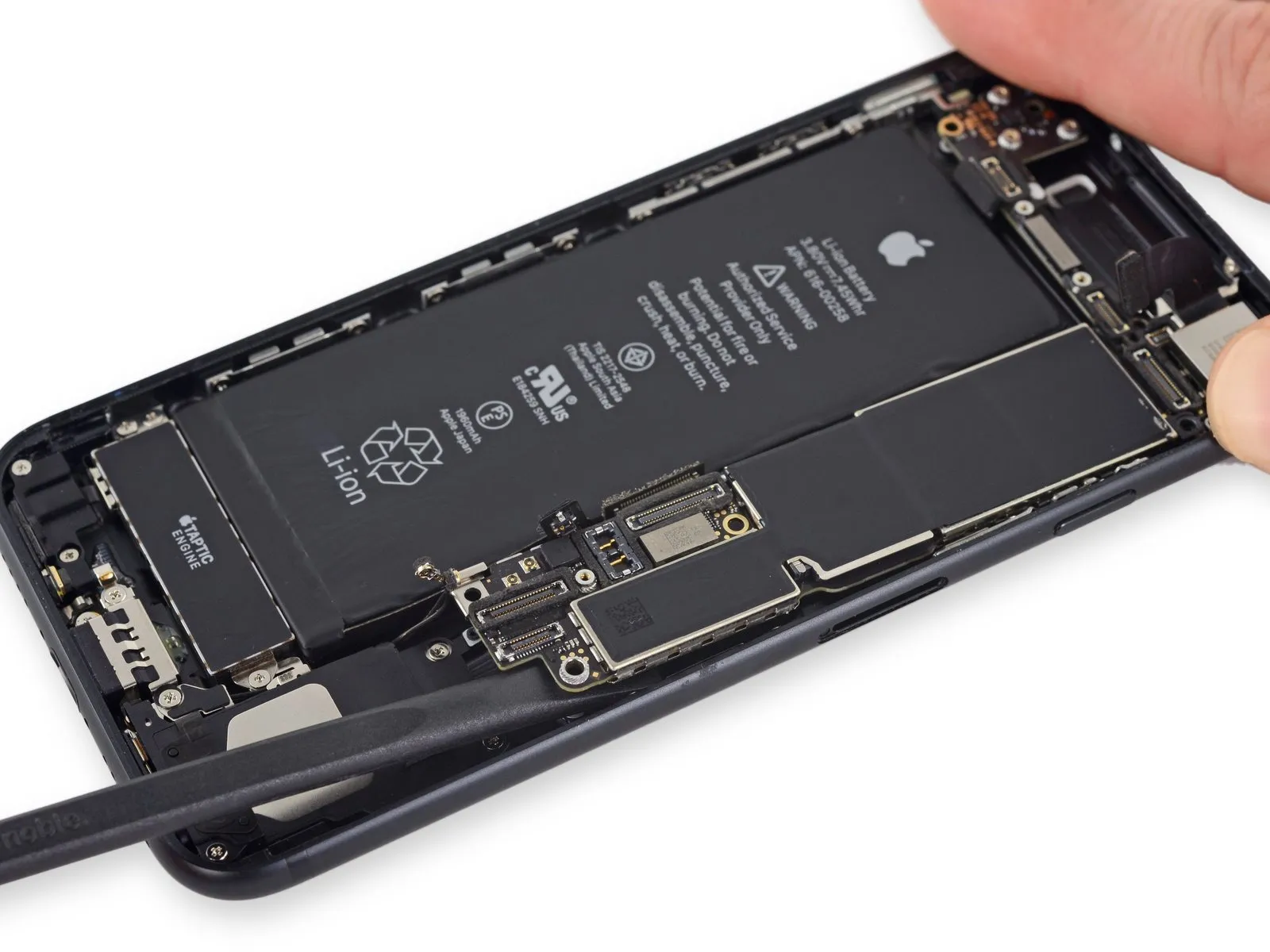
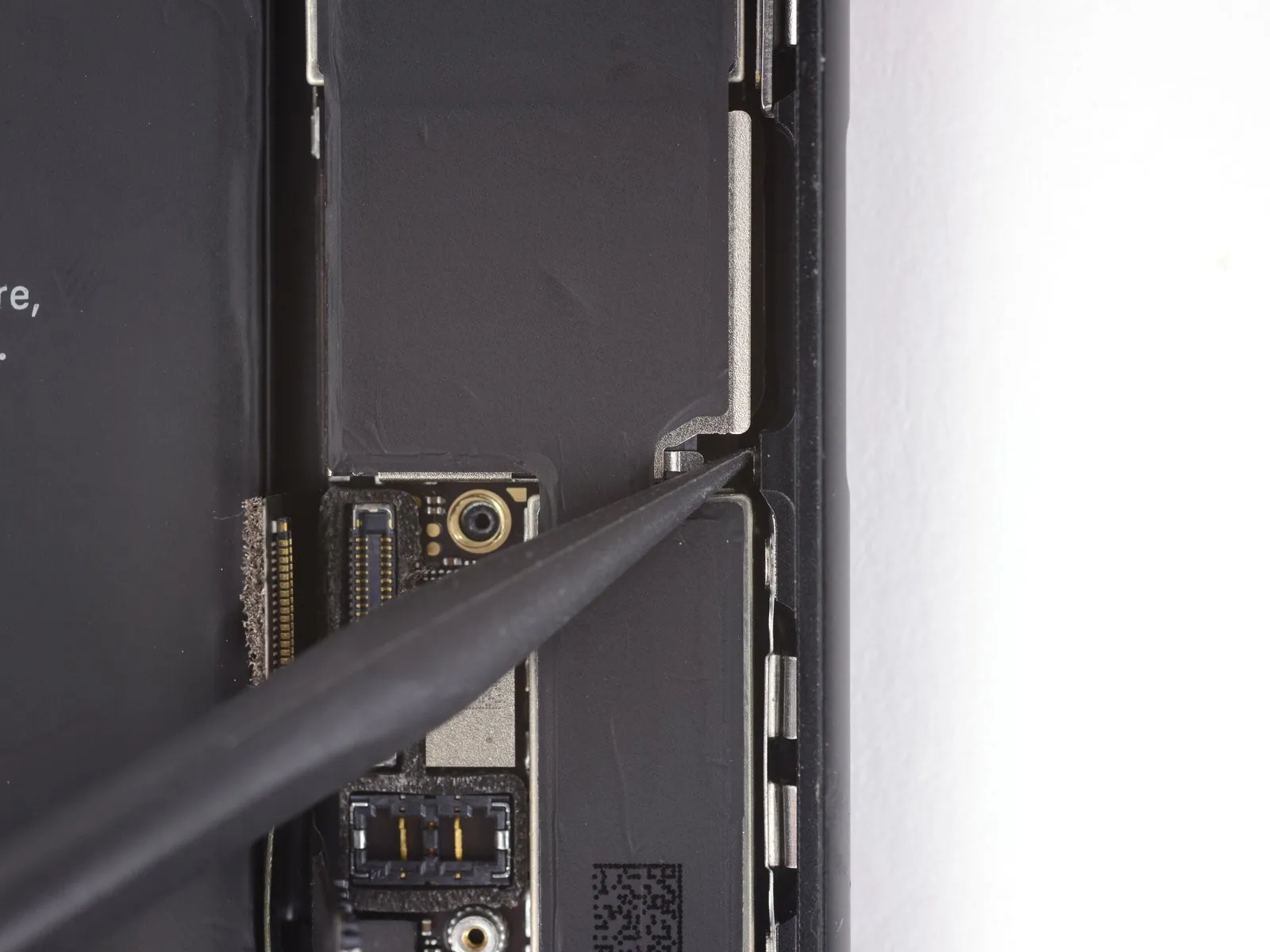
- Employ the planar edge of a spudgerto carefully elevate the battery connector portion of the logic board.
- Confirm that your lifting action isn't creating tension on any wires; should you encounter opposition, thoroughly inspect all cabling, connections, and parts to ensure they are unobstructed from the board.
Step 43

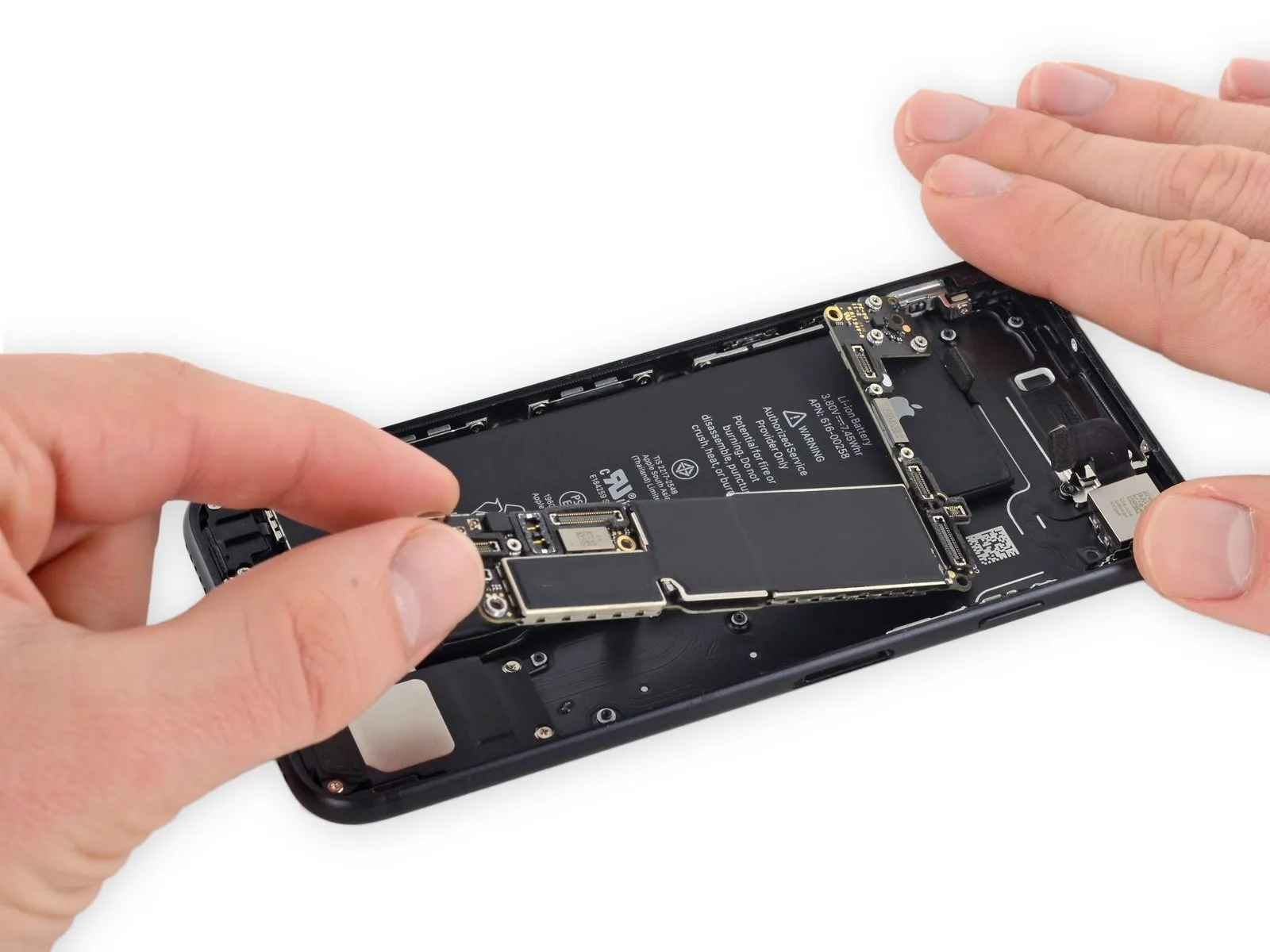

- To disconnect the logic board, elevate the battery connector end and subsequently extract the connector from the rear case.
- Exercise caution to prevent the logic board from catching on any surrounding cables.
Step 44 | Barometric Vent
Step 45
Step 46 | Power and Volume Control Cable Battery
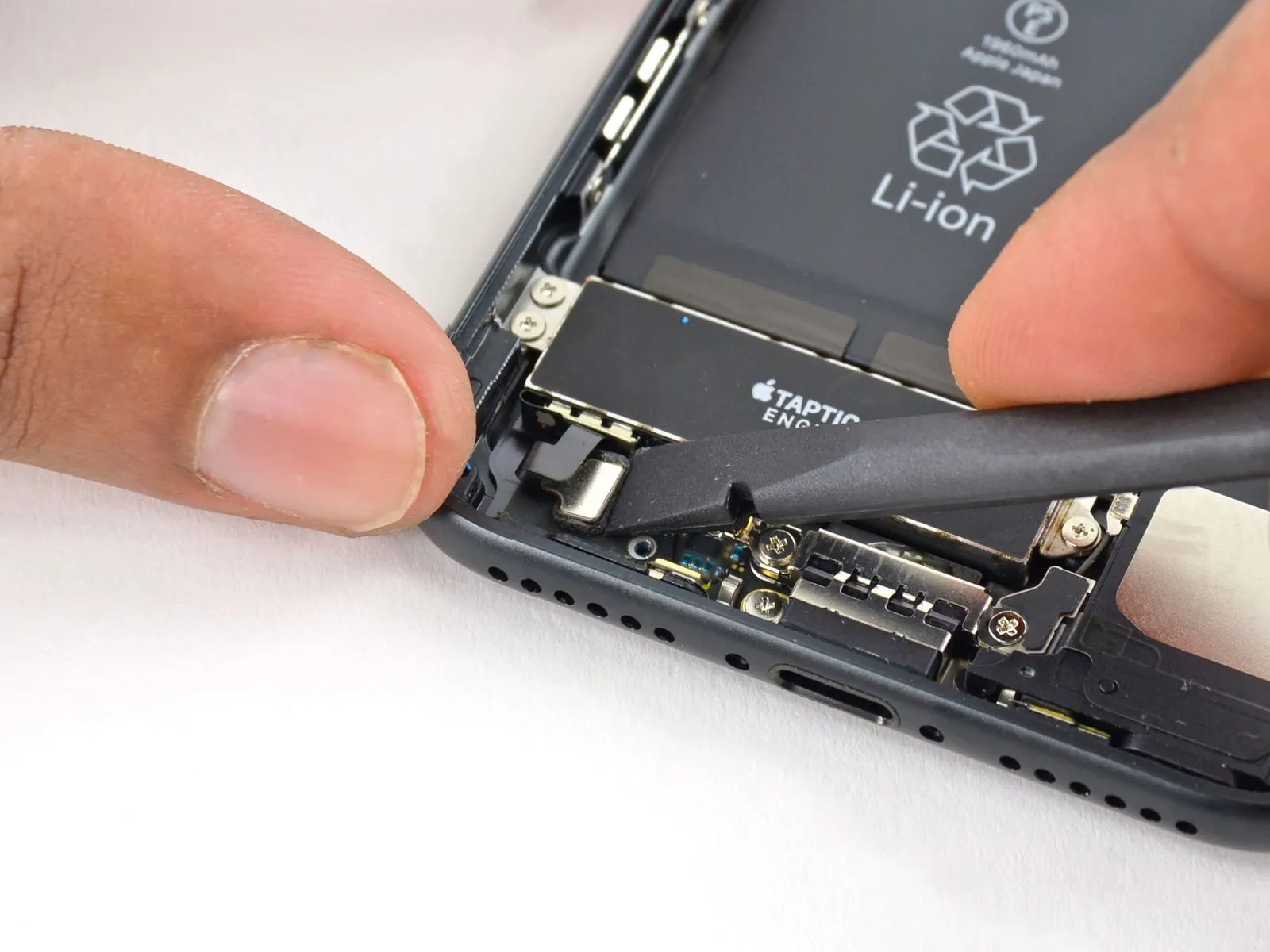
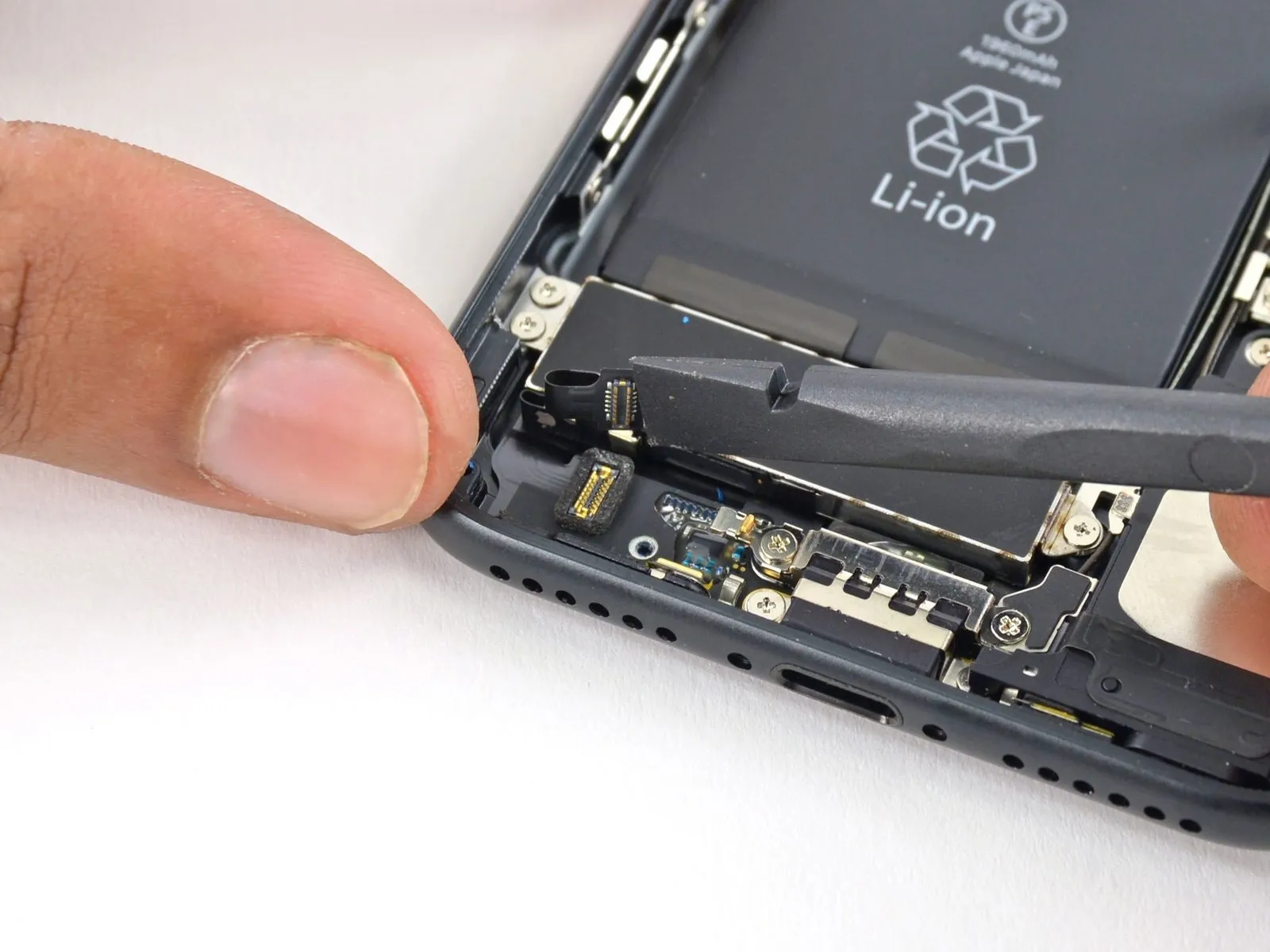
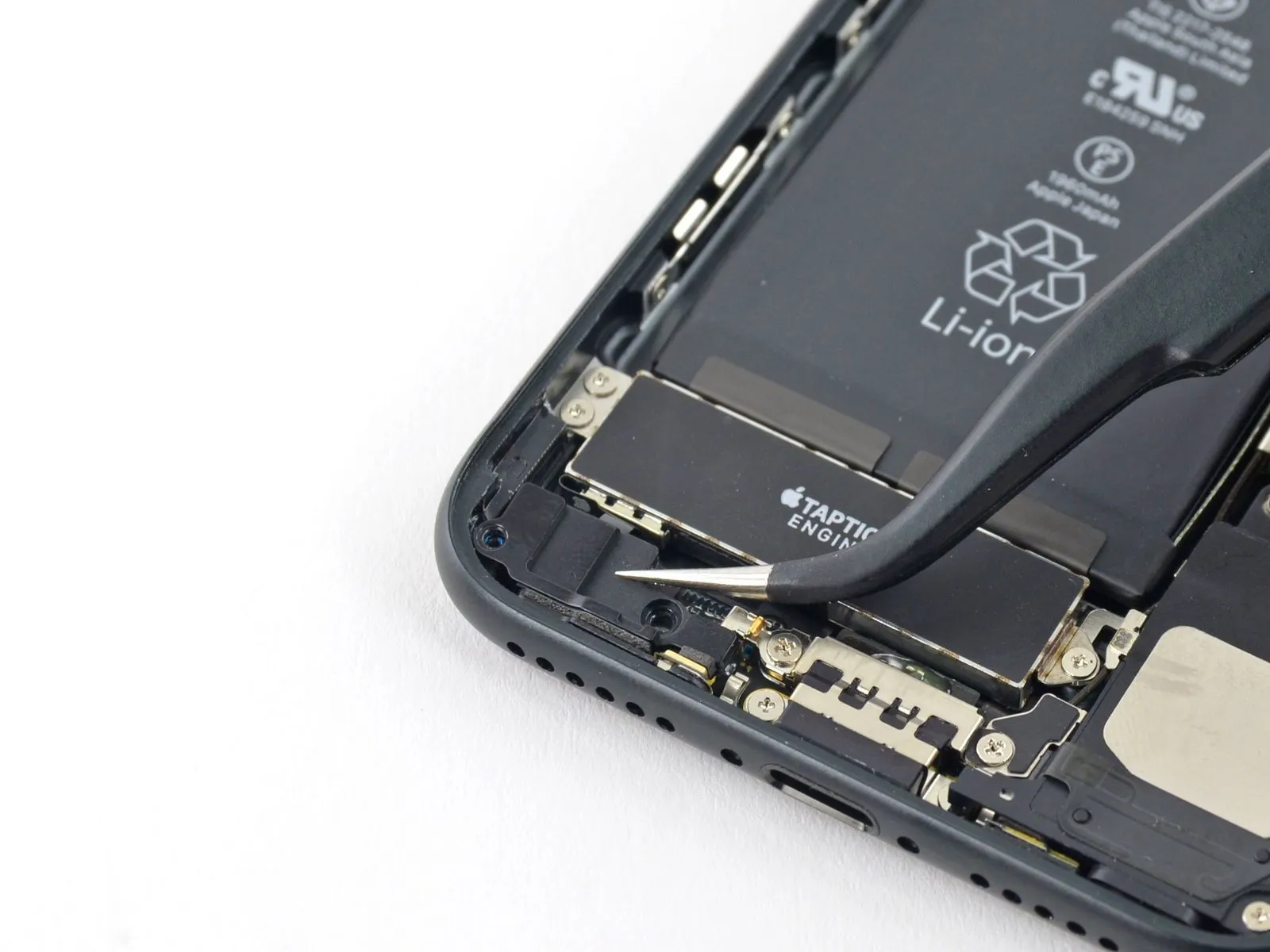
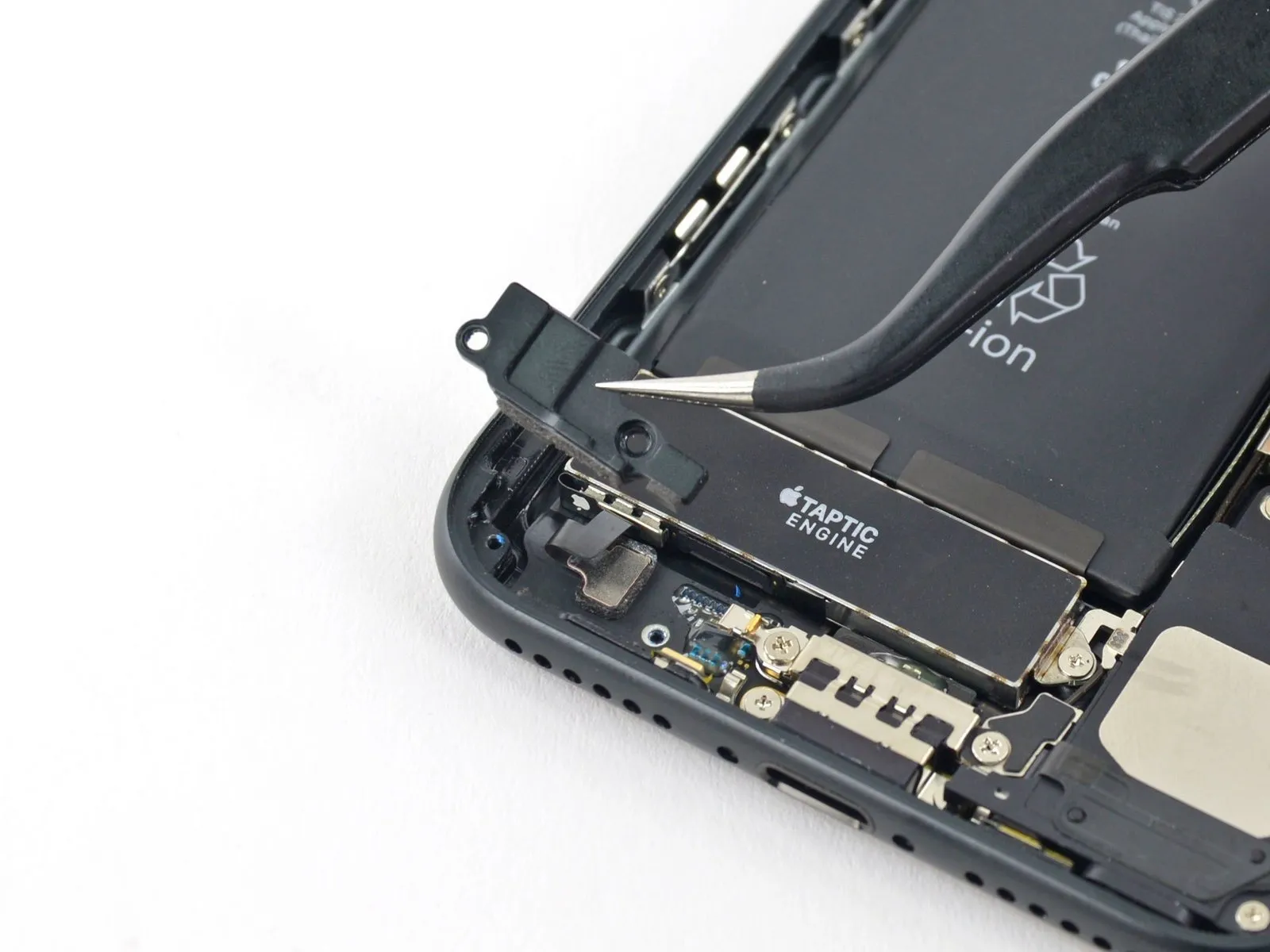
- Employ the planar edge of a spudgerto separate the Taptic Engine connector from its corresponding receptacle situated on the logic board.
Step 47
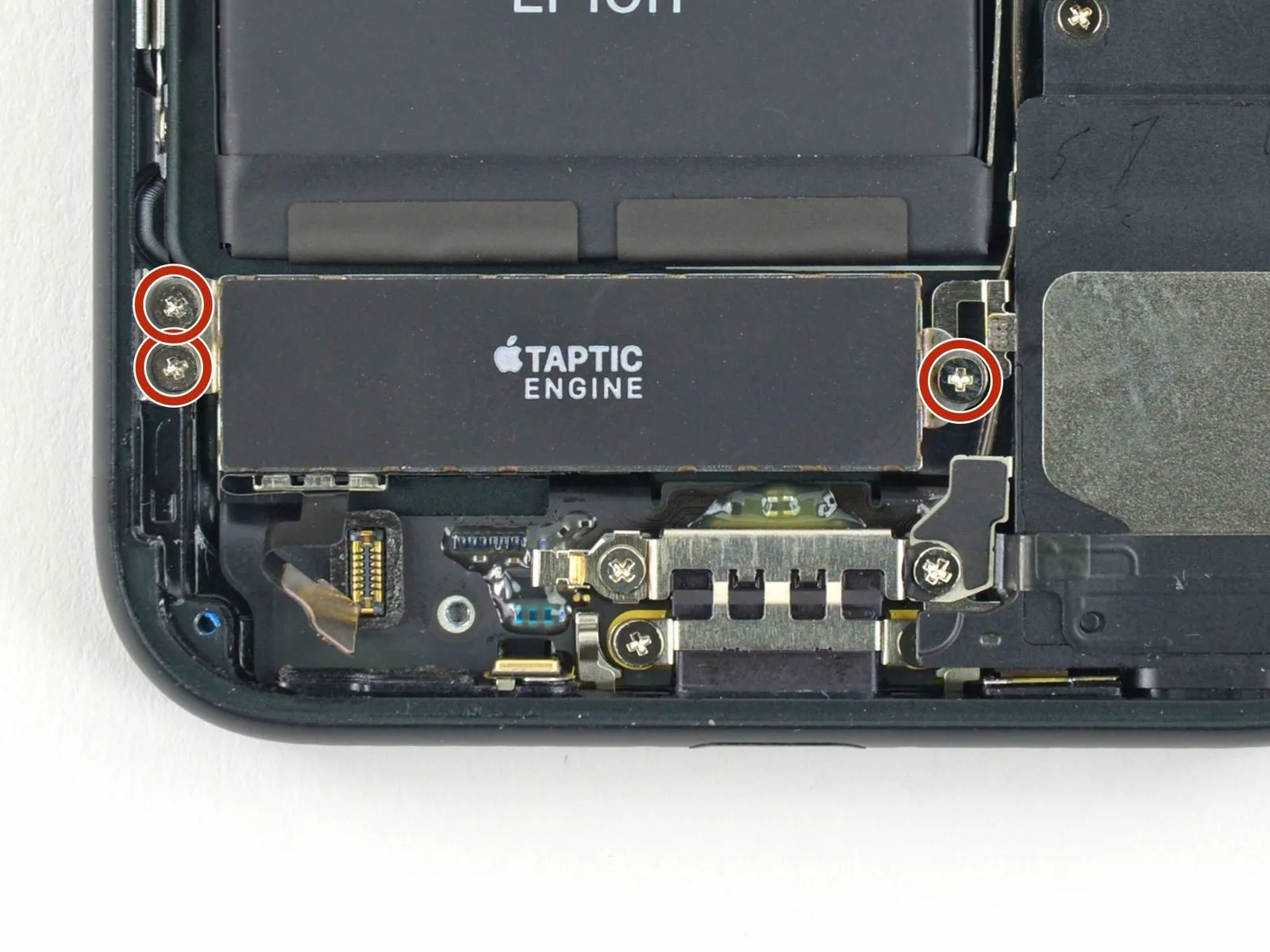
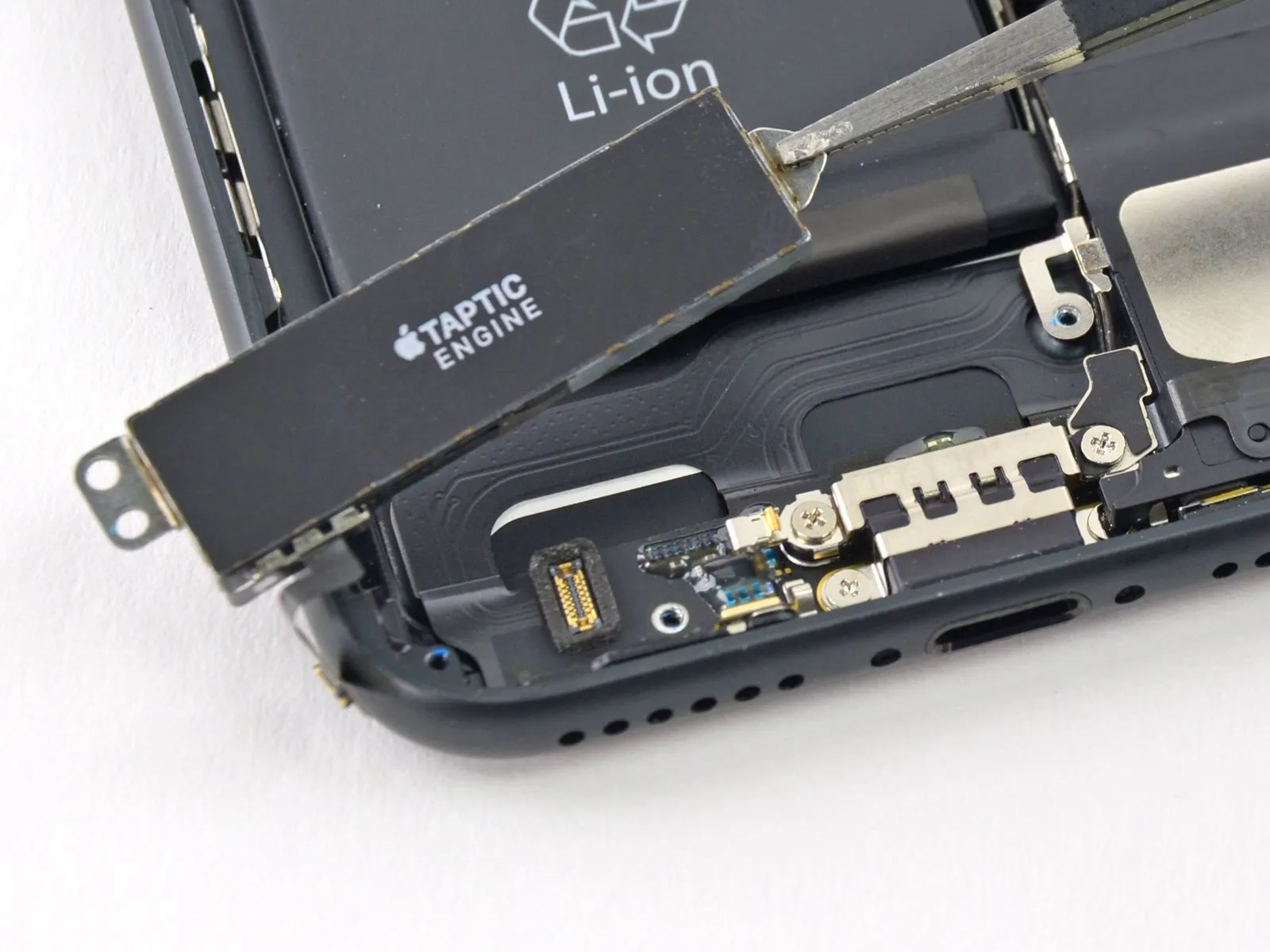
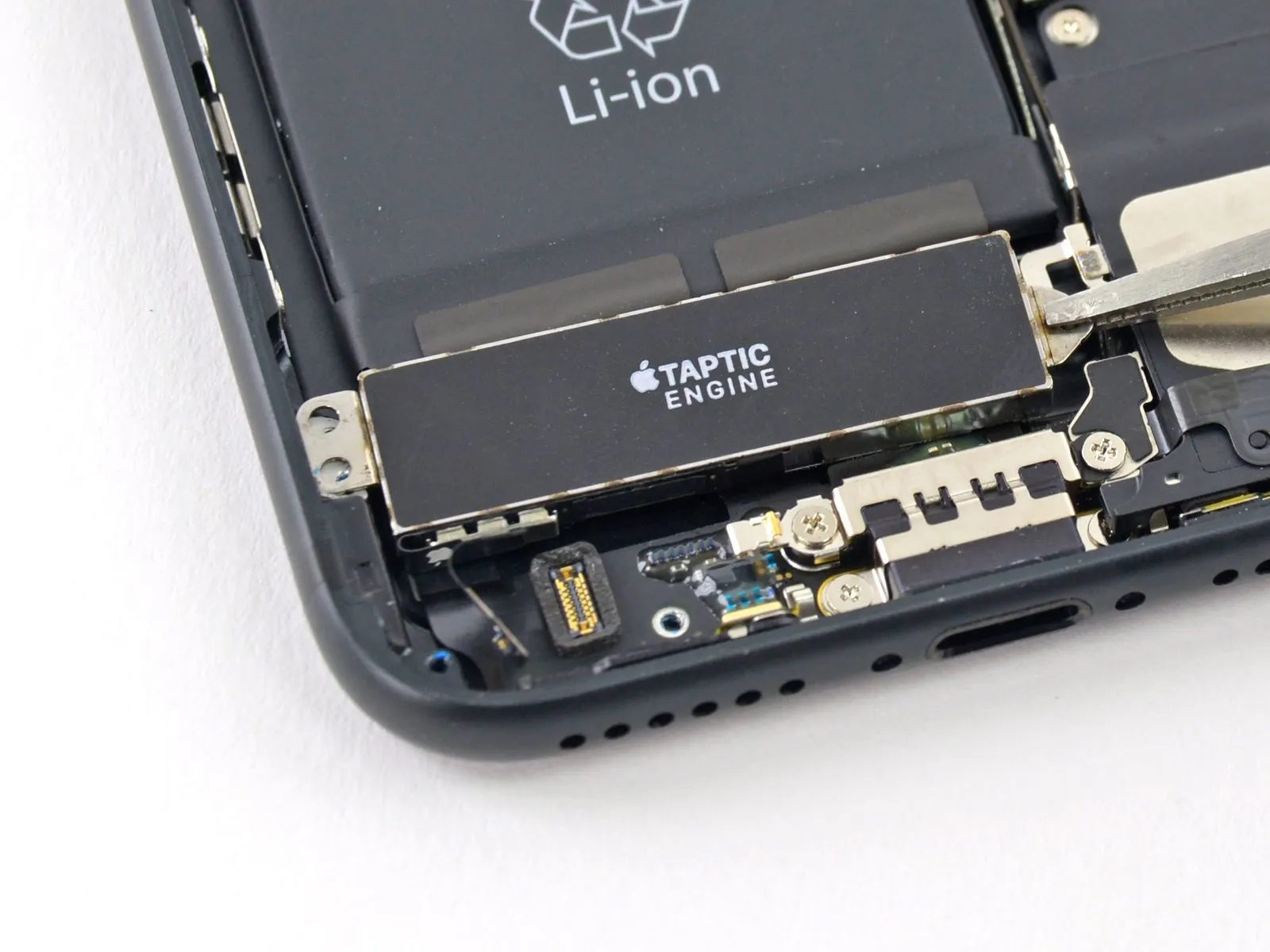
- To detach the Taptic Engine from the rear case, first eliminate the three fasteners.Utilize a Phillips screwdriver with a 1.6 mm bit to loosen and remove these screws.These screws are specifically designed to hold the Taptic Engine in place.
Step 48
Step 49
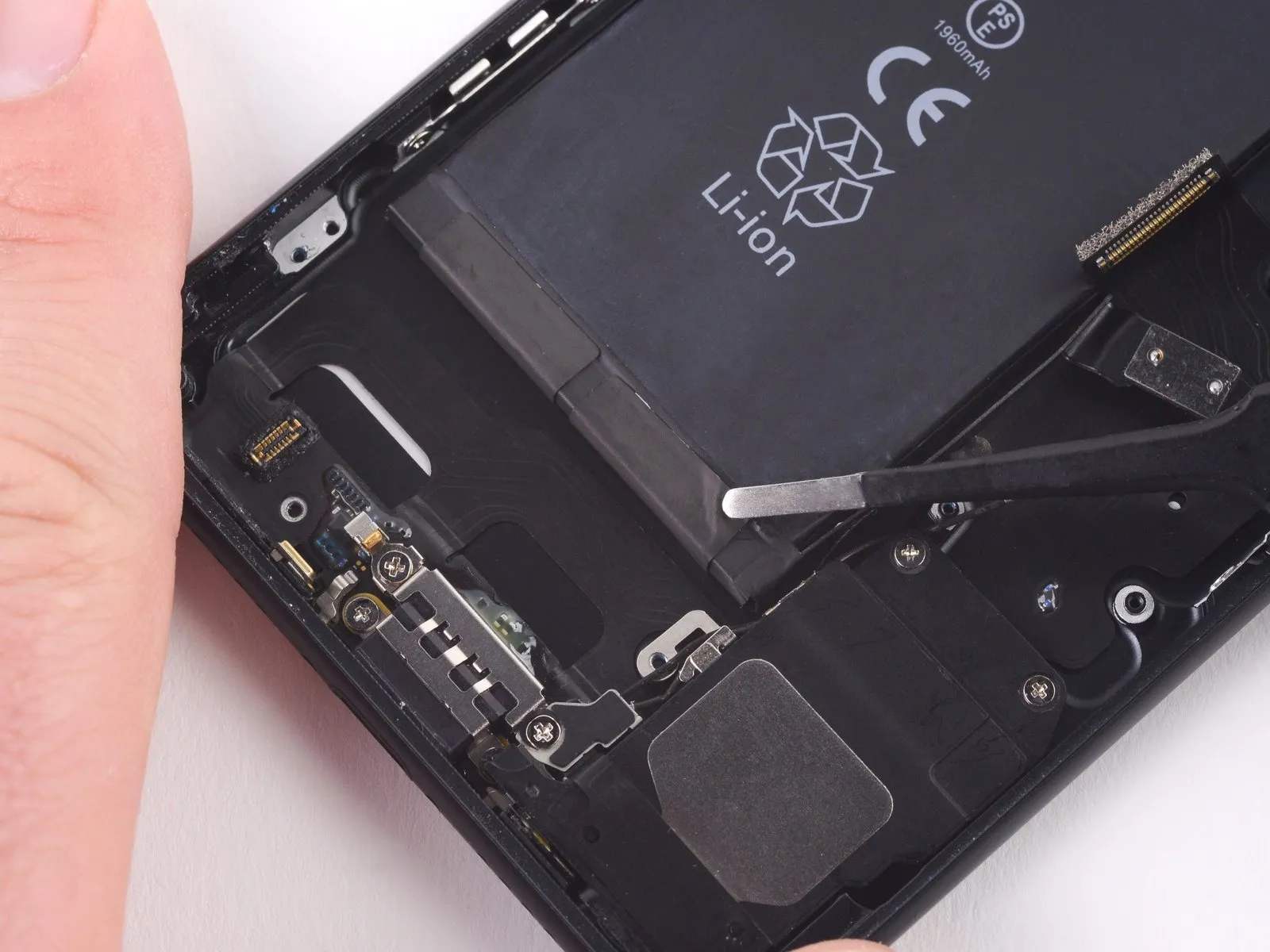
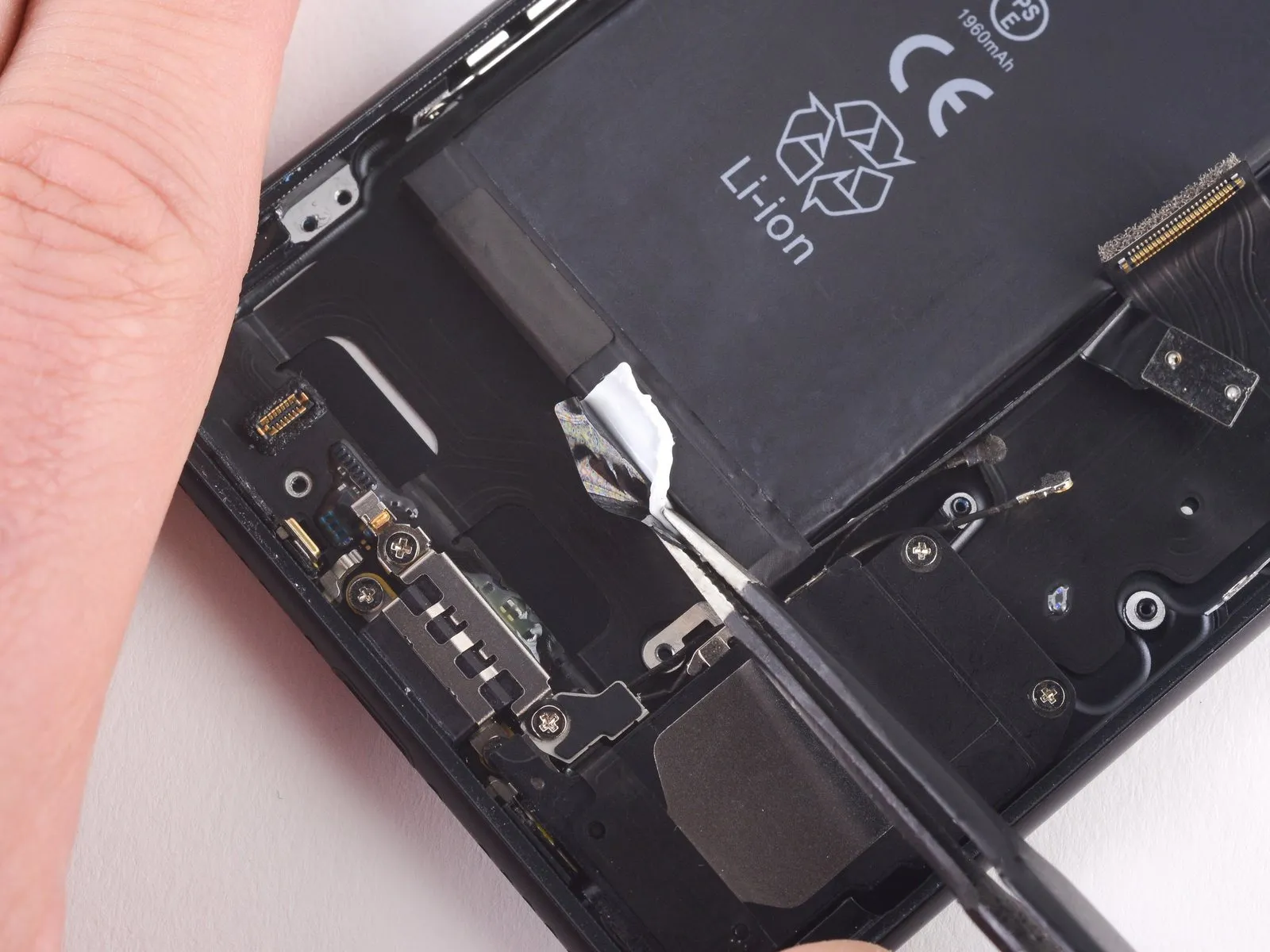
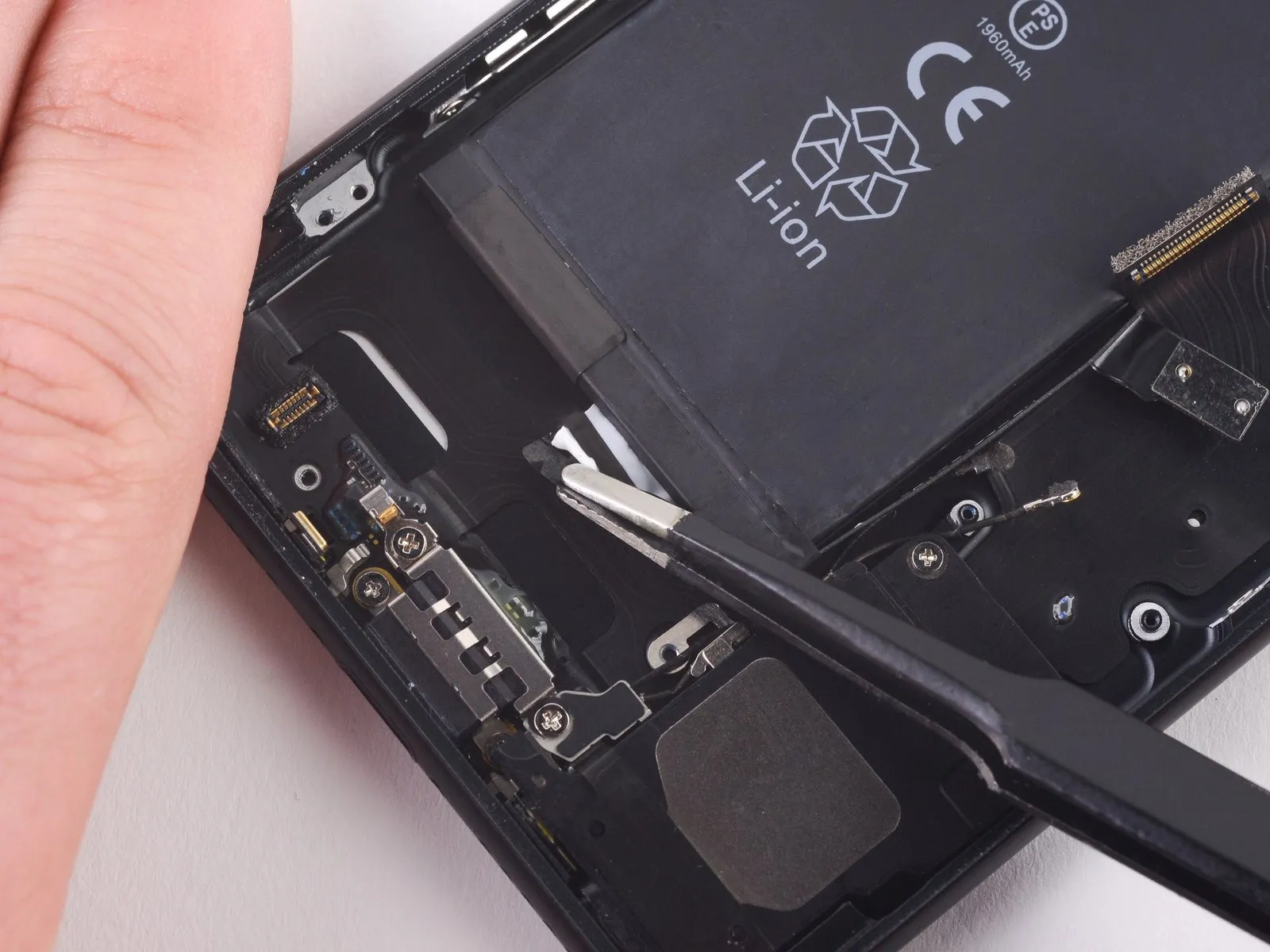
- Employ tweezers featuring rounded ends to carefully lift and separate one of the adhesive strips located along the battery's bottom edge.This action will allow for the battery's subsequent removal.
Step 50
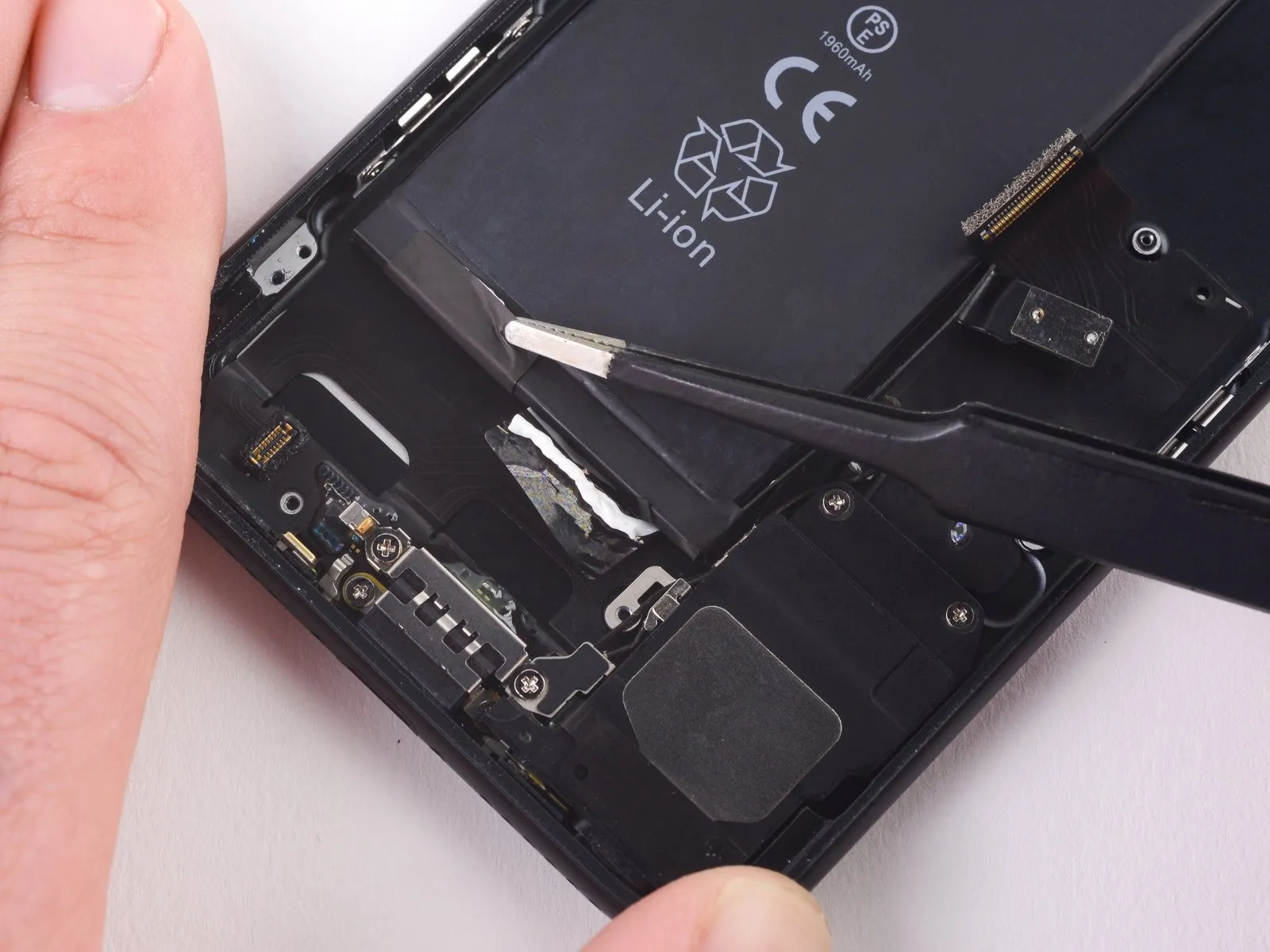
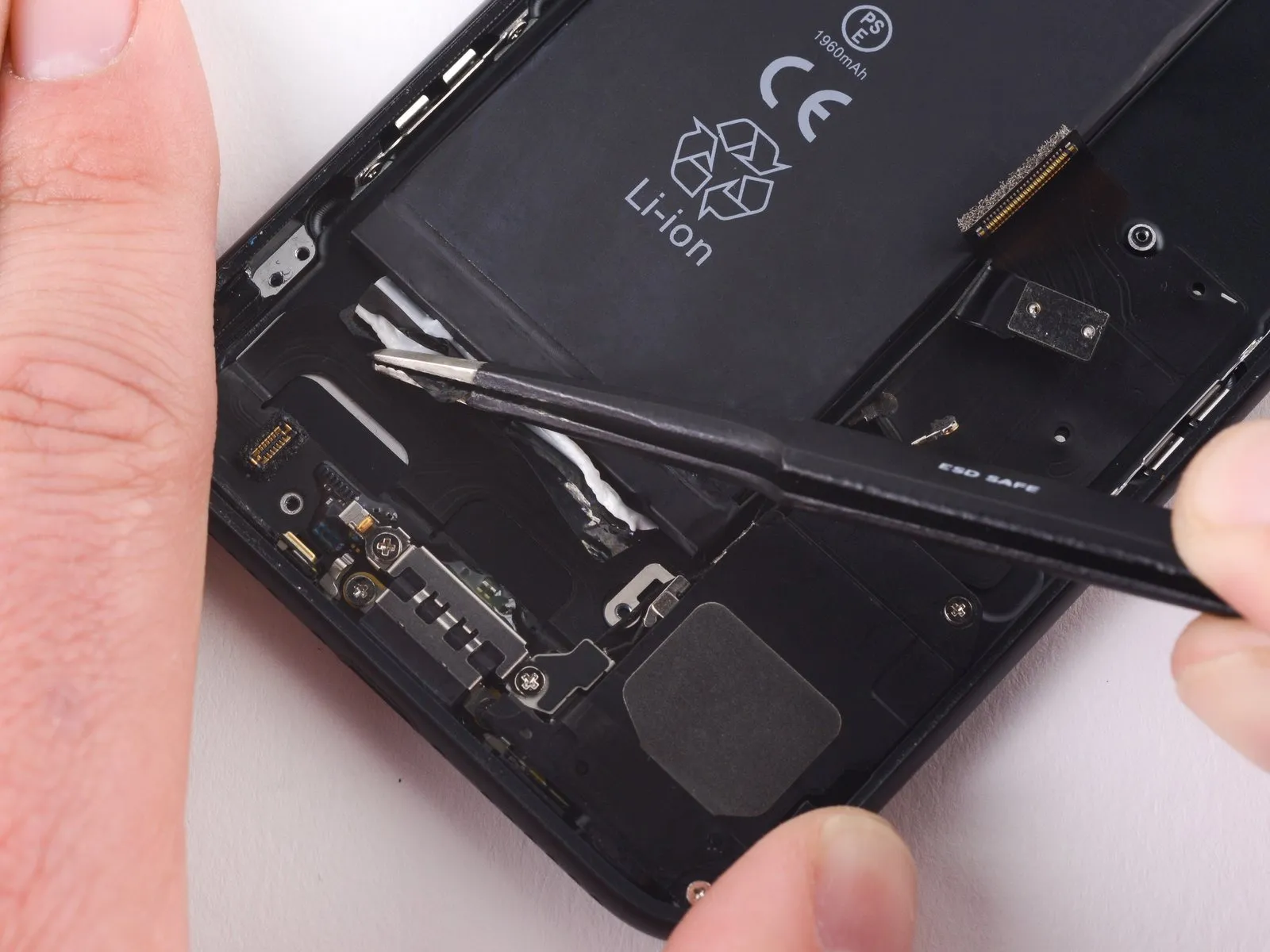
- Employ tweezers featuring rounded ends to carefully lift and separate the secondary adhesive layer situated along the battery's bottom margin.This action will expose the remaining portion of the battery's securing adhesive.
Step 51
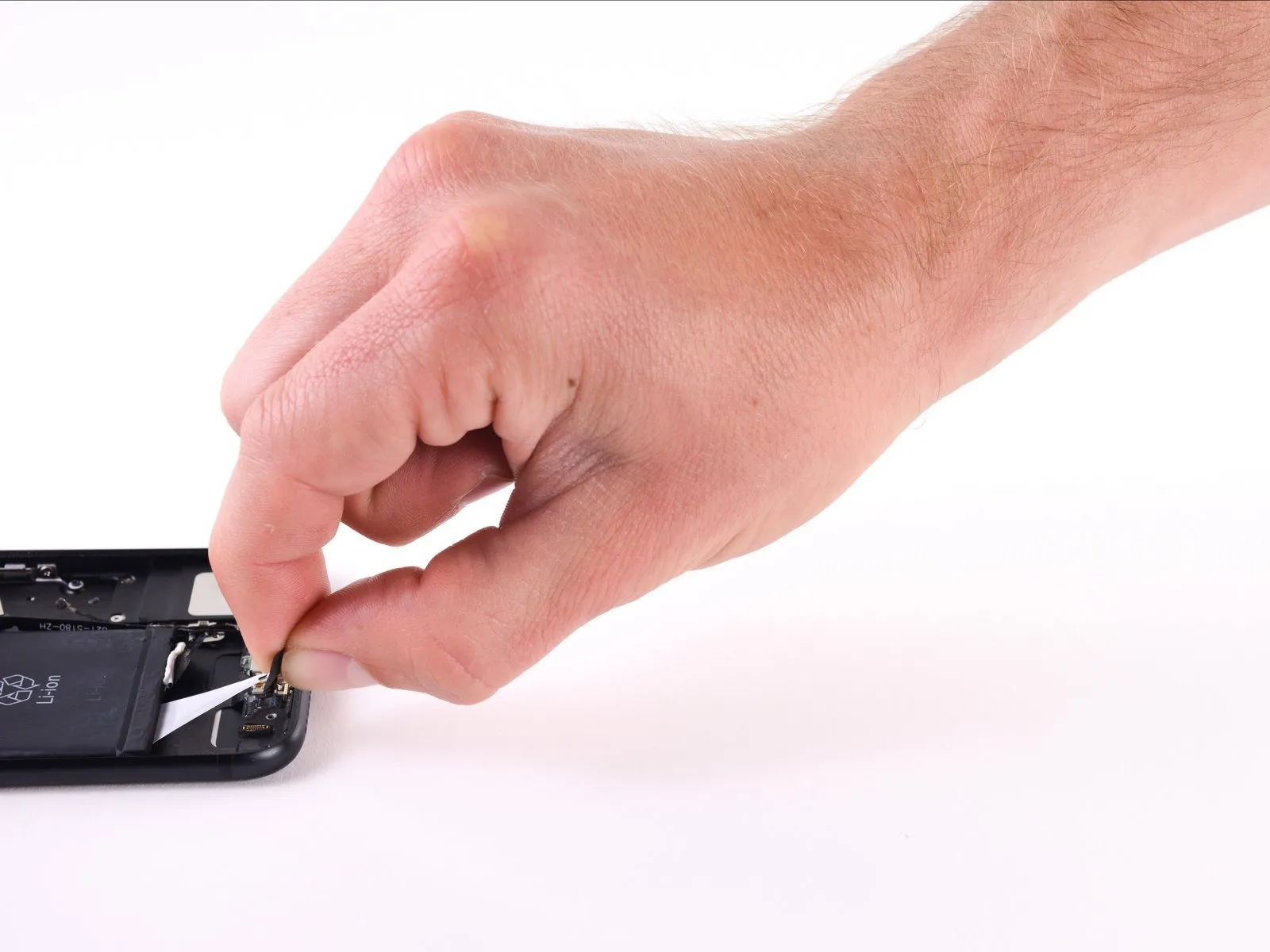
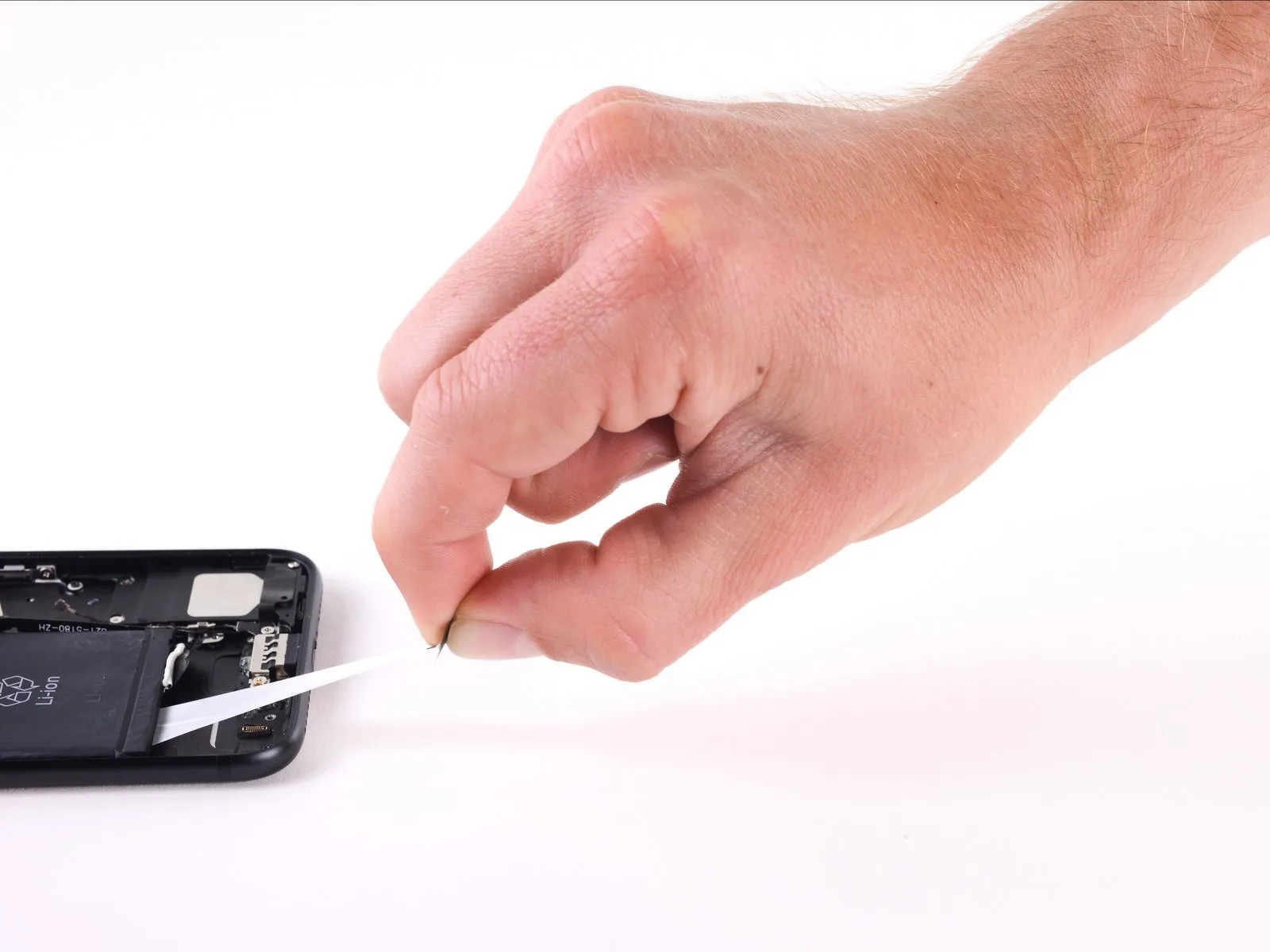
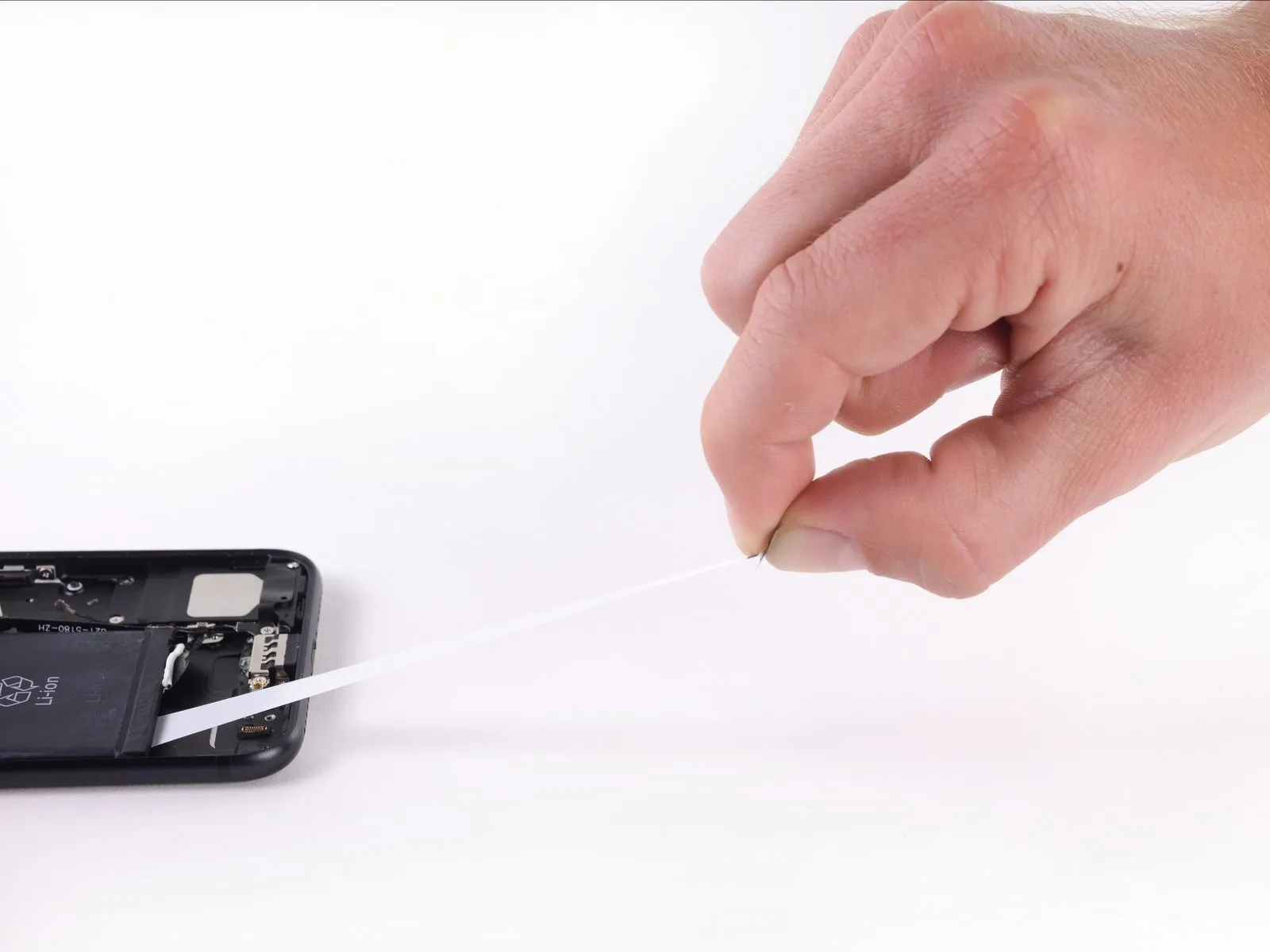
It is crucial to maintain the flatness of the adhesive strips and prevent any creases throughout this repair process.Creased strips are prone to adhering to themselves and fracturing rather than detaching smoothly.
- Gently separate one battery adhesive strip from the battery's surface., directing your movement towards the lower portion of the iPhone’s chassis.
- Apply consistent, even force while drawing the strip outward, ensuring continuous tension until it disengages from the space between the battery and the rear enclosure. To optimize the outcome, position your pull at a 60-degree angle or shallower.
Step 52
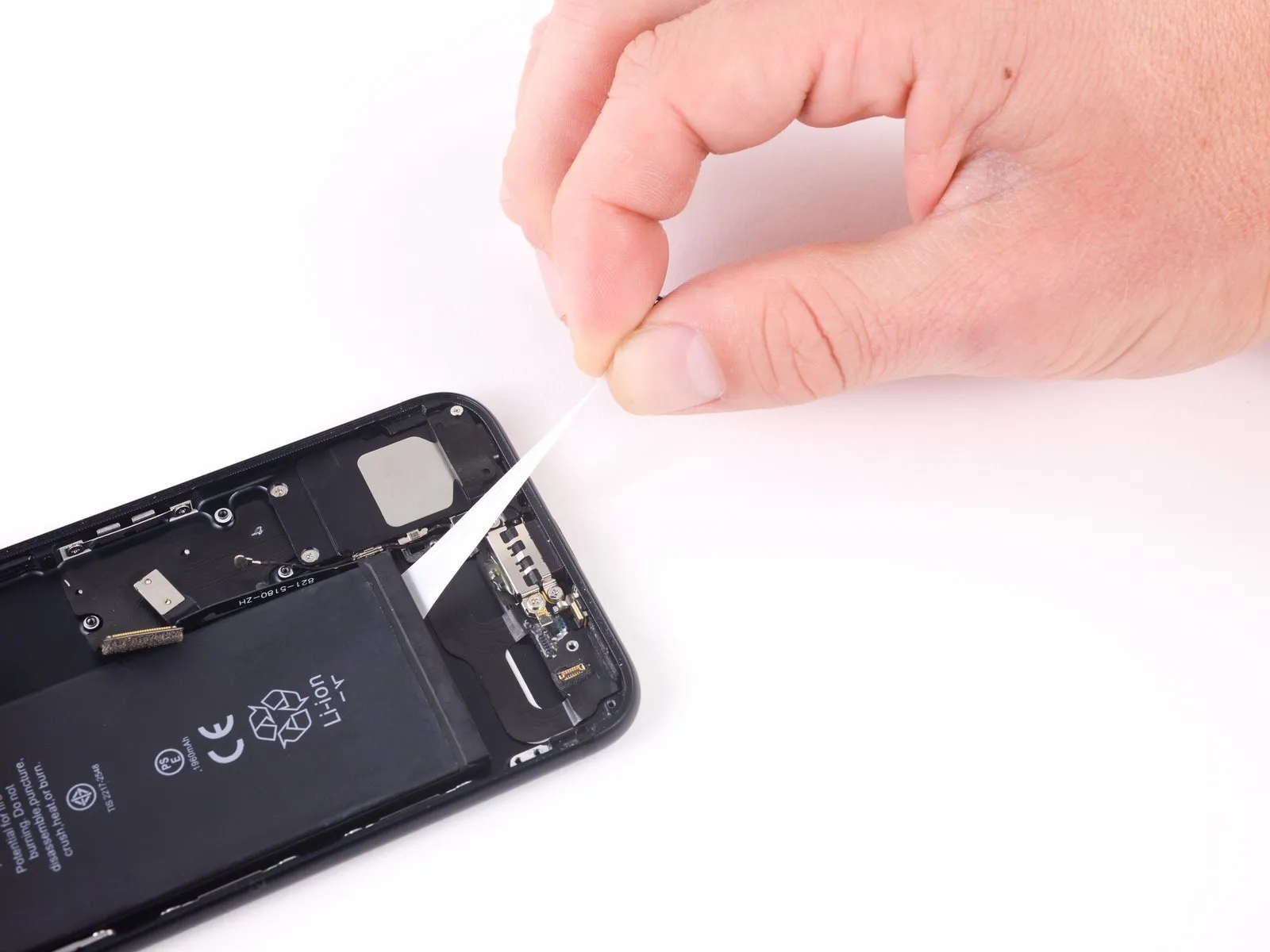
- Replicate the prior procedure for the second adhesive strip..
- Maintain pressure on the battery during the removal of the second strip.Failure to do so risks the battery being ejected from the device's casing during separation.
- Should both adhesive strips be successfully detached, proceed directly to the subsequent instruction.
- Conversely, if fragments of either adhesive strip remain adhered to the battery's underside and are inaccessible, proceed with the following steps.
Step 53
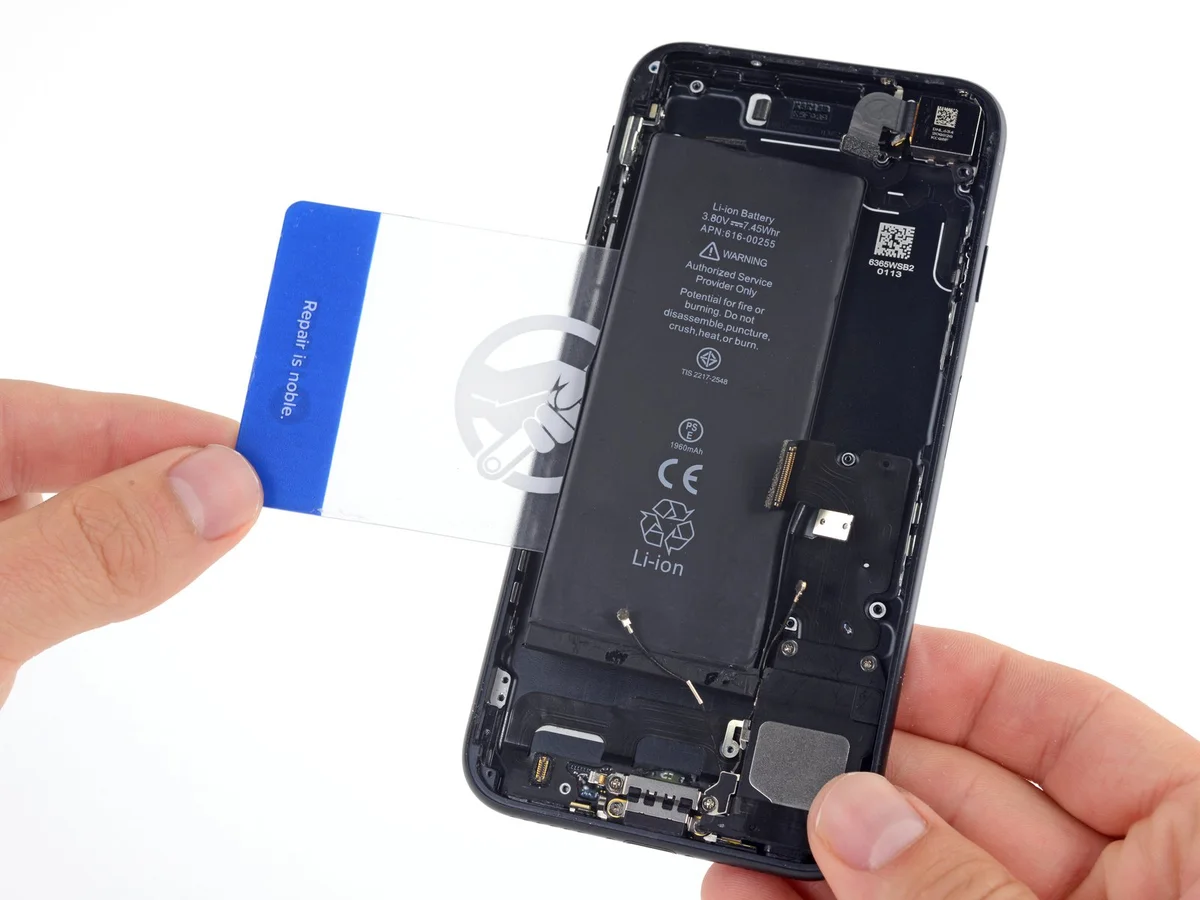
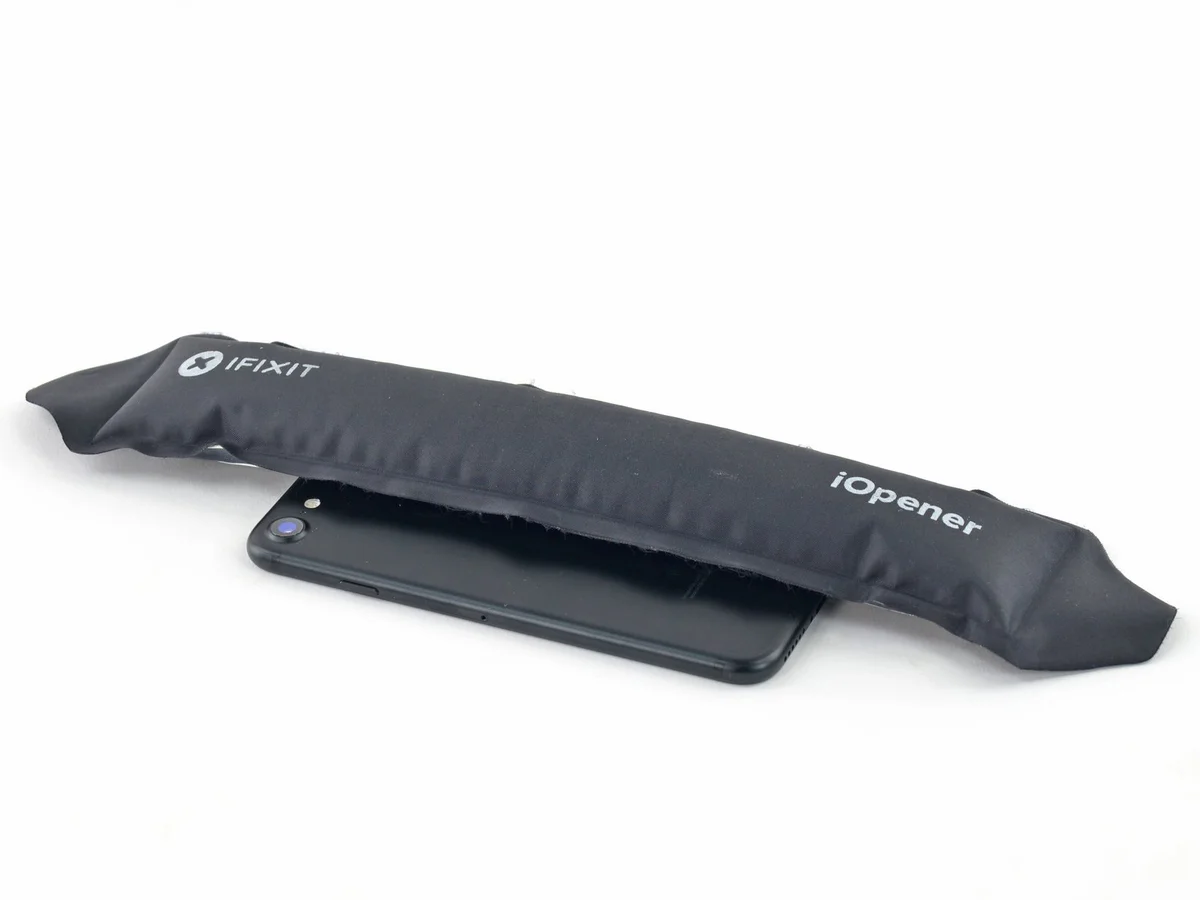
- Should the adhesive strips detach without issue, proceed to the subsequent instruction; if not, the battery must be carefully separated from the rear case using leverage.
- To soften the adhesive, utilize an iOpener and position it against the rear case's exterior, directly above the battery. As an alternative, apply warmth to the rear case with either a heat gun or a hair dryer.
- Following approximately sixty seconds of heat or iOpener application, remove the iOpener, turn the device around, and employ a plastic card to disrupt any residual adhesive securing the battery.
- Exercise caution to prevent bending the battery; any physical compromise could result in the release of hazardous substances and potentially initiate combustion.
- Refrain from inserting the prying tool beneath the upper third of the battery, as this area houses the ribbon cable connected to the volume buttons and could cause damage.
Step 54
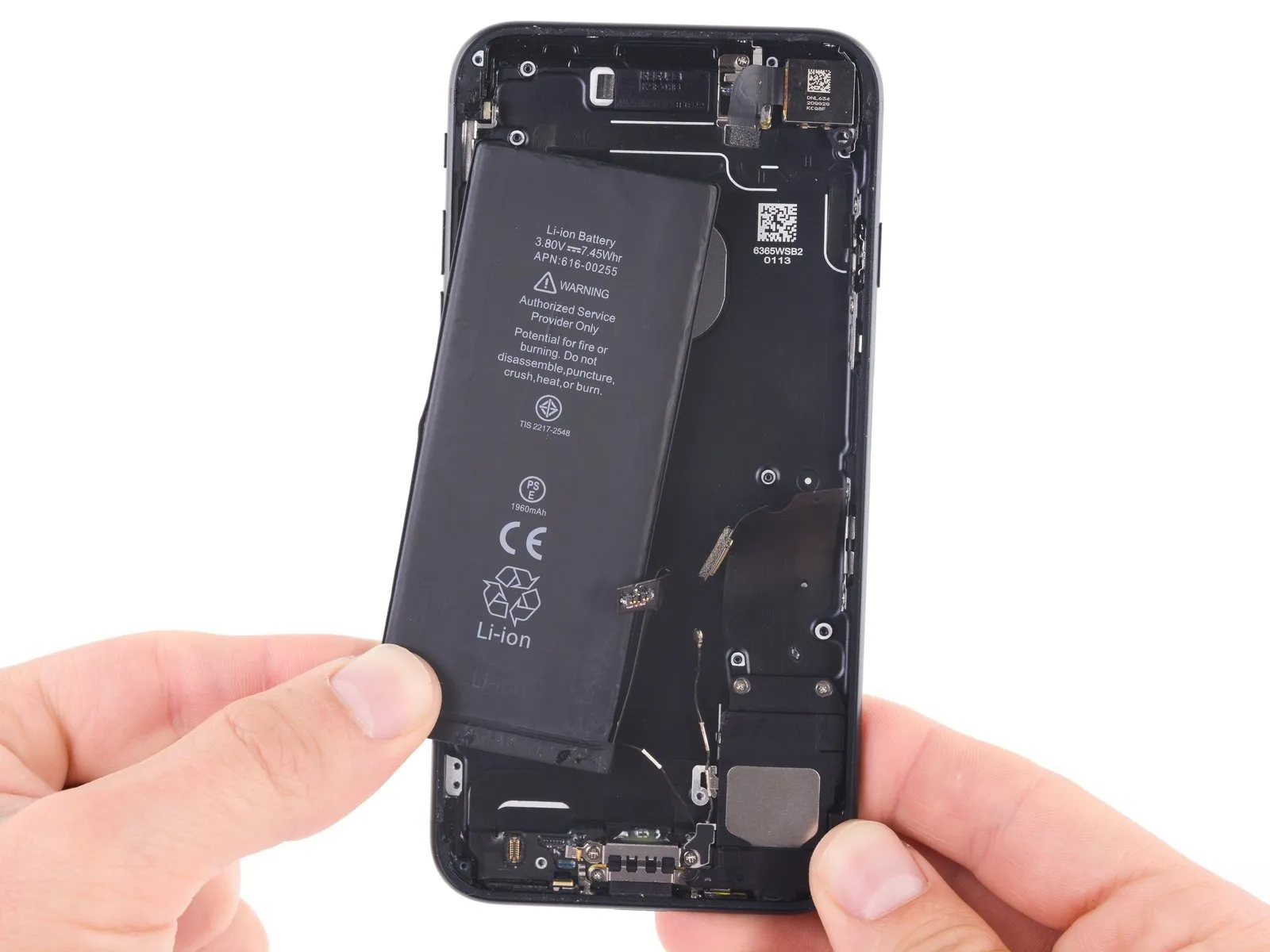
- Disconnect the power source by extracting the battery.
- During battery replacement, consult this instructional document for proper adhesive strip substitution.
Step 55 | Power and Volume Control Cable
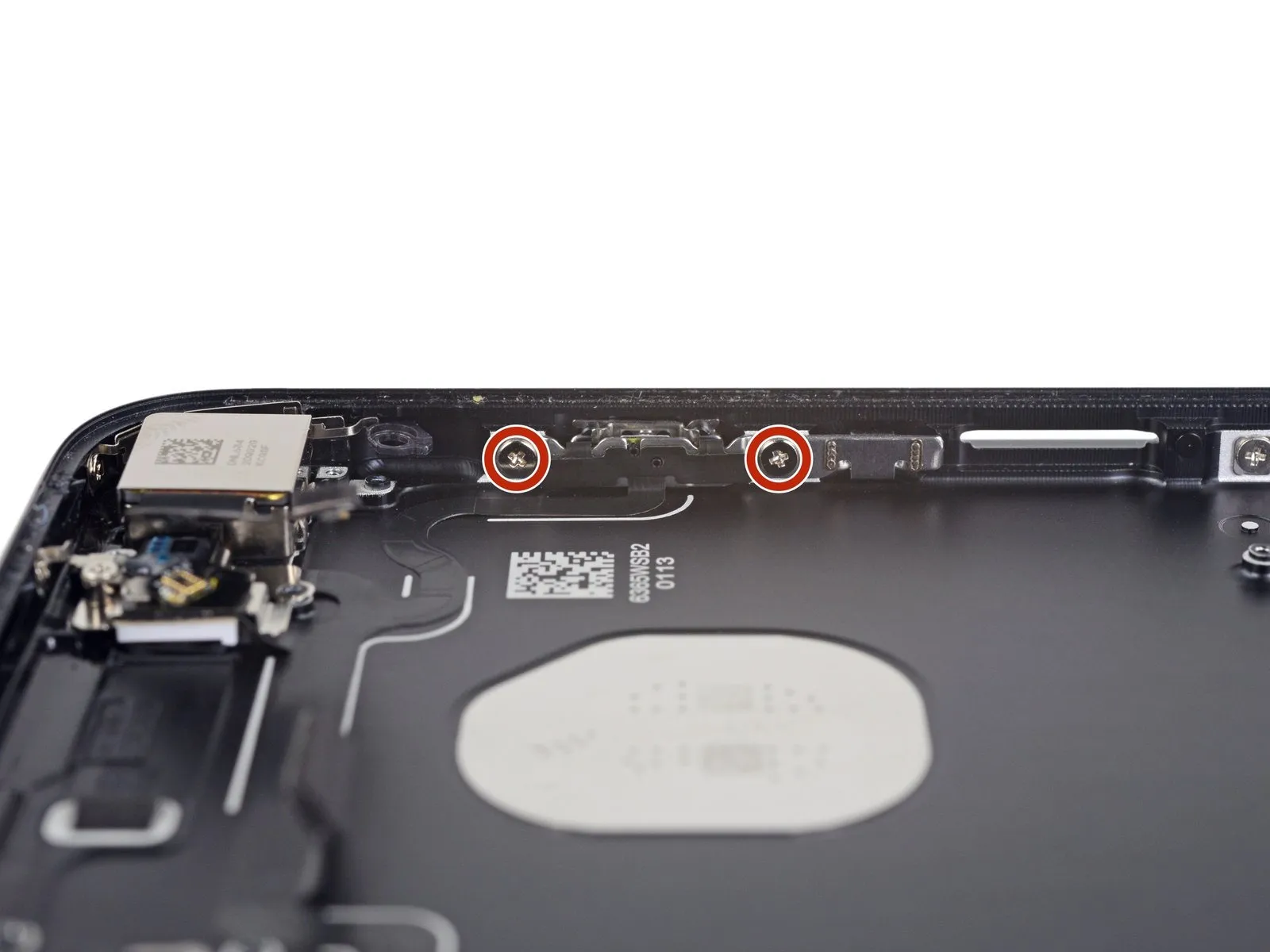
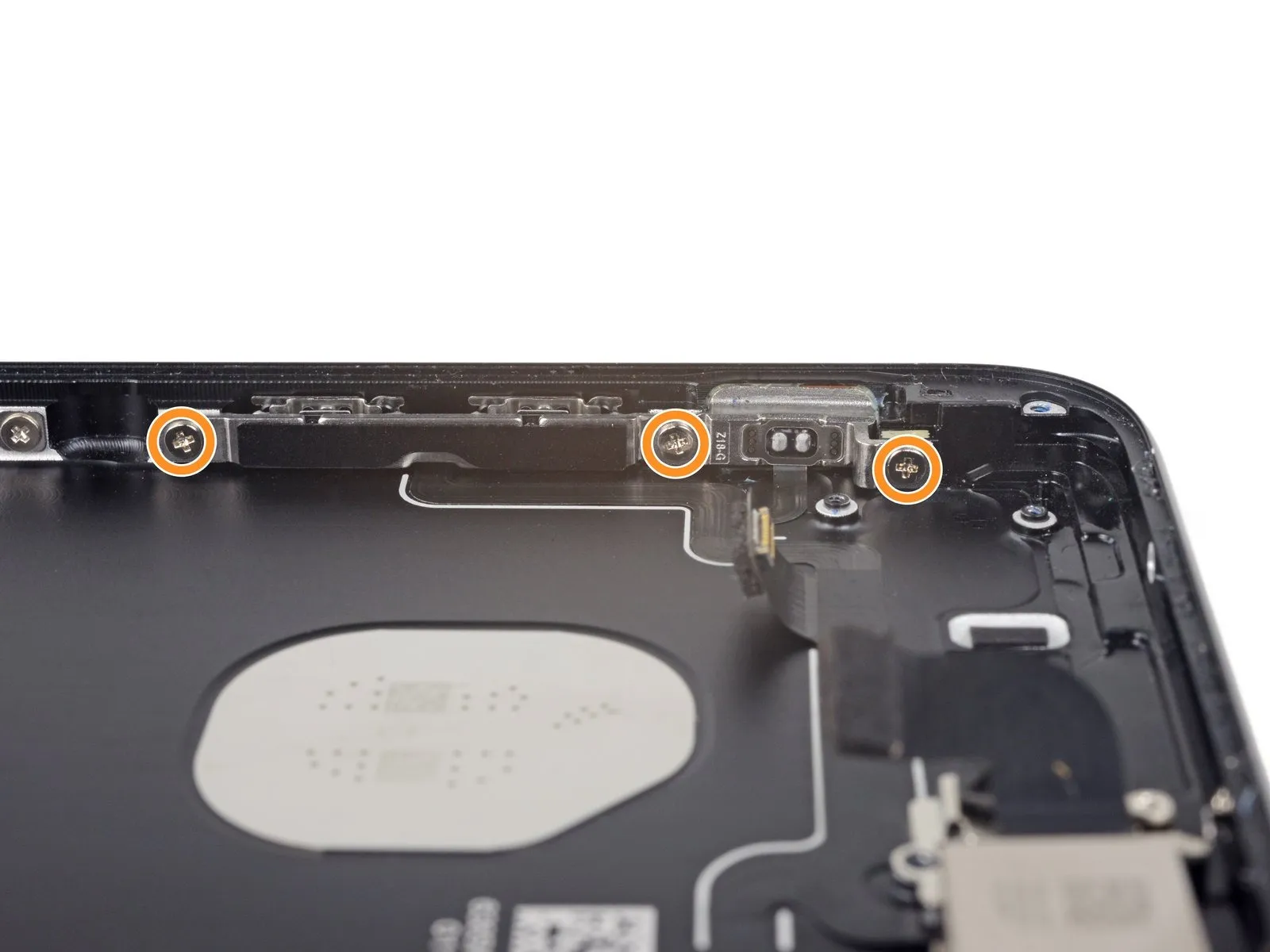
- To proceed with the repair, detach the Phillips screws listed below.
- Specifically, there are two1.9 mmscrews that fasten the power button in place.
- Additionally, three2.3 mmscrews are used to secure the volume buttons.
Step 56
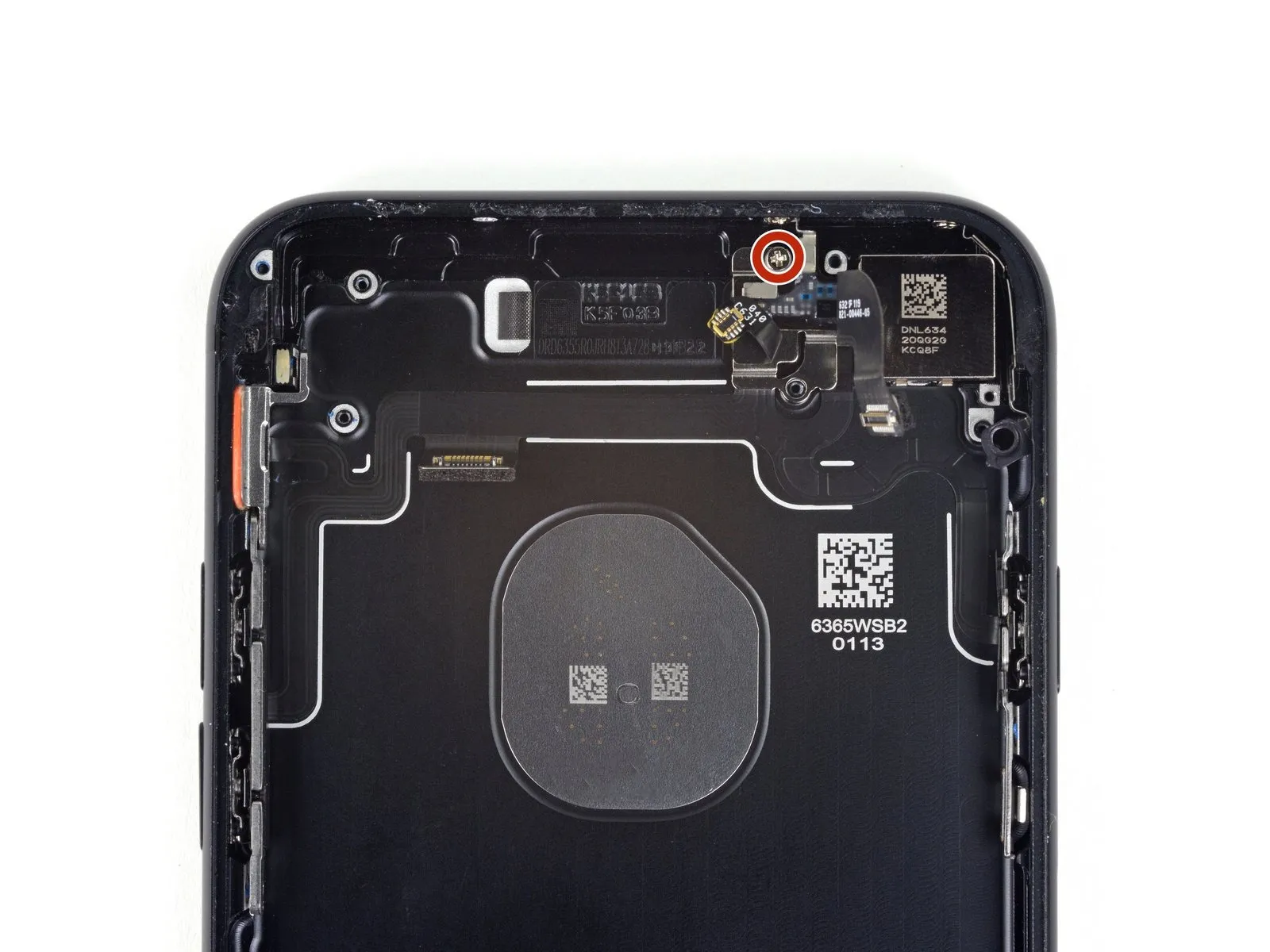
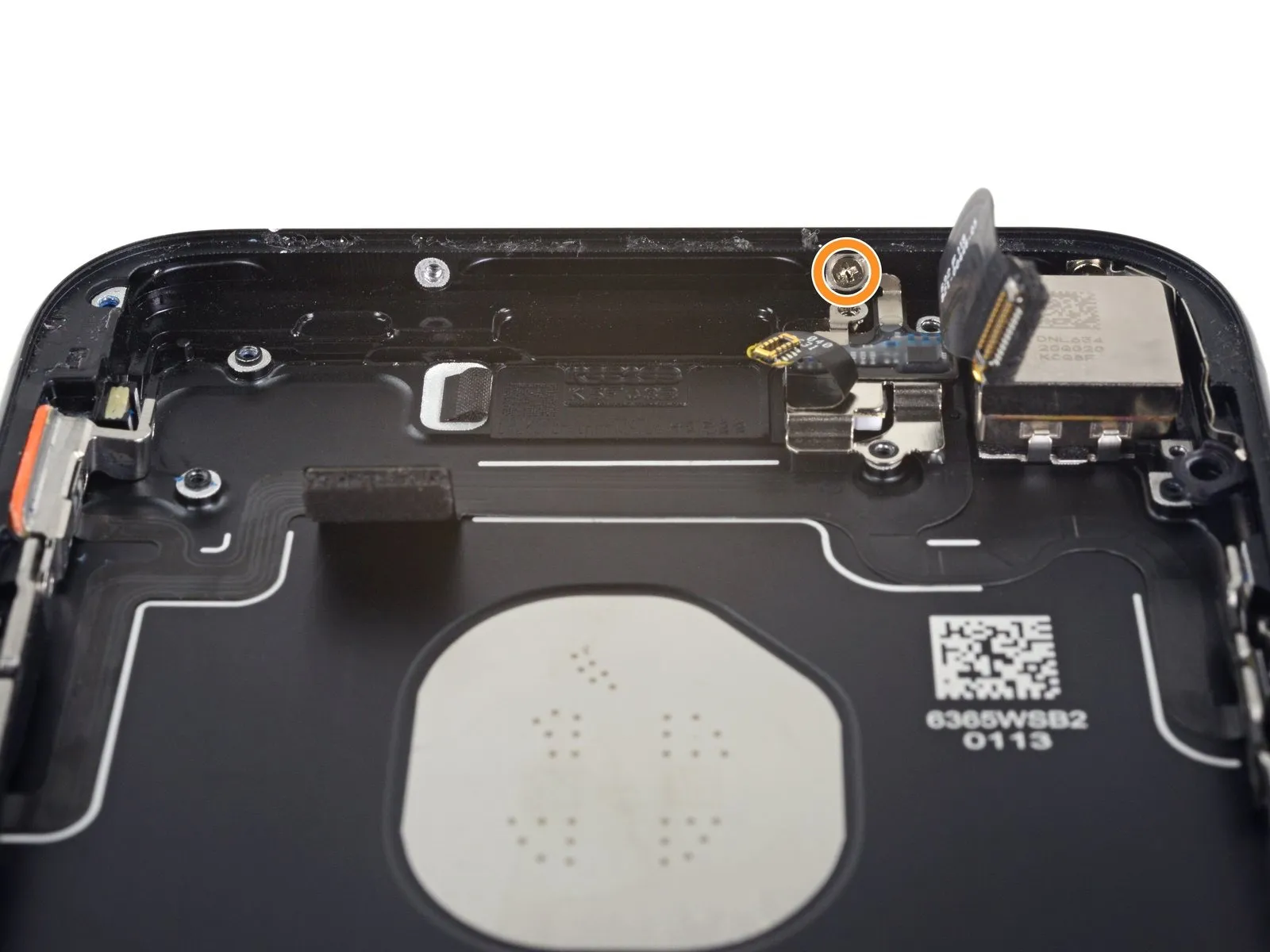
- To proceed with disassembly, eliminate the specified fasteners:Specifically, utilize a 1.3 mm Phillips screwdriver to remove:
- A single screw is located adjacent to the rear camera module.
- Additionally, a screw secures the rear case assembly.
Step 57
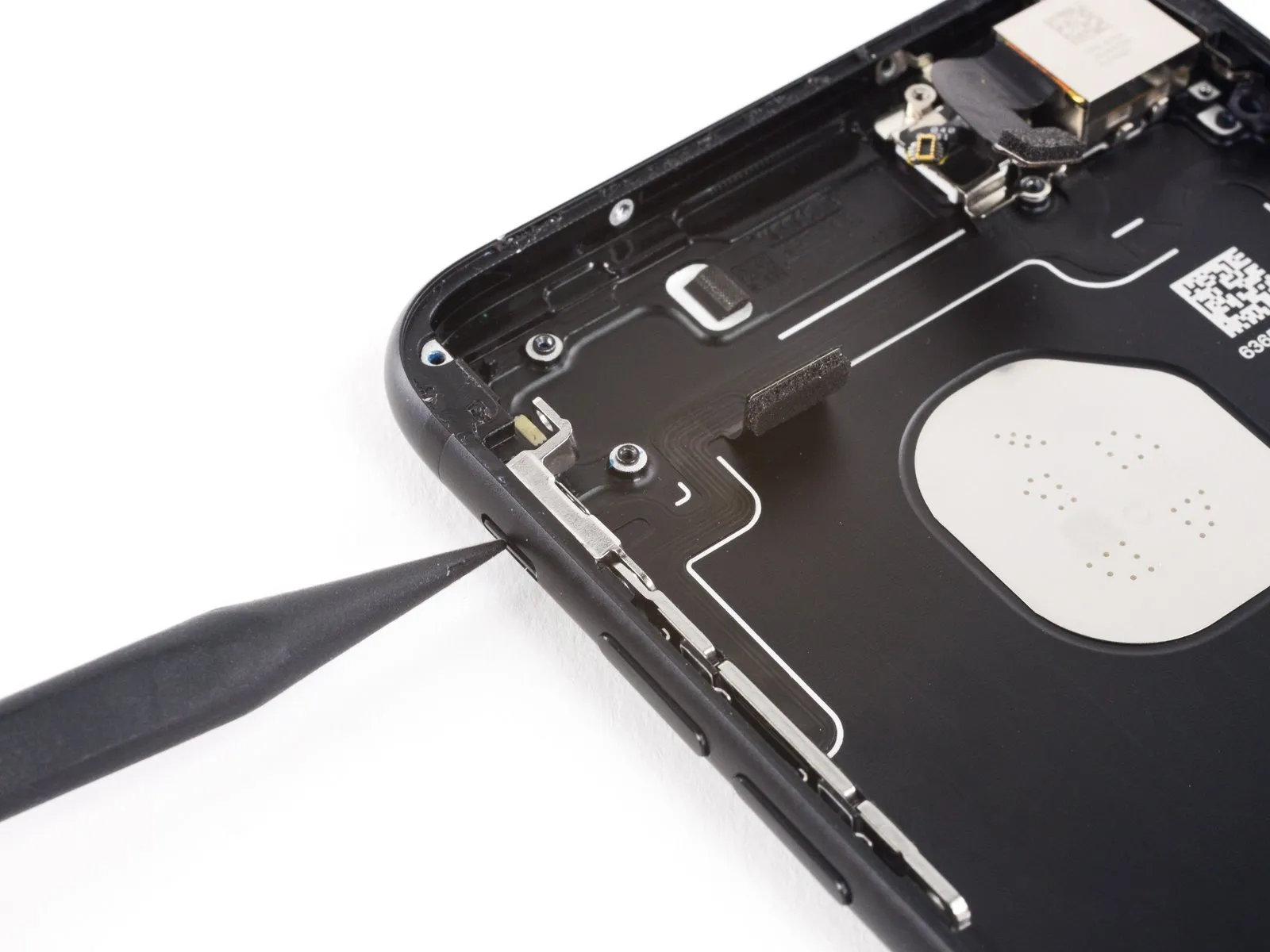
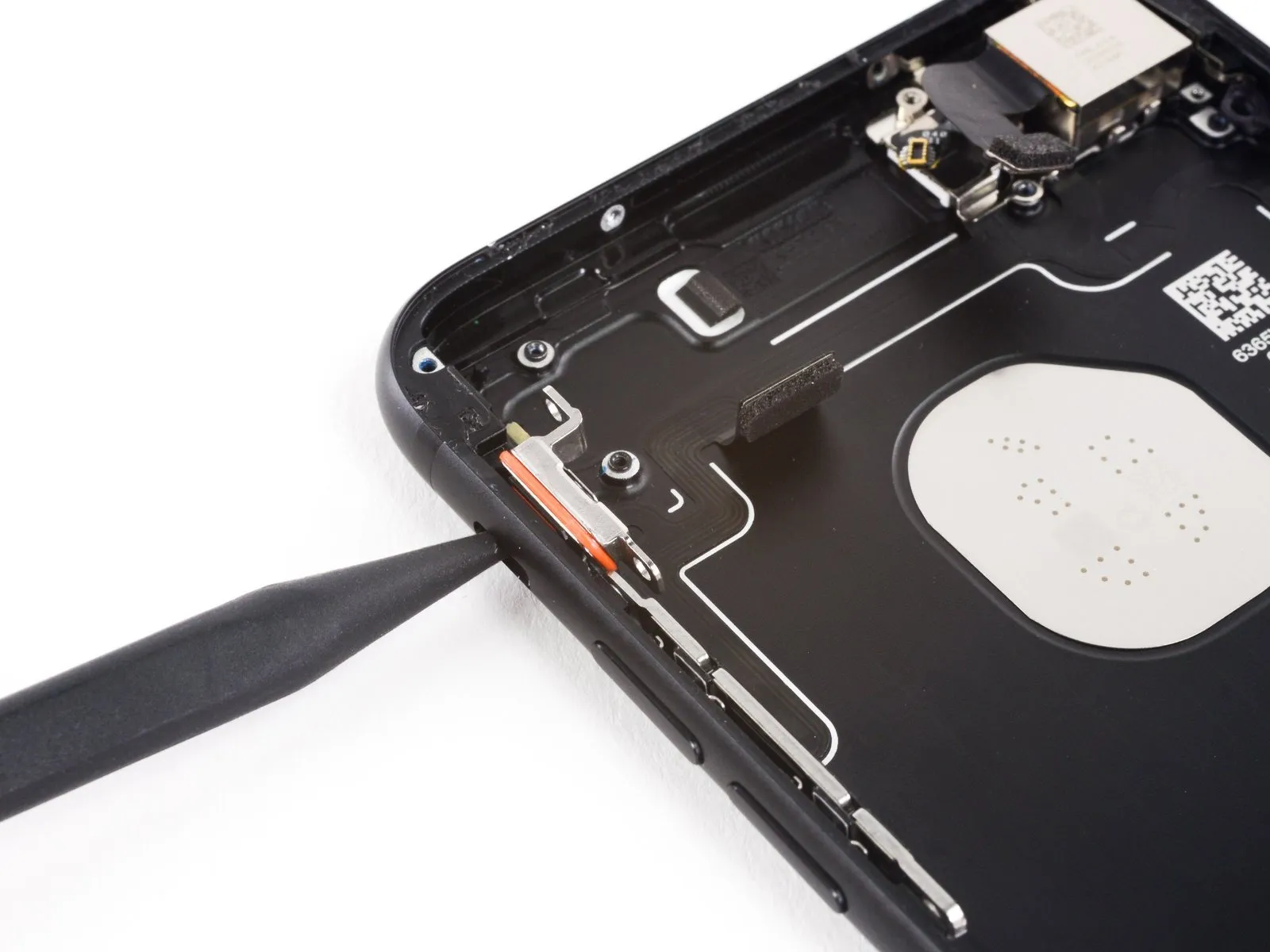
- Using a spudger's tip, depress the hold switch located on the exterior of the device, forcing it inward toward the rear casing.
- By performing this maneuver, the hold switch and its associated gasket will become disengaged from the rear case assembly.
Step 58
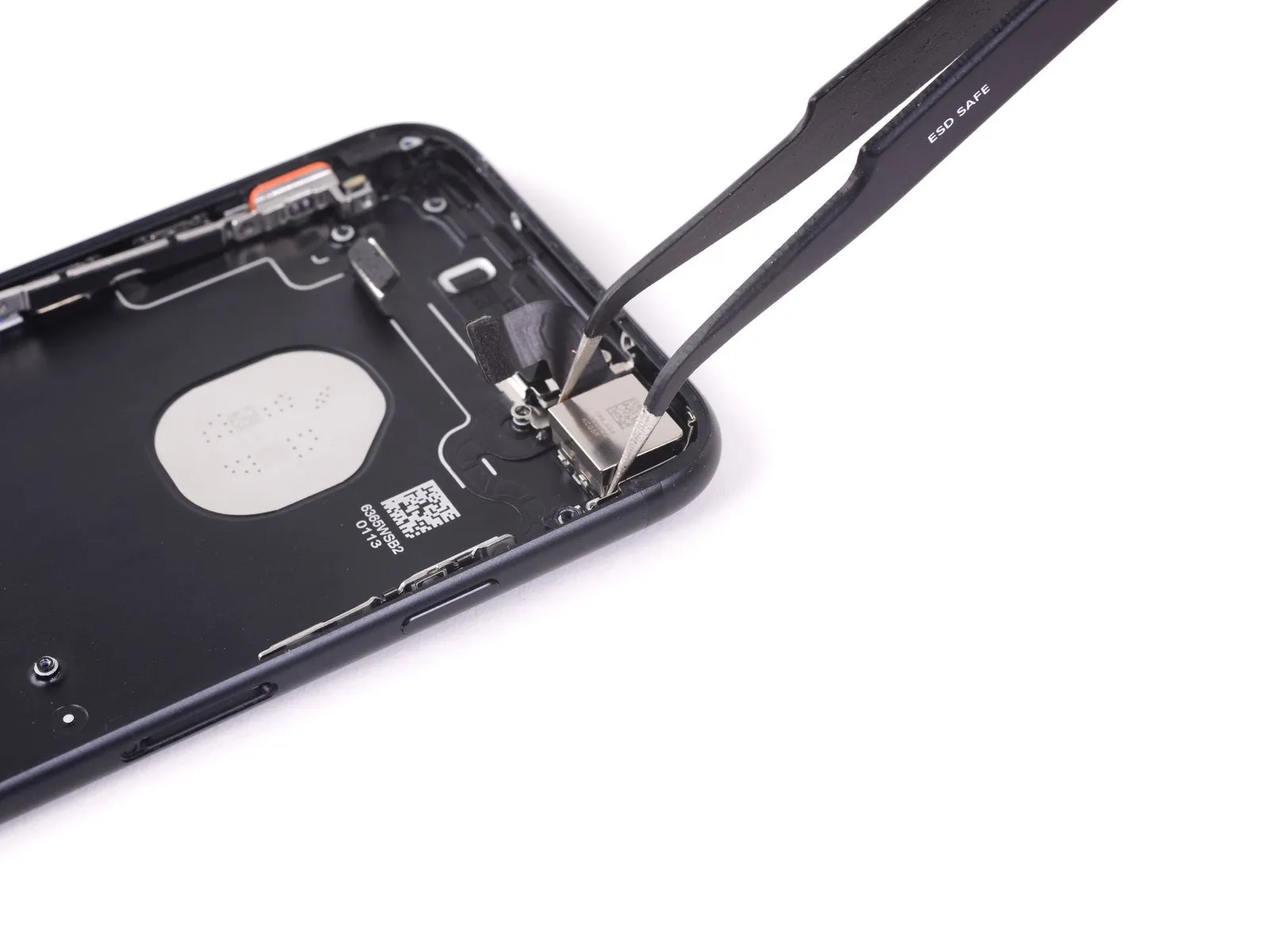

- Carefully extract the rear-facing camera module utilizing a set of precision tweezers.
Step 59
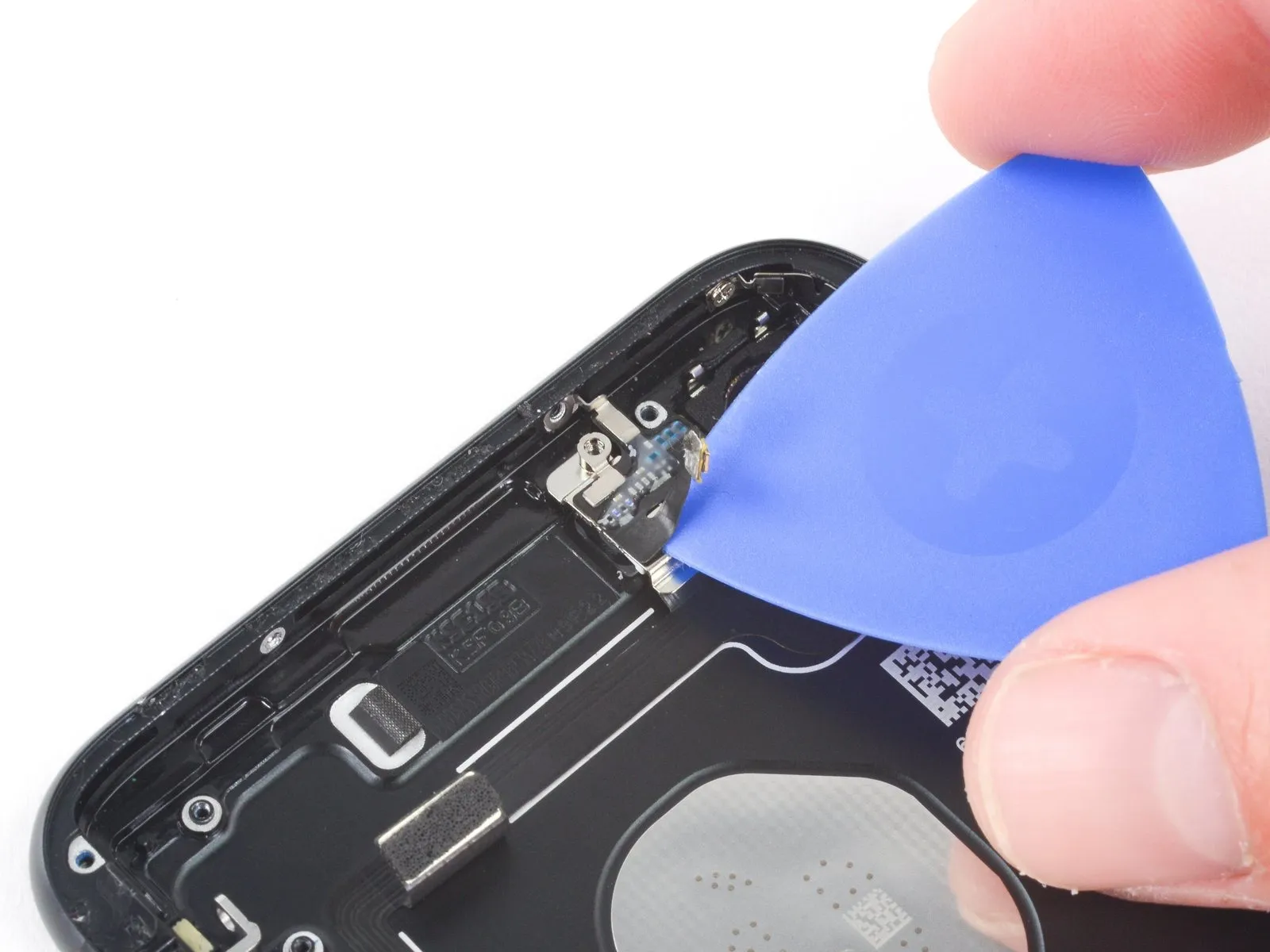
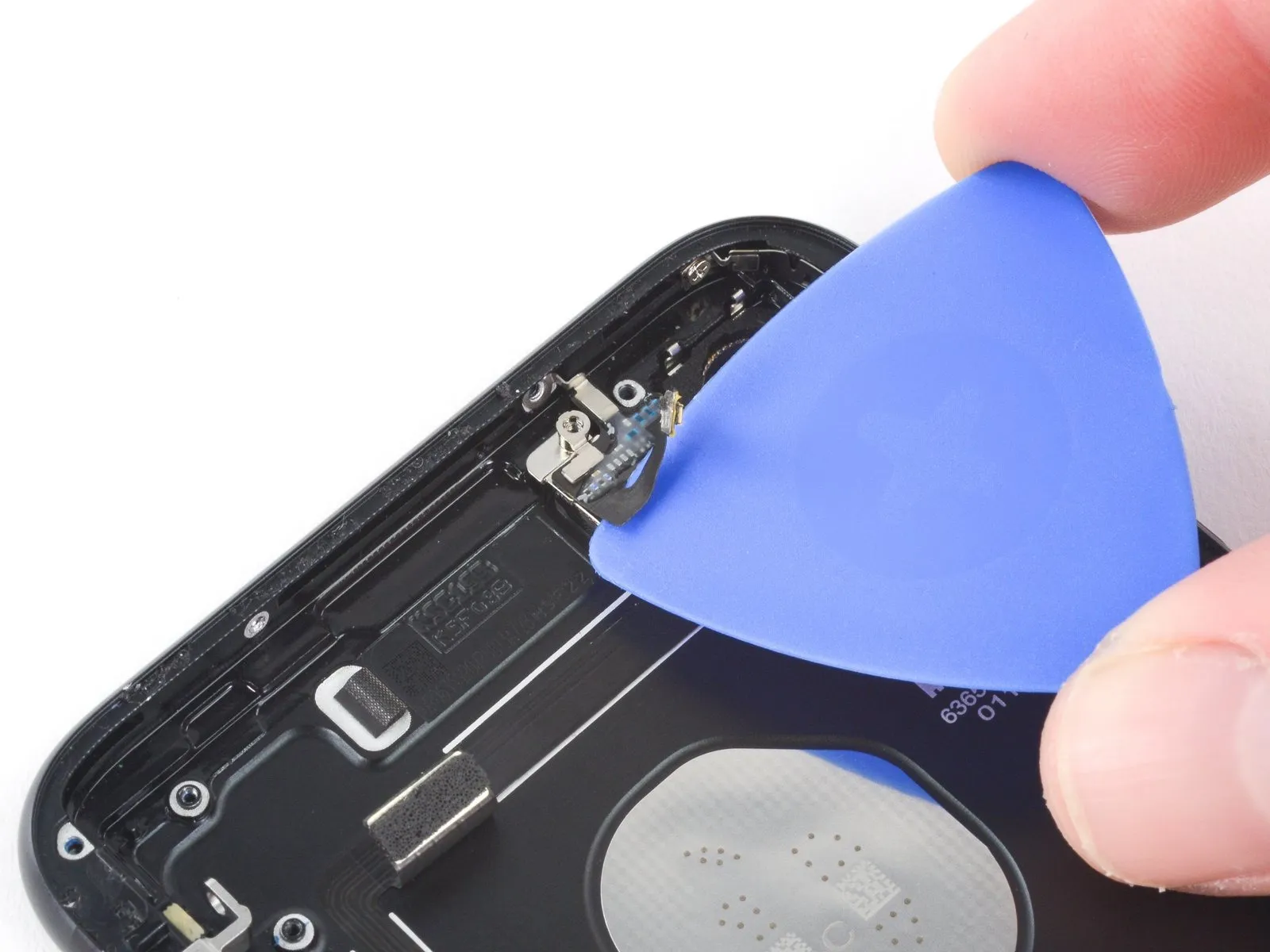
- Commencing from the power button vicinity of the device, employ a prying tool to detach the adhesive securing the antenna flex cable to the back cover.
Step 60


- Carefully insert the tip of a specialized opening tool beneath the antenna flex cable, positioned near the phone's upper edge, to detach the residual adhesive.
Step 61
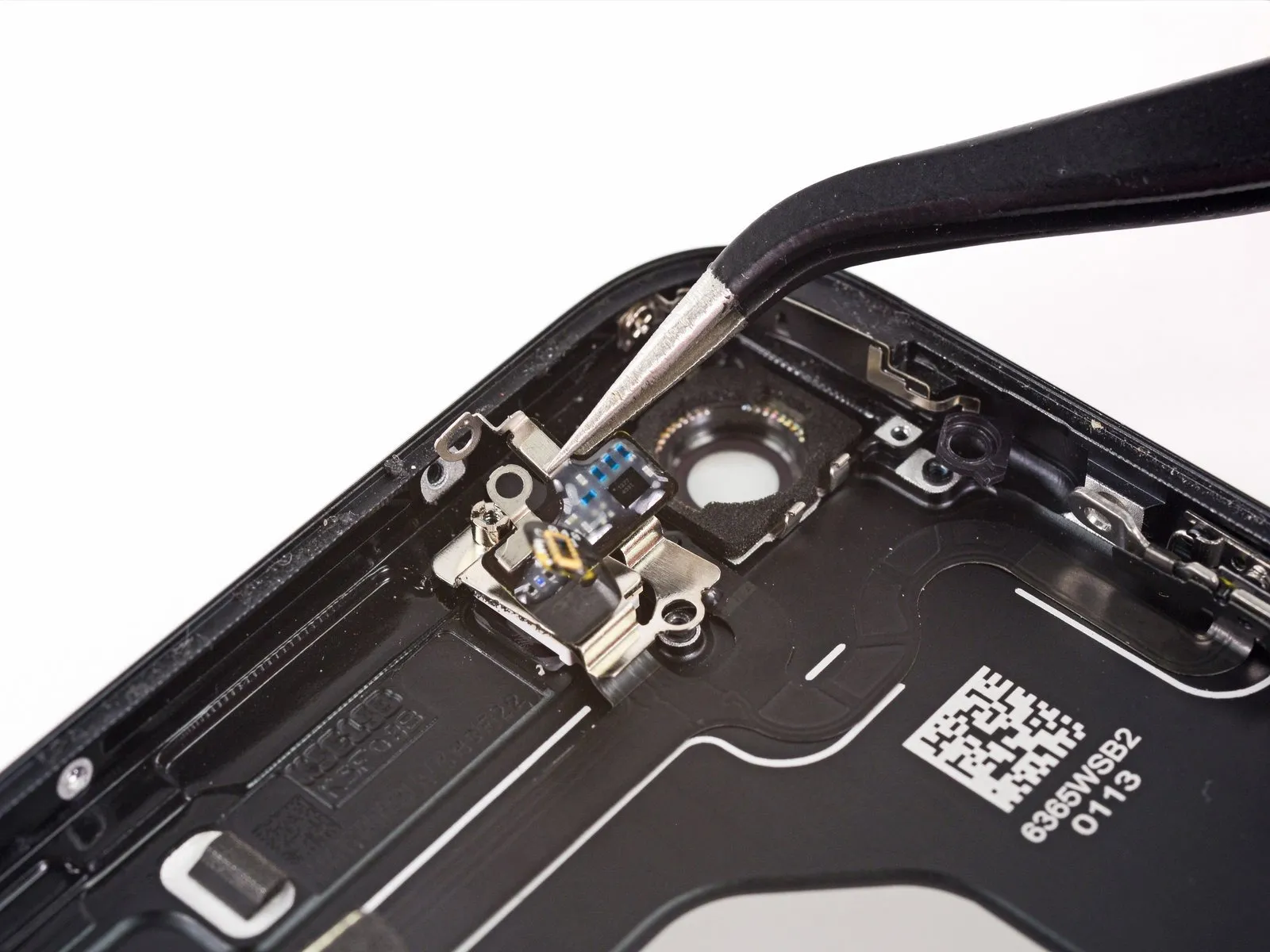

- Employ tweezers for manipulation.This allows for the separation of the antenna flex cable from the phone's perimeter, releasing the screw bracket from the back cover.
- Detach the antenna flex cable.Complete the task.
Step 62
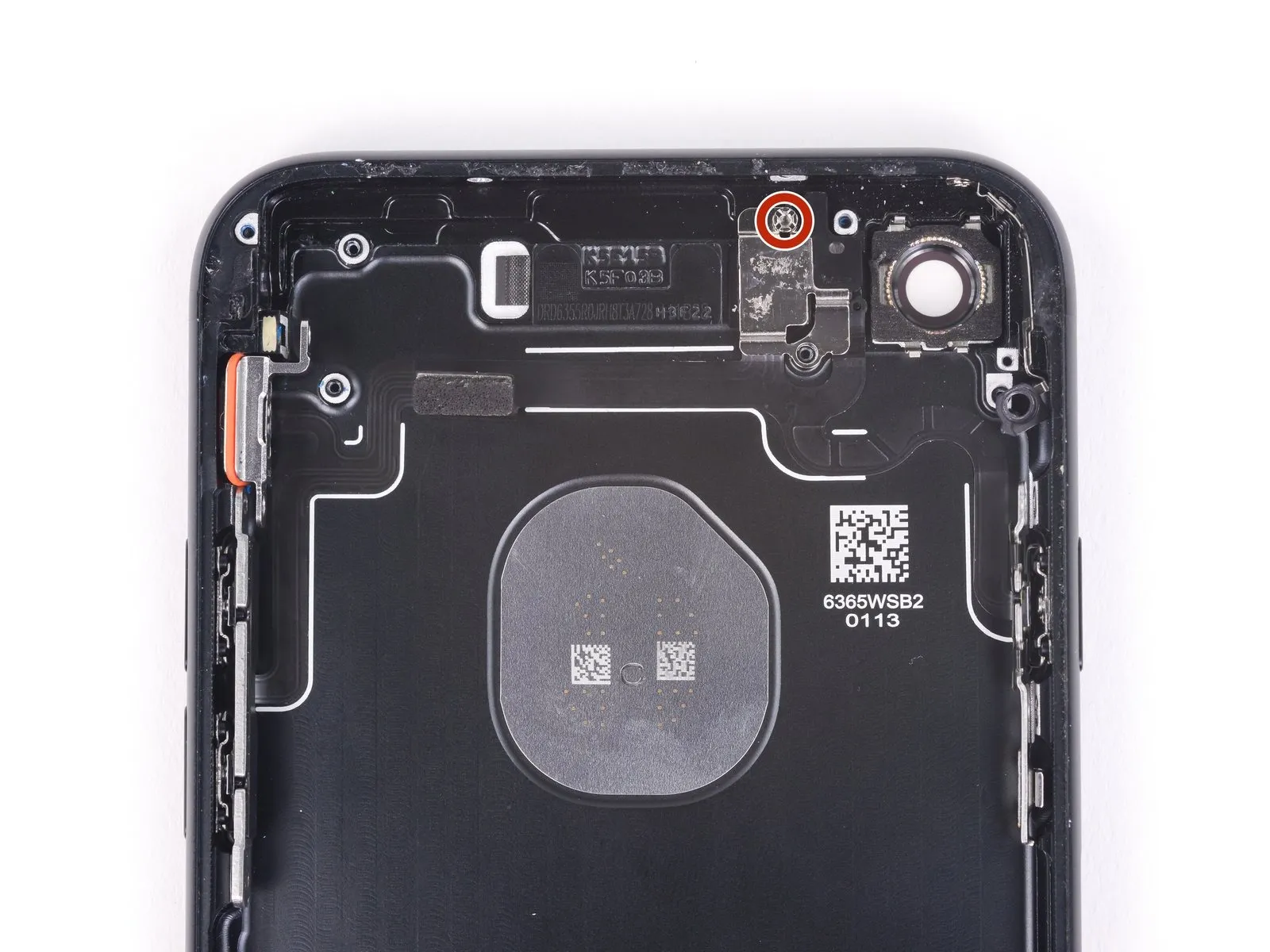
- Detach the 2.3 mm standoff screw, which is responsible for affixing the flash bracket to the rear case.For optimal results when removing standoff screws, utilize a [linked product missing or disabled: IF145-343] along with a driver handle.
- Should a specialized tool be unavailable, a small flathead screwdriver can be employed as a substitute; however, exercise heightened care to prevent slippage and potential harm to nearby parts.Standoff screws are best removed using an and driver handle.
In a pinch, a small flathead screwdriver will do the job-but use extra caution to ensure it doesn't slip and damage surrounding components.
Step 63
Step 64


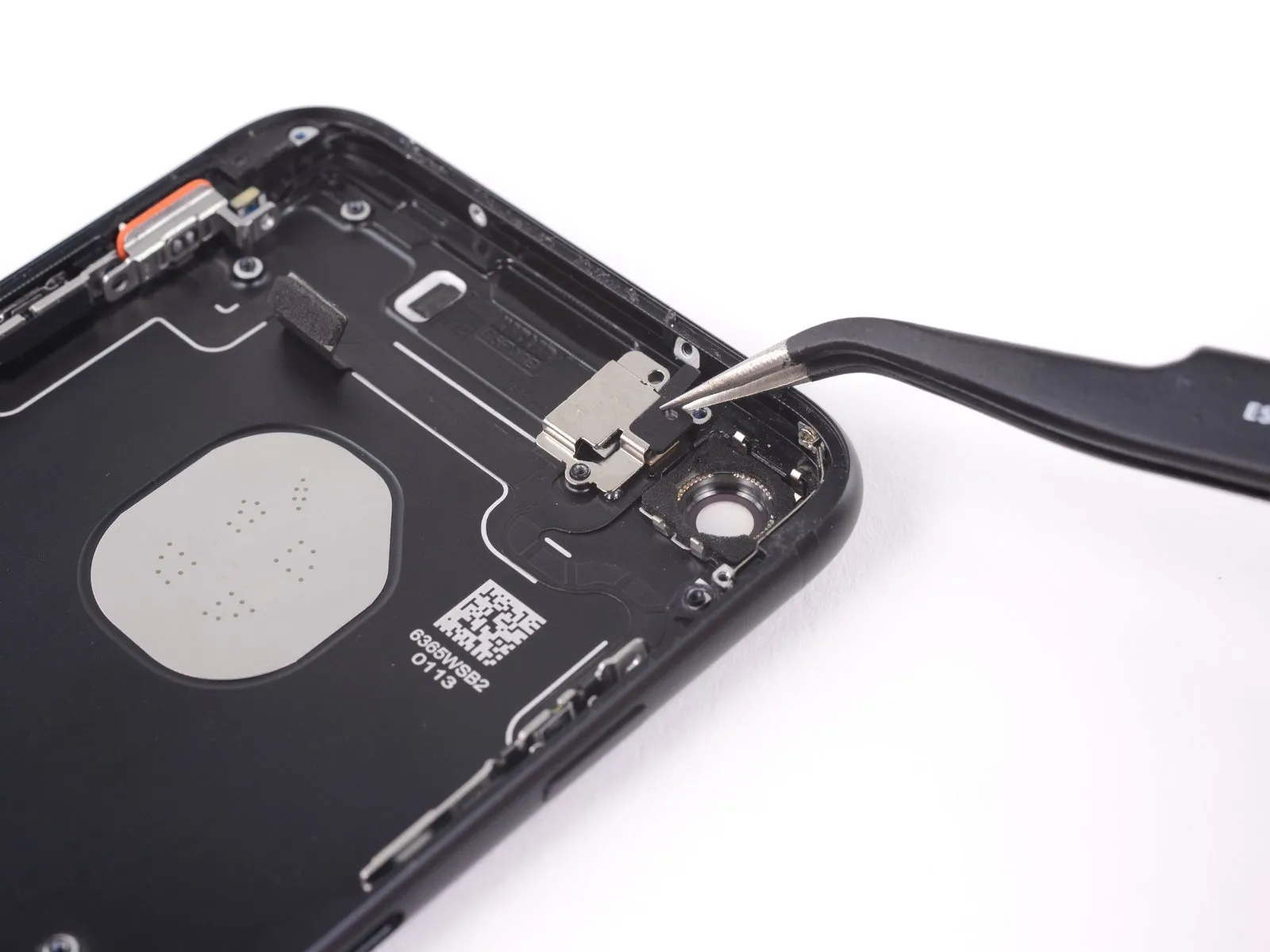
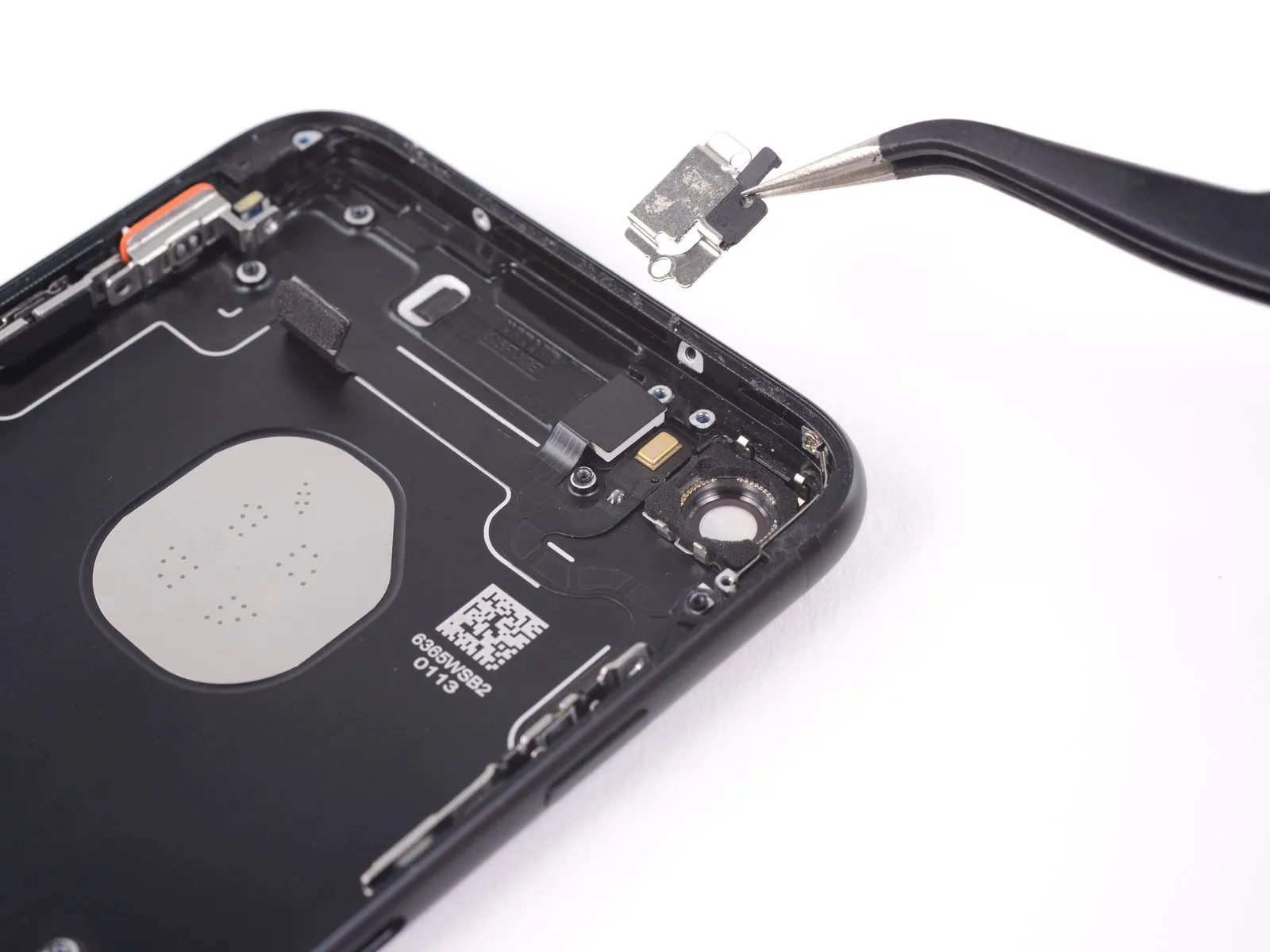
- Employ the tip of a spudger to carefully dislodge the flash module.This action facilitates the removal of the flash module without causing damage.
Step 65
Step 66
Step 67
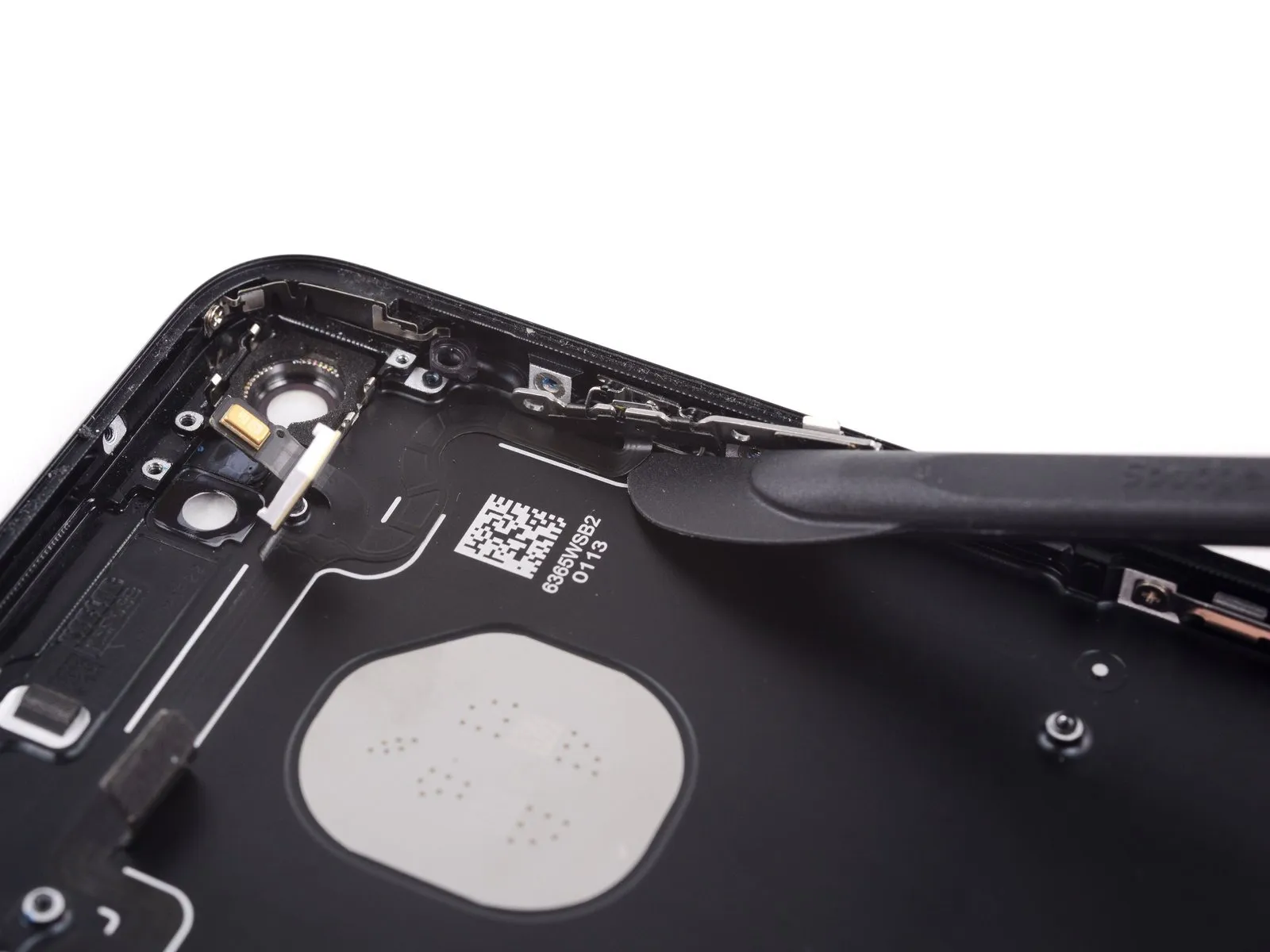

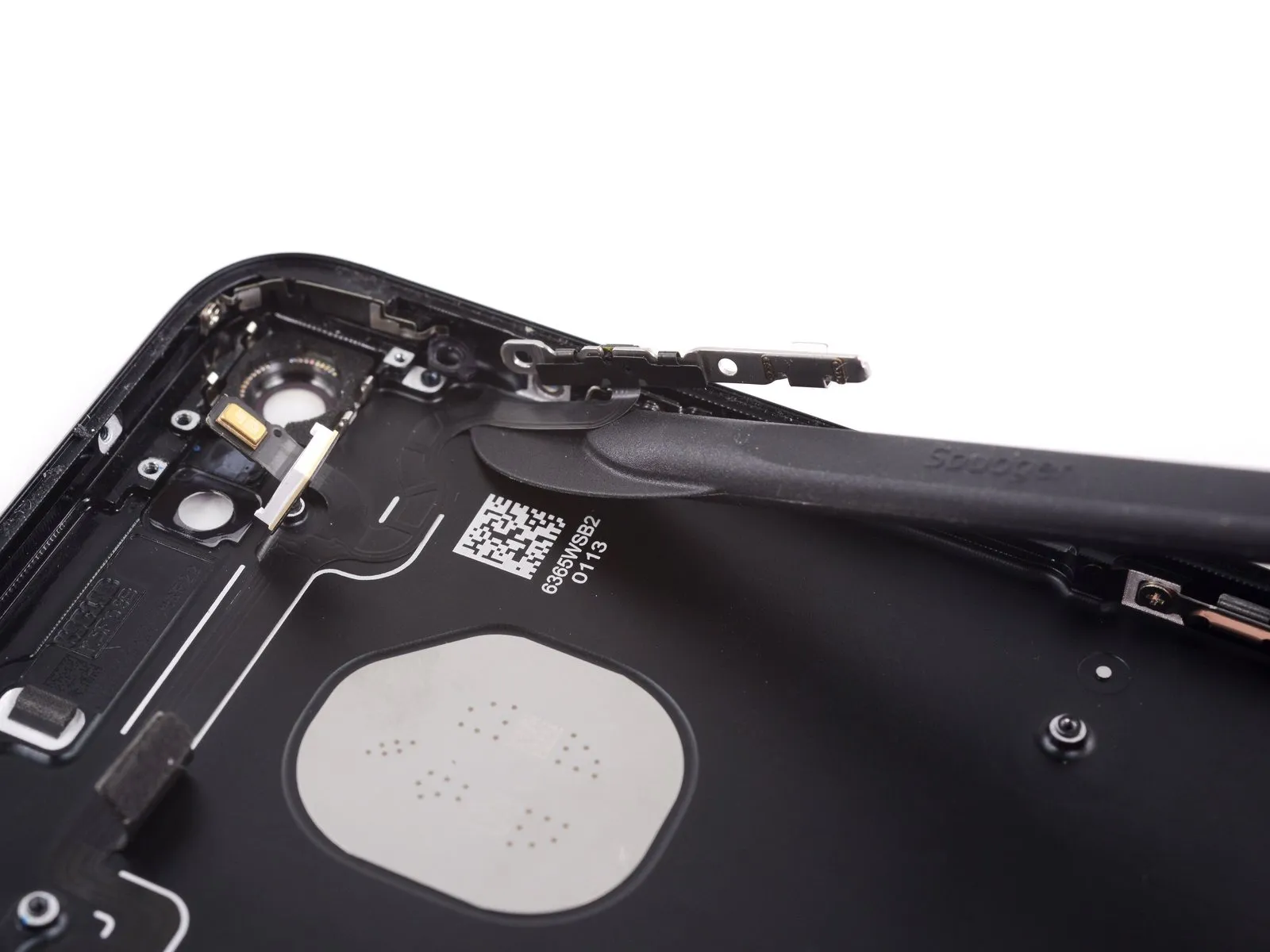
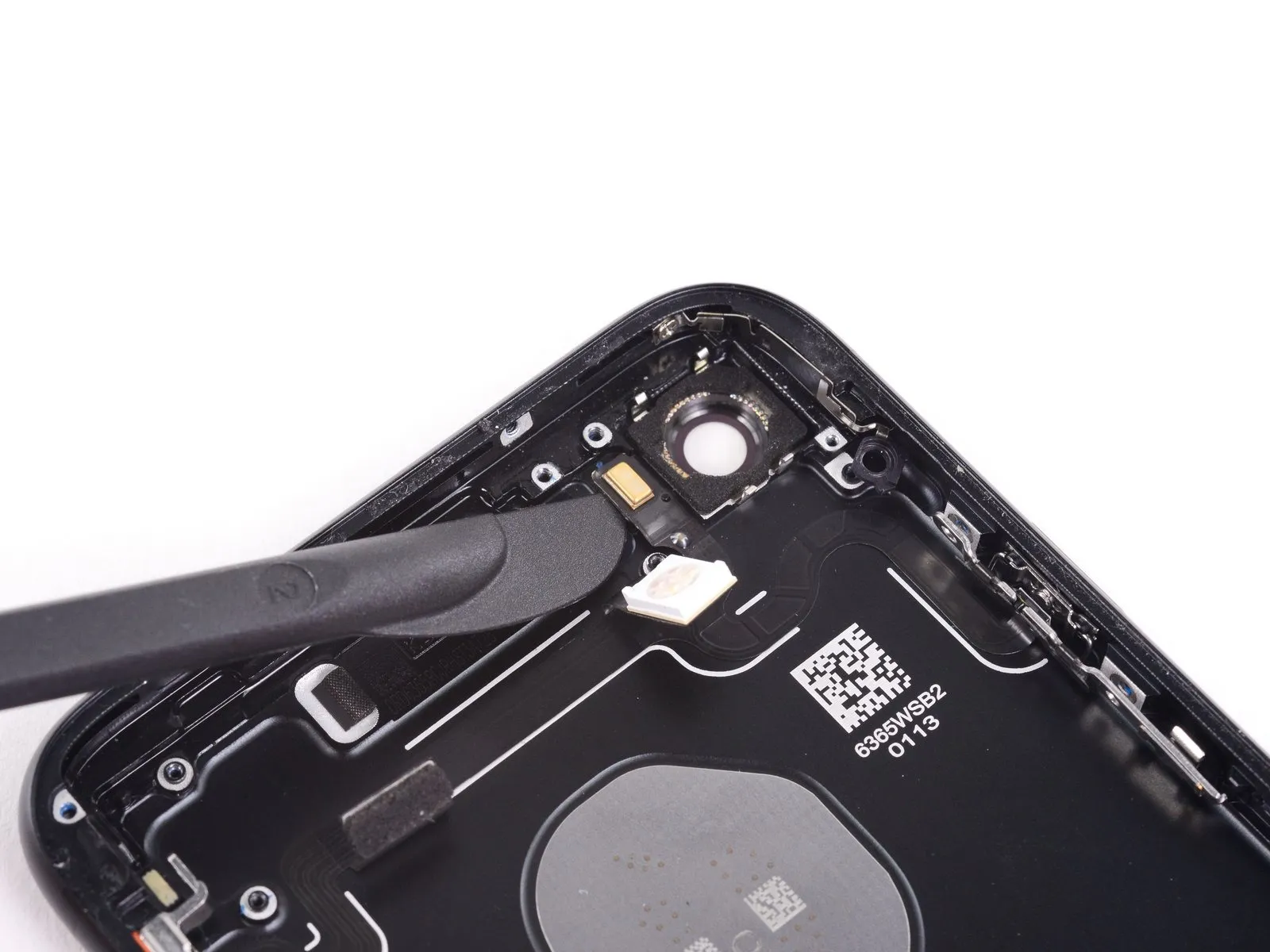
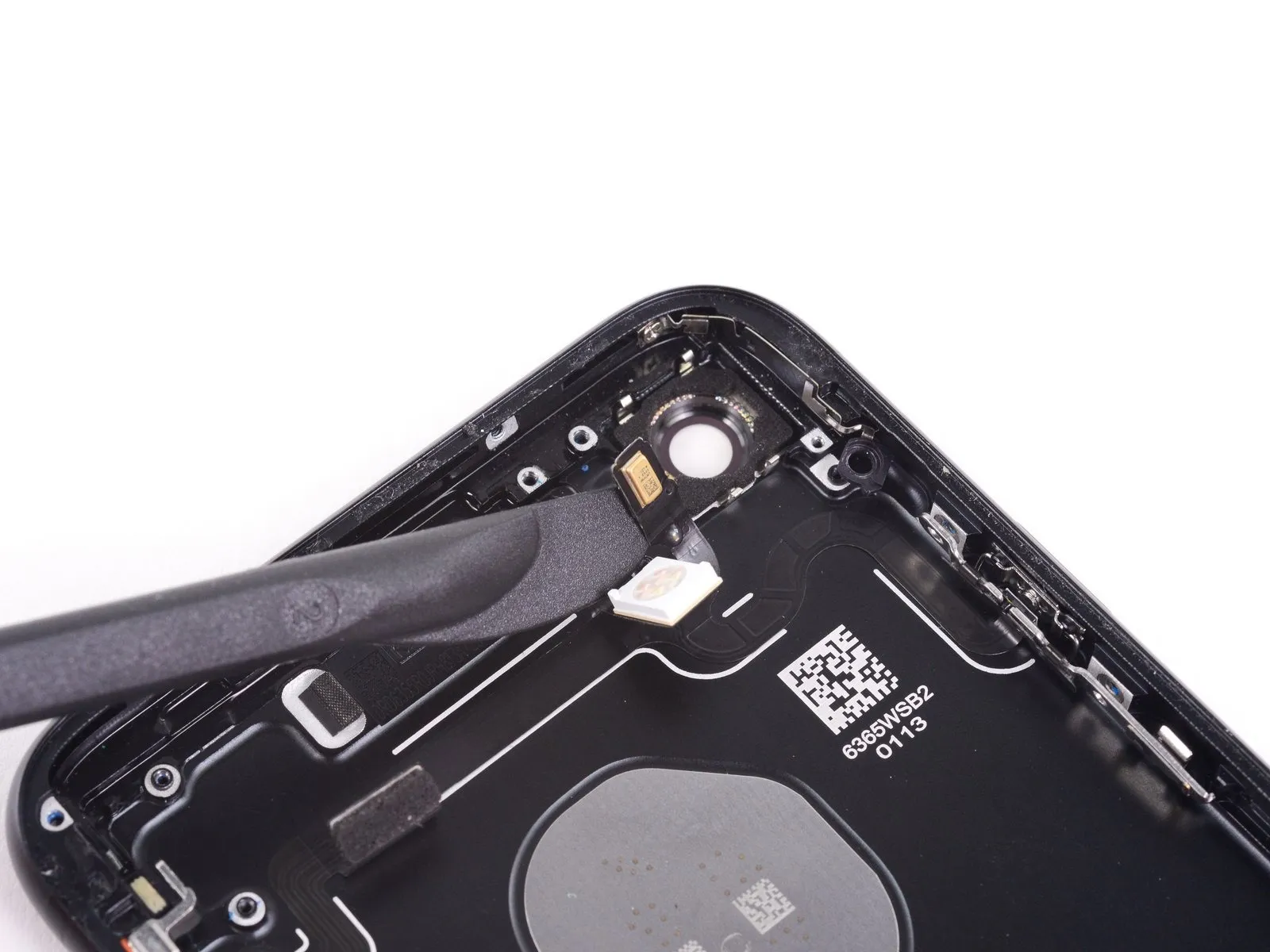
- Utilize a halberd spudger's blade, carefully inserting it beneath the power button's connection point on the button cable to detach it from the adhesive securing it to the rear case.
- Proceed with separating the adhesive bond by repositioning the blade's movement towards the uppermost region of the device.
Step 68


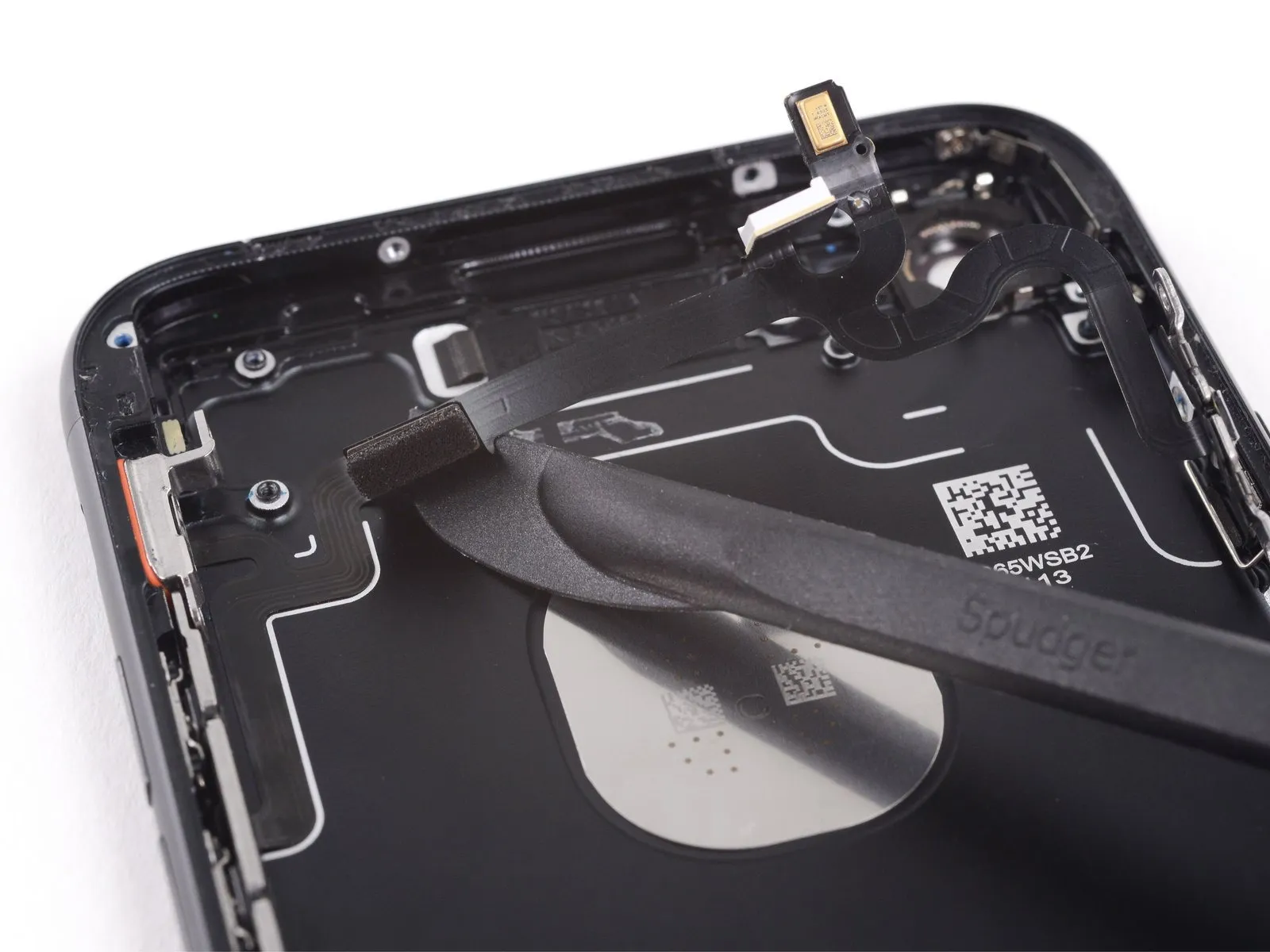
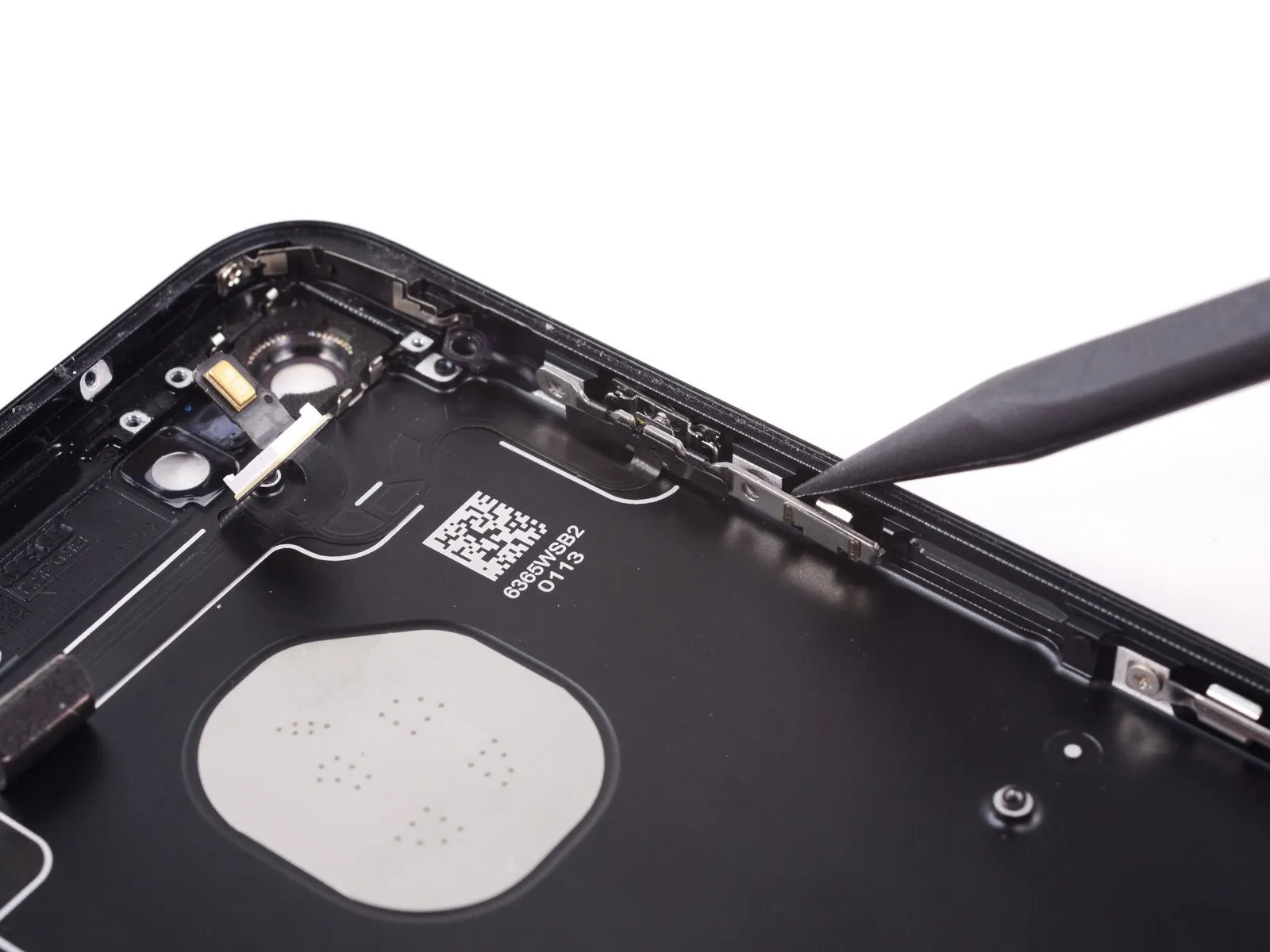
- Proceed with carefully sliding the halberd spudger's blade between the power and volume control cable and the device's internal components.
- Advance gradually to guarantee the cable remains undamaged throughout the detachment process.
Step 69
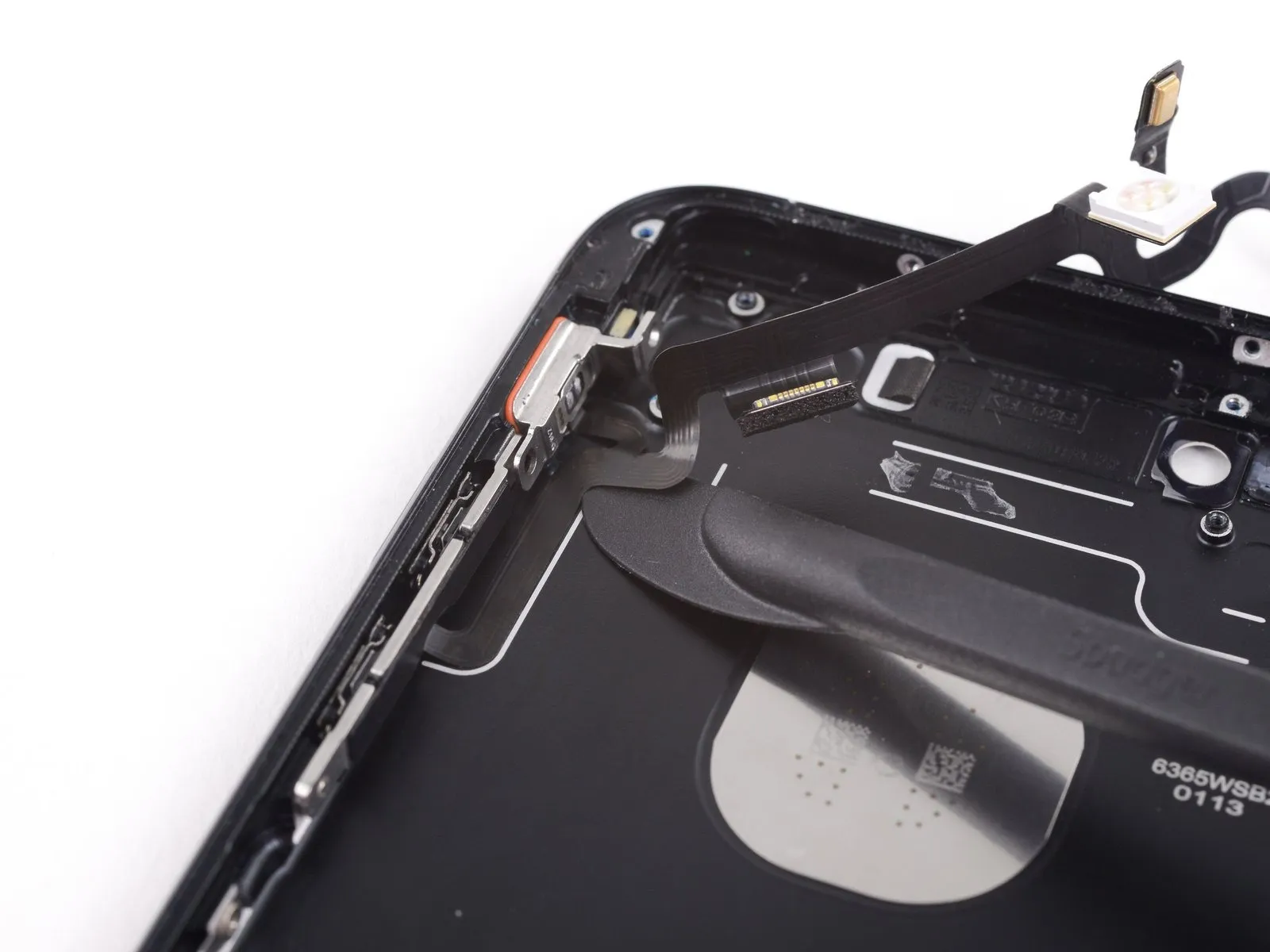
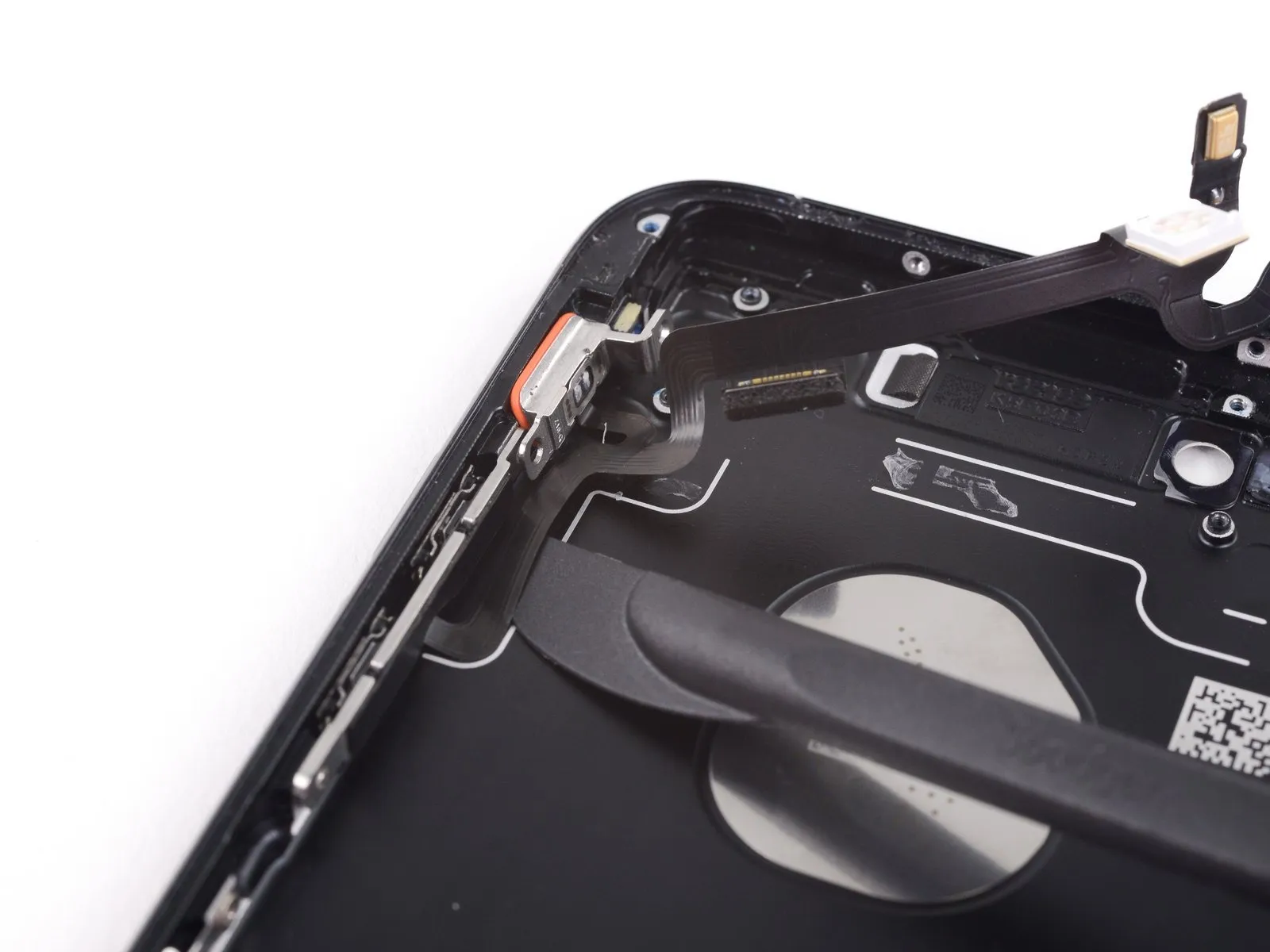
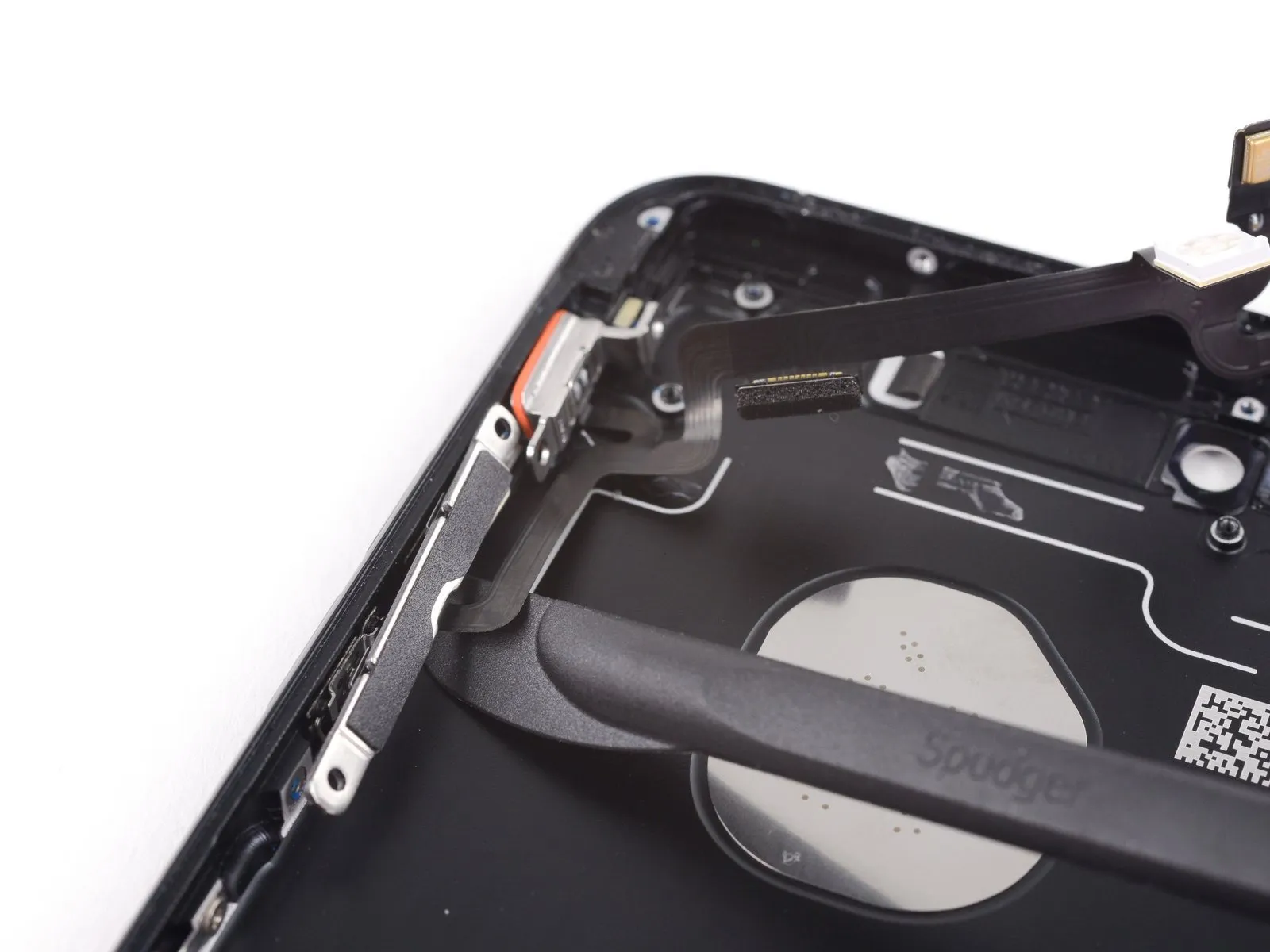
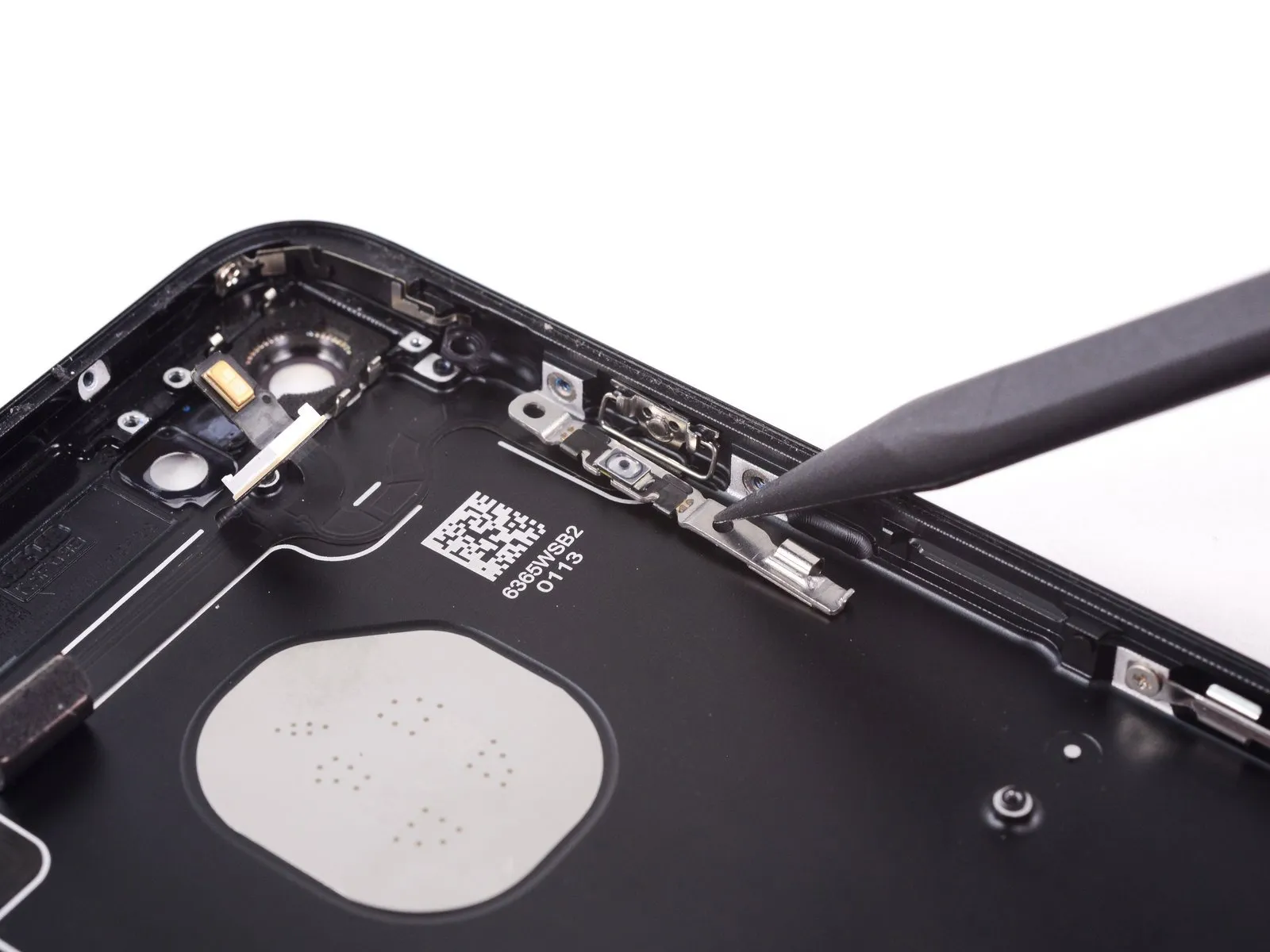
- Position thehalberd spudgerbeneath the section of the button cable associated with the volume control.
- Carefully move the blade's edge beneath the cable, progressing toward the phone's lower edge, to release the remaining adhesive bond.
Step 70
